Music training for the development of speech segmentation

The latest from my friends at Neuromusic News (ed. by Fondazione Mariani).

Contributors: Luisa Lopez, Giuliano Avanzini, Maria Majno and Barbara Bernardini.

This week’s digest regarding music and speech includes much of the same of what we already know: the implications of musical exposure in children with speech perception issues grow greater by the day. This study specifically compares the use of music as opposed to the use of art in 8 year old children.

Cereb Cortex 2012 Jul 10

Music training for the development of speech segmentation

François C, Chobert J, Besson M, Schön D
Institut de neurosciences des systèmes, INSERM and Aix-Marseille University, Marseille, France

The role of music training in fostering brain plasticity and developing high cognitive skills, notably linguistic abilities, is of great interest from both a scientific and a societal perspective. Here, we report results of a longitudinal study over 2 years using both behavioral and electrophysiological measures and a test-training-retest procedure to examine the influence of music training on speech segmentation in 8-year-old children. Children were pseudo-randomly assigned to either music or painting training and were tested on their ability to extract meaningless words from a continuous flow of nonsense syllables. While no between-group differences were found before training, both behavioral and electrophysiological measures showed improved speech segmentation skills across testing sessions for the music group only. These results show that music training directly causes facilitation in speech segmentation, thereby pointing to the importance of music for speech perception and more generally for children’s language development. Finally these results have strong implications for promoting the development of music-based remediation strategies for children with language-based learning impairments.

And for our Italian friends:

Il ruolo del training musicale nel promuovere la plasticità cerebrale e lo sviluppo di capacità cognitive linguistiche è di grande interesse sia dal punto di vista scientifico sia sociale. In questo studio, gli Autori riportano i risultati di uno studio longitudinale, durato oltre due anni, effettuato usando sia misure elettrofisiologiche sia comportamentali per verificare l’influenza del training musicale sulla segmentazione del linguaggio in bambini di 8 anni. I bambini sono stati assegnati con pseudo-randomizzazione a due gruppi di studio, uno sottoposto a training musicale, l’altro a lezioni di pittura, e testati periodicamente sulla capacità di estrarre parole senza significato da un flusso continuo di sillabe di un linguaggio artificiale. Le valutazioni dimostrano che solo i bambini esposti a training musicale aumentano la capacità di segmentazione del linguaggio, suggerendo l’importanza fondamentale del training musicale per lo sviluppo linguistico. Questi risultati hanno forti implicazioni nel promuovere l’elaborazione di strategie basate sul training musicale per aiutare i bambini con disturbi di apprendimento su base linguistica.mu

Vocal warm-up produces acoustic change in singers’ vibrato rate

“Now Andrea, do you know why we’re going through this specific exercise?”

“Is it because you hate me?”

Although this smal event personifies one of my favorite students simply expressing a bit of good-natured sarcasm, I cannot tell you how difficult it can be sometimes to get communicate to my young students the importance of warming up the voice. In regards to the following study: I knew it! Now if I could just get my kidss to believe me…

Moorcroft L, Kenny DT

Australian Centre for Applied Research in Music Performance, Faculty of Arts and Social Sciences, The University of Sydney, Sydney, New South Wales, Australia

Vibrato rate and vibrato extent were acoustically assessed in 12 classically trained female singers before and after 25 minutes of vocal warm-up exercises. Vocal warm-up produced three notable changes in vibrato rate: (1) more regularity in the cyclic undulations comprising the vibrato rate of a note, (2) more stability in mean vibrato rates from one sustained note to the next, and (3) a moderating of excessively fast and excessively slow mean vibrato rates. No significant change was found for vibrato extent. The findings indicate that vocal warm-up may regulate vibrato rate. Thus tone quality, which is strongly linked to vibrato characteristics, may undergo positive change as a result of vocal warm-up.

And for my Italian friends…

La frequenza e l’estensione del vibrato sono state studiate in 12 cantanti femmine con istruzione musicale classica, prima e dopo 25 minuti di riscaldamento vocale. Il riscaldamento vocale produceva tre risultati: 1) una maggiore regolarità nelle ondulazioni cicliche che comprendevano la frequenza del vibrato di una nota; 2) una maggiore stabilità nella media del vibrato nel passaggio da una nota sostenuta alla successiva; 3) una moderazione delle frequenze di vibrato troppo alte o basse. Nessuna variazione è stata rilevata per quanto riguarda l’estensione del vibrato. Questi risultati suggeriscono che il riscaldamento vocale può regolare la frequenza del vibrato. Di conseguenza, la qualità del suono, che è fortemente associata alle caratteristiche del vibrato, può risentire positivamente degli esercizi di riscaldamento.

My pilot in music and autism: thoughts on empathy, mirroring and rapport

I’ve been employed at California State University, Northridge since last September as a research assistant in the psychology department working on a study in autism, working memory and music. I completed my training and began administration of the study in January of this year. I’ve tested ten clinical subjects, three control subjects, and loved nearly every moment. What I’d like to speak about is a fairly recent observation.

It’s nothing short of ironic that I am almost identically following in the academic footsteps of my mother. Despite the fact that she was not satisfied until the completion of her second doctorate in phenomenological and existential psychology, she spent a great deal of time before and after as an independently contracted school diagnostician. When I told her I was to be trained on how to properly administer the Wechsler Intelligence Scale for children, she was beside herself. I suppose it should not be ironic, then, that the one thing I’ve come to enjoy most in the process is what I’d heard years of stories pertaining to when I was a child. That aspect is the outcome when one properly executes and achieves psychological rapport.

The concept of rapport can obviously be applied in a number of contexts and situation, and like most things, can be pursued and established for good or ill. It is a technique used in manipulation, in sales, and in seduction. It can also used to coax out life-saving information from victims in the midst trauma, to bond with strangers in a new environment, and closest to home for me, to comfort and elicit high performance qualities from nervous children brought in for an extensive battery of psychoeducational evaluation. As they frequently wonder “What is wrong with me?” or “Why am I here?” I have learnt a bit of understanding and reaching out can go for miles. One of the most interesting features  I’ve observed thus far as that the children on the ASD scale-children thought to commonly possess a ‘faulty’ mirror neuron system that would keep them from typically developed empathy responses- should seem so sensitive to their surroundings.

Every child, with the exception of one (who in the end did not meet the criteria for the study), has not only displayed a warm demeanor and trusting disposition, but also has volunteered to sing back to me in my pilot study. After testing my first two control subjects, I realized that asking high school boys to sing to me may as well have been climbing Mt.Everest (or so I thought).  However, nine out of ten of my clinical subjects, after my initial singing the pilot study to them, felt comfortable enough to sing it right back to me, as my original protocol dictates. This reasoning can be due to a number of things, but it’s an achievement I was unable to make with any control subjects. All I know is had the first autistic male not simply asked that instead of speaking the phrases after me, “Can I sing it out loud like you did?” I never would have continued the pilot in that manner, and heard the other 8 boys sing.

It is small testing group thus far to be sure. I’m still sorting through data, and trying to discern exactly what it shows about the empathy, musicianship and working memory of the young, high-functioning autistic population. Until I do, I simply wanted to share the portion of it that made me so incredibly happy. While the most difficult part of the project was reading through each individual IEP and noting every social and emotional setback the child had experienced, the easiest part was talking and joking with the boys about how much they played video games, that they were eating all the oreos and juice set aside for their parents, and what lovely singing voices they had. I do not always love the computational administration, or working with personnel who do not share my passion for children. I do, however, love these kids, and have all the hope for them in the world. Rapport does not have to be a dangerous method of transference and countertransference that sets the psychologist on the path of no return. It does not have to be an empty therapeutic tactic to secure a goal with little regard of what the patient really needs. It really can just be taking a short amount of time out of your day, and looking at life through another’s perspective. One will often be amazed with what they find.

Krzysztof Penderecki, Jonny Greenwood, Mental Illness and Encephalography

I ran across something rather intriguing the other day, thanks to this friend and music enthusiast. It is a collaboration between two highly respected musicians:  Krzysztof Penderecki and Jonny Greenwood. Imaginative, provocative and innovate as these string arrangements may be, it is in a very small component of the composing process which lies the real fascination for me:

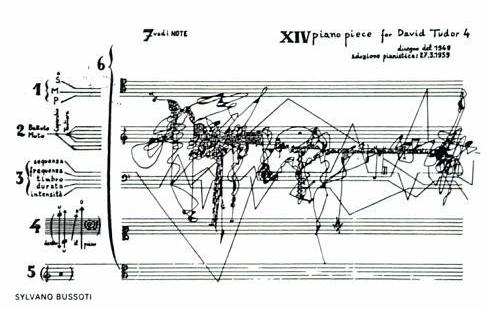
Penderecki’s Polymorphia also had a fascinating birth. The composer played a recording of Threnody for patients with mental illnesses at the Krakow Medical Center while the patients had encephalographs (brain-wave charts) made; he then based Polymorphia‘s musical lines around the shapes on their charts. In his reply to Polymorphia, Greenwood takes up that big, glorious and triumphant C Major chord — and then shatters that harmonic glow into smithereens. He begins with a strangely Bach-reminiscent chorale (“Es Ist Genug,” or “It Is Enough,” which is also the name of a famous Bach chorale) that Greenwood then distorts and dissolves over and over again. He builds tension and lets it drain away, takes up an idea and then lets it go in swirling eddies of motion.

The original article on NPR may be found here.

The “Anatomy of a Tear-Jerker” and my cover of Adele

In futile effort of keeping up with the Joneses of pop culture and music psychology, consider this my token post on Adele. Why?

 A) She’s fabulous

B) She just won big at the Grammys

C) WSJ Online has just released a major post largely on her hit Someone Like You entitled Anatomy of a Tear-Jerker 

D) I have covered her countless times, and her piano songs are a part of my teaching repertoire

In terms of the post WSJ released, I strongly recommend giving it a good read. The research was originally conducted at McGill, a university widely celebrated for their Music Perception and Cognition program, and home to celebrity writer Daniel Levitin, author of This Is Your Brain on Music. In light of Adele’s recent superstardom and the widening knowledge and appreciation of music psychology as a whole, I’d wager this article is going to get some serious attention. While I wholeheartedly agree with it’s main premise, I find something deeply awry here, and it is found the in subtitle itself:

Why does Adele’s ‘Someone Like You’ make everyone cry? Science has found the formula.

As a twenty-something young woman who has not only sung since age three, composed angsty love ballads on the piano for years but also been left by a lover in the worst way, I love Adele. Let me be clear on this: I love Adele. Someone Like You and Hometown Glory (as well as Rollin’ In The Deep, which I will teach tomorrow) are also favorites of my young vocal and piano students. However, I think if we look at that tag line again of this post-‘science has found the formula’- we will see that something is very wrong. I may be alone in my feeling here, but I doubt it. With the way EEG, MRI, fMRI and now even rtfMRI are developing, we know more about the human brain and it’s reactions to stimuli than ever before-more than we ever dreamed possible. I have a couple problems with the way the article glorifies grace notes and appoggiaturas-but most of all, how they glorify her. Yes, she and Dan Wilson have crafted a brilliant combination of soul, melodic intonation and dissonance in all the right suspended instances-but at the end of the day, I would be cautious in how objective we lean in quantifying beauty. There is a line to be drawn-there necessarily is. In saying “science has found the formula,” we have inadvertently taken the ‘magic’ (for lack of a better word) out of her song, and made it just that: a scientific formula. It should not be a commercial marketing scheme, however, and God forgive us should we ever make it one. It’s a great article, yes, and I hope everyone reads it. I only hope we can all take a step back from the science behind every mathematical placement of every ornamentation and remember why this lovely woman crafted the song in the first place.

And now, just for fun, a rough cover I did of Adele’s Hometown Glory in 2011.

On the origin of my PhD topic, Music Intervention as Psychotherapeutic Approach

Thanks to Pravin Jeya for his inquiry as to the origin of my PhD topic.                      Many of you have asked, and without going too in depth into my  passionate affair with fight or flight and the amygdala, I have tried to explain where it began. The post may be found here, and I would encourage you to check it out in conjunction with Pravin’s work.

If one were to ask for my academic or intellectual rationale for choosing music psychology, I would most likely rattle off something matter-of-factly about how I’ve grown up around music and psychology. My parents were psychologists; my mother has two doctorates so academic achievement was always very important. Yet they always stressed the cultural and intellectual importance of music. Music is what I do, and I have a lazy passion for the more philosophical side of things, so it simply ‘made sense,’ as it were.

As to my intellectual rationale for music psychology, it started exactly a year ago. From the time I discovered Dr. Victoria Williamson’s research in the applied neuroscience of music, I’ve been completely enamored with the field. Since I was a young child, I’ve been devoted to the pursuit of music in any way possible. I’ve been involved in music theatre, music video production and engineering, music composition, and music marketing in radio and television. As my emotional intelligence developed, however, I found I also had an intense desire to understand people and their motives. In high school and college, I took classes in philosophy, psychology and ethics. My first emphasis in college was music and psychology. But as I was strongly discouraged from pursuing majors with such ‘different focuses,’ I chose music alone. In line with this, I never resolved to solely do one or the other, and eventually it was cause for a year break before enrolling in a graduate programme. I found I simply could not be happy studying only music or only psychology. Enter my absolute elation upon discovering the Music, Mind and Brain programme at Goldsmiths College, University of London. I believe that their programme’s careful integration of music perception, neuroscience and statistical methods combined with a faculty of such encouragement and expertise will be just the training I seek in preparation of a PhD and a career in the field.

If someone were to ask to explain or justify my ‘non-academic’ journey into exactly what I have chosen to pursue, I still find myself needing to pause and really think it through. One catalyst for this is that my rationale is not static but dynamic, changing and evolving daily into something slightly new and adjusted. I suppose that that should say something in and of itself – the pursuit of music psychology has become my life blood – it’s what I think about most moments of every day. The more I’ve reflected on my own listening habits over the years, the more I realize there are few times I am without music. I use it advantageously in every possible situation. As an ENFJ (extroverted, intuitive, feeling, judging) Jungian personality type, being able to calm and put people at ease is one of my greatest joys, and strengths. Music can turn a moment of happiness into a moment of memorable bliss that stays with you always. It can also turn a slightly vague and uncomfortable memory into a transparent lake of psychoanalytical outpouring. Music is in everything, and it has the power to heal people.

If one were to ask the truly cementing factor in my life that secured music psychology, however, it is most of all the following. Last summer, I lost my step-sister, my father, and my best friend within two weeks of each other. Though I’d dealt with a fair share of hardship in adolescence, I’d never gone through anything of this magnitude. Through the process of witnessing my family’s grief (and my own) in spending time in hospitals and hospice, I felt more than ever an acute desire to help people through their pain. I never cease to be amazed at music’s capacity to bring about a mental resilience. I know music to be a healing tool, because I am a living attestation. There are many who would disagree with my personal ethic, but I continued to teach my private music lessons to children in the morning after I lost my father, and missed not a single lesson until several months later. I’m finding my time now to be alone and to grieve, but I honestly believe that the joy of working with kids in music sustained me through the more terrible moments, and as I said, I’ve kept in reserve the strength to maintain my lessons and lead a research project at the university. I wish to practice music psychology because I know it works. I now desire to delve further into the why, and the how.

My long-term goal is to complete a PhD in using music as a therapeutic tool in those who struggle with self-harm. From there exist many options I’d like to pursue, such as research and music therapy in a clinical setting. Though I have many different interests in listening behavior, emotional intelligence and applied neuroscience, the concept of psychological resilience remains of the most consequence to me, and I’ve many ideas how to pair this with music.

Diana Hereld holds a Bachelor’s degree in Music and Communication. She works currently as a psychology researcher at California State University, music tutor in piano and voice, and teacher for an early childhood music company. When she is not working, she spends her time independently researching all things music psychology and neuroscience, and theology/philosophy when it pertains to the former. Her interest is particularly in the way varied personality types respond emotionally to music, whether that can change over time in consequence of plasticity, and the implications for psychological resilience. She has just been accepted into the Music, Mind and Brain MSc programme at Goldsmiths College University of London for Fall 2012. You can follow her on Twitter @christypaffgen and subscribe to her blog, As the Spirit Wanes: The Form Appears.

The Sound of Prose: Omensetter’s Luck

For anyone interested in music theory in terms of form and analysis, musical syntax or the ‘sound of prose’ and how it may work closely with its more literary neighbors, there’s a great post just up at An und für sich already yielding some interesting discussion. This post (On Some Sentences of William Gass) is part of a book event on William H. Gass’s Omensetter’s Luck of which I will soon be submitting. As someone indulging in a bit of literary analysis from a music background of sorts, I’ve already found it quite interesting, and wager you will as well.

Go Long, Final Go

Much remains to write about from my trip, my new vocational experiences as vocalist and researcher, and life in general, but until I may finally settle down (very possibly tomorrow, as I will fly home to Seattle for a week) I will share something personal that I have done since being back.

A year or so ago, a friend showed me this song by Joanna Newsom. It was the first thing I ever heard her do. Sometime shortly after, I fell in love with her and covered her myself on my little 2 track. It was suggested it was rather nice, and that I record it professionally. Here is the rough track from Dec 17, 2011. This song will never be mixed, or mastered. I will not cover her again, I’m finished now. But I couldn’t let her go without one last hoorah.

The following is my cover of one of the saddest and heartfelt songs I have ever heard. For the other two of hers that never fail to leave me completely wrecked and in awe, please go here and here. I hope you enjoy it.

Go Long (Vocal and Piano by Diana Hereld, originally recorded by Joanna Newsom)


Last night, again,
you were in my dreams
several expendable limbs were at stake
you were a prince, spinning rims
all sentiments indian-given
and half-baked
I was brought
in on a palanquin
made of the many bodies
of beautiful women
brought to this place to be examined,
swaying on an elephant:
a princess of india

We both want the very same thing.
We are praying
I am the one to save you
But you don’t even own,
your own violence
Run away from home-
your beard is still blue
with the loneliness of you mighty men,
with your jaws, and fists, and guitars
and pens, and your sugarlip,
but I’ve never been to the firepits with you mighty men

Who made you this way?
Who is going to bear your beautiful children?
Do you think you can just stop,
when you’re ready for a change?
Who will take care of you
when you’re old and dying?

You burn in the Mekong,
to prove your worth,
Go Long! Go Long!
Right over the edge of the earth!
You have been wronged,
tore up since birth.
You have done harm.
Others have done worse.

Will you tuck your shirt?
Will you leave it loose?
You are badly hurt.
You’re a silly goose.

You are caked in mud,
and in blood, and worse.
Chew your bitter cud,
Grope your little nurse.

Do you know why
my ankles are bound in gauze
(sickly dressage:
a princess of kentucky)?
In the middle of the woods
(which were the probable cause),
we danced in the lodge
like two panting monkeys.

I will give you a call, for one last hurrah.
If this tale is tall, forgive my scrambling.
But you keep palming along the wall,
moving at a blind crawl,
but always rambling.

Wolf-spider, crouch in your funnel nest,
If I knew you, once,
now I know you less,
In the sinking sand,
where we’ve come to rest,
have I had a hand in your loneliness?

When you leave me alone
in this old palace of yours,
it starts to get to me. I take to walking,
What a woman does is open doors.
And it is not a question of locking
or unlocking.

Well, I have never seen
such a terrible room-
gilded with the gold teeth
of the women who loved you!
Now, though I die,
Magpie, this I bequeath:
by any other name
a jay is still blue

with the loneliness
of you mighty men,
with your mighty kiss
that might never end,
while, so far away,
in the seat of the west,
burns the fount
of the heat
of that loneliness.

There’s a man
who only will speak in code,
backing slowly, slowly down the road.
May he master everything
that such men may know
about loving, and then letting go.

Since each of us was several, there was already quite a crowd.

The two of us wrote Anti-Oedipus together. Since each of us was several, there was already quite a crowd. Here we have made use of everything that came within range, what was closest as well as farthest away. We have assigned clever pseudonyms to prevent recognition. Why have we kept our own names? Out of habit, purely out of habit. To make ourselves unrecognizable in turn. To render imperceptible, not ourselves, but what makes us act, feel and think. Also because it’s nice to talk like everybody else, to say the sun rises, when everybody knows it’s only a manner of speaking. To reach, not the point where one no longer says I, but the point where it is no longer of any importance whether one says I. We are no longer ourselves. Each will know his own. We have been aided, inspired, multiplied. 


-Deleuze and Guattari, A Thousand Plateaus: Capitalism and Schizophrenia 

Joy

It’s been some time since I recorded this, but this sober take on a beloved children’s song remains poignant to me today, regardless of where I am in more ways than one.