Music, Mind and Meaning Conference at the Peabody Institute – Day 2 Recap

1779146_10100787537465660_2115934_nMusic, Mind and Meaning Conference – Day 2

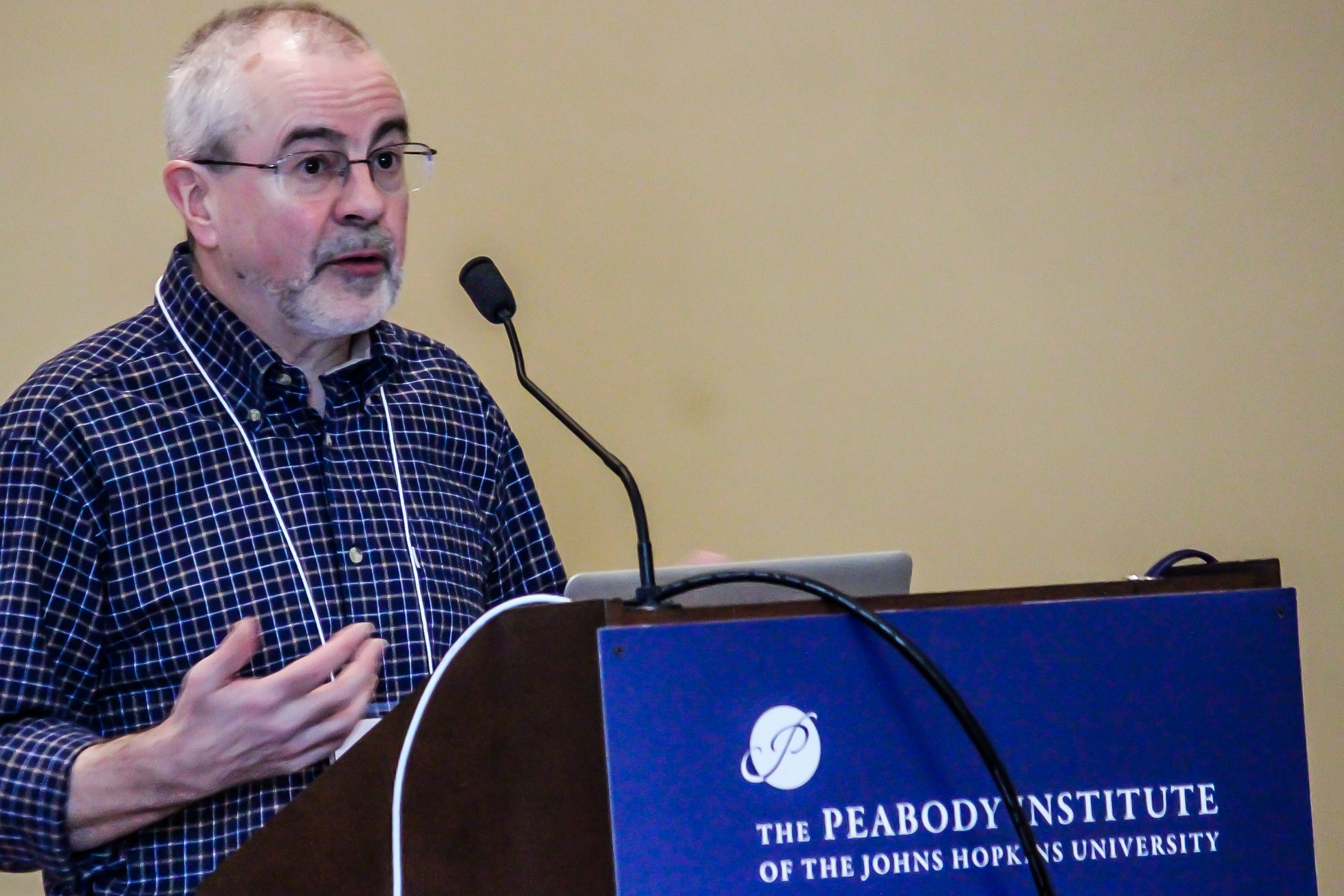
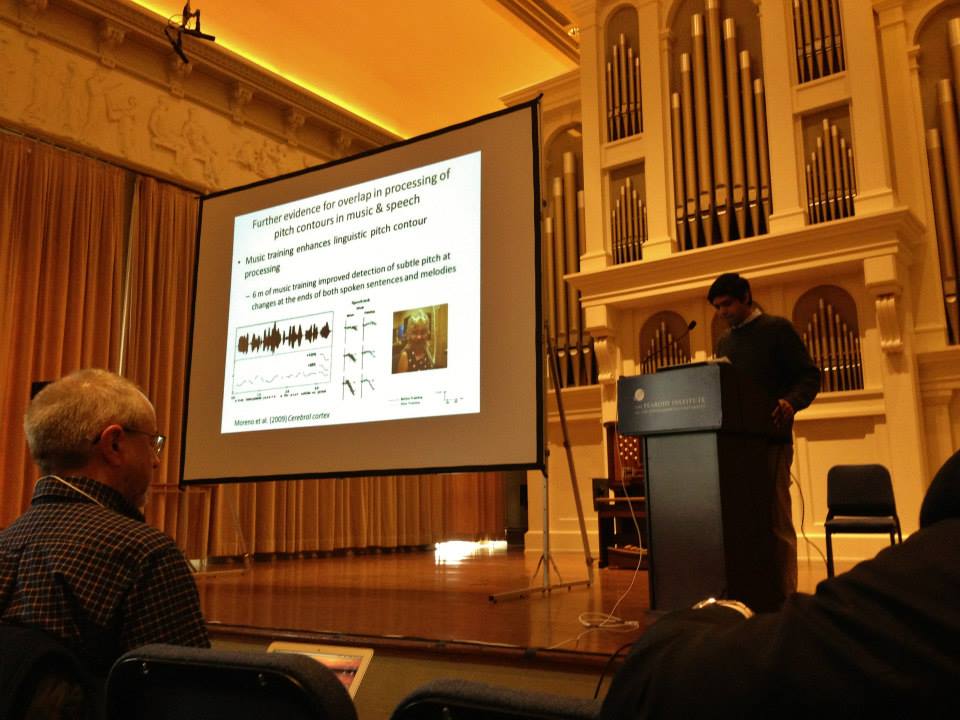
Friday commenced with the morning keynote delivered by Dr. Ani Patel, entitled Does instrumental musical training enhance the brain’s processing of speech? In Patel’s articulate and informative lecture, he began by drawing our attention to the following: “Music and language have important connections as cognitive and neural systems, and that has implications for theoretical debates about how the mind is organized – for evolutionary studies on the origins of these abilities, and practical issues about remediation of language disorders” (Patel, 2014). Though the parallels in music and language are less novel on account of the publication of his 2008 book Music, Language and the Brain, the implications of instrumental training lending to developments in language and speech are very much so. In conclusion, operating with his extended OPERA hypothesis, Patel emphasizes that regardless of the varying direction and debates these studies may undergo, “Comparative music and language research really does deepen our understanding of human communication.” (Patel, 2014).

Dr. Elizabeth Tolbert spoke next, providing an evolutionary perspective in Music, Meaning and Becoming Human. Approaching the co-evolution of music, meaning and social intelligence, Tolbert addressed music as a behavior, not object; of possessing a social ontology, and its implicational model as derived from social interaction, shared intentionality and social intelligence. Her overarching thesis states “the story of becoming human is the story of the development of a specifically human type of meaning rooted in social intelligence, and one that likely has its origins in proto-musical behavior.” (Tolbert, 2014).

IMG_9286Dr. Ian Cross’s lecture entitled Music, Participation and Interaction further expanded on the day’s existing idea of music not only as a “practice composed by the few and consumed by many,” but as the encompassment of interactive processes far beyond a role of abstract structures, symbolic realms or lofty themes. As uniquely flexible and socially cooperative creatures, humans are capable of utilizing music as not only a mode of communicating information and ideals, but at times as phatic organisms. Cross went on to explain with conviction that if this theory were more widely considered, the insinuation might result in music being given the proper chance to utilize it’s more pragmatic magic in resolving social uncertainties (and thus social anxiety), provide powerful effects on memory and social attitude, and “provide us with new perspectives on the investigation of music beyond the bounds of Western culture” (Cross, 2014).

The second keynote, Losing the Beat: A New Window on Human Rhythm was given Dr. Isabelle Peretz (University of Montreal). Peretz has published over two hundred and fifty five scientific papers regarding everything from perception, emotion and memory to singing and dancing. In Losing the Beat, Peretz explained that a defining characteristic of human interaction with music is “the identity and ability to move to the beat.” Although this universal faculty is typically formed early in life, her recent research shows that some individuals suffer from the inability to synchronize with beats in music. This disorder is referred to as beat deafness, a new form of congenital amusia. In her presentation, Peretz conveyed a strong sensibility for the cause of studying musical disorders in regard to “reverse-engineering of the musical brain” (Peretz, 2014).

IMG_9311Later in the afternoon, Andrea Halpern took the floor to share her work on auditory imagery, and to describe her study examining the neural loci of imagined music. Halpern is a pioneer in her long-standing devotion to the field from early in its development. She has contributed fundamental work on memory and perception of musical structure, including studies on earworms and the persistence of musical memories), effects of timbre and tempo change, and perception of emotion in sounded and imagined music. In her presentation Auditory Imagery: Linking Internal and External Music, Halpern presented the argument that although internal and external music experiences are distinctive encounters, they share a number of important similarities, which both musicians and nonmusicians can exploit to enhance the musical experience.

Photo 1 – Diana Hereld

Photos 2, 3 – Scott Metcalfe

Note: I must include an apology for the delay in reporting on the conference this weekend. I simply found myself so wonderfully overwhelmed with information (but overwhelmed regardless) that I was unsure how to encapsulate the day’s culmination of so many brilliant minds in presentation of their most recent work. As a result, I’ve decided to report individually on each of them in the near future. A few other outlets have picked up specific coverage, and I will advise as those are released. I will also be sharing a summation of the conference’s concluding rountable featuring the speakers and performers, which was truly a thing to behold.

Music, Mind, Meaning Conference 2014 at the Peabody Institute of Music

peabody library (January 30-31, Baltimore, MD) The Music, Mind and Meaning Conference will bring together scientists from the field of music cognition  and renowned musicians for a two-day event to explore the relationships between music and science at the Peabody Institute of Music. The events will include presentations from leading scientists and a special musical performance by the Grammy-nominated jazz pianist Vijay Iyer and tenor saxophonist Gary Thomas, Chair of Jazz Studies at Peabody. Keynote speakers will be Drs. David Huron, Aniruddh Patel, and Isabelle Peretz, three remarkable scientists who have led groundbreaking studies of how and why people have engaged in musical behaviors throughout human history. Conference participants will include scientists, clinicians, musicians, students and interested members of the public. Presentations will explore the idea of musical meaning by examining issues of expectation, creativity, evolution, culture, language, emotion and memory from the viewpoint of cognitive psychology, musicology and auditory neuroscience. The conference is generously supported by a conference grant from the Brain Sciences Institute at the Johns Hopkins University School of Medicine. For more information visit http://www.mmmbaltimore2014.org/.

I will be attending and covering this conference, so please feel free to follow me on Twitter @pathwaysinmusic and look for coverage here directly following. A special thanks to Mr. Cooper McClain for making this trip possible.

Declaring Our Independence: “I Am A Music Therapist”

Welcome to 2014: Declaring Our Independence

Guest post by Dena Register, PhD, MT-BC

Regulatory Affairs Advisor, Certification Board for Music Therapists

The end of the year always brings with it a great deal of reflection. It feels good to look at the accomplishments of the year at its close, set new intentions and imagine new heights for the year ahead. My own professional reflections for this year brought the realization that over the last eighteen years I have enjoyed a rather diverse career in music therapy with roles as a clinician, educator, consultant and professional advocate. One of the most interesting components of wearing so many different “hats” is trying to imagine how those you are working with perceive music therapy.

There is a constant effort to try and imagine how I can best help others understand what music therapy is and the many benefits for our clients. I feel the need to have an analogy for every situation, description, and population. I can’t imagine that I’m alone in this challenge. I know many music therapists that adapt in this chameleon-like fashion when it comes to how we describe our life’s work. We build rapport with our various audiences by searching for some common ground or understanding to use as a point of departure in hopes that they will have that magical “A-ha!” about the many benefits of music therapy. While these experiences help us develop remarkable skills in story sharing and empathy, we are constantly altering the description of our professional identity in order to help others understand us. This task is a complex one for professionals and is one of the challenges that both students and new professionals find difficult to navigate early on in their careers.

I get to teach a class in philosophy and theory of music therapy. Over the last several offerings of this course the students and I have spent hours exploring what music therapy has in common with other therapeutic and creative arts professions. Each semester produces fascinating discussions, diagrams and reflections on the shared aspects of our professions and, more importantly, how music therapy is notably distinct from any other profession or practice. Successful participation in our profession is reliant upon years of skilled musicianship, and a balance of both scientific and artistic knowledge and understanding. It is highly unlikely that an individual who does not have any prior musical training can make their way through varied and rigorous coursework of a music therapy degree and successfully complete the academic, clinical and musical requirements needed.

In the sixty-plus year development of our profession we have learned to be both flexible and savvy in our descriptions of music therapy. These well-honed skills have built a foundation for our profession to grow and expand in ways we didn’t think possible.  And, in most recent years, our advocacy efforts have brought us to a place of greater acknowledgement and public awareness than we have ever experienced before. What comes next? It is the era of INDEPENDENCE.

With an increased focus on research about the numerous impacts of music as a therapeutic medium, greater access to quality services by licensed professionals and continuously growing clinical offerings music therapy is positioned for continued, exponential growth. Now is the time for continued clarification to others regarding who we are as a profession as well as our unique qualifications.  In 2014, it is imperative that we declareI am a music therapist  and understand how to articulate our unique qualifications and distinctions from our other therapeutic partners.  How will YOU celebrate your ‘independence’ this year?

About the Author: Dr. Dena Register is the Regulatory Affairs Advisor for the Certification Board for Music Therapists (http://www.cbmt.org) and an Associate Professor of Music Therapy at the University of Kansas. She can be reached at dregister@cbmt.org

This January is Music Therapy Advocacy month. For more information on the practice and professionals who make up the field, follow @pathwaysinmusic and #mtadvocacy on Twitter, and check back for updates, interviews and op-eds. For more information on advocacy for recognition and access to services, please visit Music Therapy State Recognition home.

Music and Memory 2014 Columbia Music Scholarship Conference

CMSCThe tenth annual Columbia Music Scholarship Conference (CMSC) will be held on March 8, 2014 at Columbia University in the City of New York. The theme of the 2014 meeting is Music and Memory. The conference is organized by graduate students from the Department of Music at Columbia University with financial support from the Department of Music and the Graduate Student Advisory Council.

The conference welcomes Prof. Jonathan Sterne from the Department of Art History and Communication Studies, McGill University as the 2014 keynote speaker. Prof. Sterne teaches in the Department of Art History and Communication Studies and the History and Philosophy of Science Program at McGill University. He is author of MP3: The Meaning of a Format (Duke 2012), The Audible Past: Cultural Origins of Sound Reproduction (Duke, 2003); and numerous articles on media, technologies and the politics of culture. He is also editor of The Sound Studies Reader (Routledge, 2012). His new projects consider instruments and instrumentalities; histories of signal processing; and the intersections of disability, technology and perception.

Burgeoning interdisciplinary inquiry on memory is enabling scholars to develop new perspectives in a diverse array of fields ranging from history, anthropology, sociology, literary studies, art history, archeology, cultural studies, and media studies, to philosophy, political science, theology, education, psychology, and the cognitive sciences. This conference will add to this growing interdisciplinary conversation about memory in the sciences, arts, and humanities, stimulating a dialogue both on the role of memory in music studies and on the place of music in studies of memory.

The conference seeks to consider the complexity of memory’s embeddedness in music’s practices, subjects, objects, ideologies, sites, and technologies. Interests lie in memory as lived, constructed, represented, performed, transmitted, inscribed, incorporated, and stored, as persisting, travelling and circulating, as material and immaterial, human and non-human, as a capacity and a resource that impacts and shapes everyday lives. In what ways can memory influence musical practice, and in what ways can musical practice influence memory? How might memories be theorized musically? What can music scholars offer to memory studies, and memory scholars to music studies?

Information provided by the CMSC website.


Musicality correlates with sociability and emotionality in Williams Syndrome

(Ng R, Lai P, Levitin D, Bellugi U)

From the Laboratory for Cognitive Neuroscience, Salk Institute for Biological Studies, La Jolla, California, USA

Williams Syndrome (WS) is a neurogenetic developmental disorder characterized by peaks and valleys of cognitive abilities. One peak that has been understudied is the affinity that many individuals with WS have toward music. It remains unknown whether their high levels of musical interest, skill and expressivity are related to their sociable personality or their verbal intelligence. Authors examined the relationships between musicality (musical interest, creativity and expressivity), sociability (social-emotionality, social approach) and language comprehension in WS and typically developing (TD) controls. Findings suggest that emotion-expressivity through music in WS may be linked to their sensitivity and responsivity to emotions of others, whereas general interest in music may be related to greater linguistic capacity in TD individuals. Musicality and sociability may be more closely related in WS relative than in typical development; implications for future interventions for this neurodevelopmental condition will be discussed.

photo

Full PDF in English

In Italiano –

La Sindrome di Williams (WS) è un problema dello sviluppo neurologico caratterizzato da punti di forza e di debolezza nelle abilità cognitive. Una qualità che è stata poco studiata è l’affinità elettiva che molti soggetti con WS hanno verso la musica. Non è chiaro se l’alto livello di interesse musicale, di capacità esecutiva e di espressività sia correlato alla loro personalità sociale o alla loro intelligenza verbale. In questo studio gli autori hanno esaminato la relazione tra la musicalità (interesse musicale, creatività ed espressività), l’attitudine sociale (emotività sociale, approccio sociale) e la comprensione del linguaggio in bambini affetti da WS e in bambini con sviluppo neurologico tipico (TD). I risultati suggeriscono che l’espressività delle emozioni attraverso la musica nei bambini con WS potrebbe essere legata alla loro sensibilità nei confronti delle emozioni altrui, mentre l’interesse generico nella musica potrebbe essere dovuto a una maggiore capacità linguistica nei bambini con sviluppo tipico (TD). La musicalità e l’attitudine sociale potrebbero essere più affini nei soggetti WS piuttosto che nei soggetti TD. Gli Autori discutono i risultati nell’ottica di possibili interventi educativi per i soggetti con WS.

CASBS Stanford Welcomes 2013-2014 Fellows and Visiting Scholars


THE CENTER FOR ADVANCED STUDY  IN THE BEHAVIORAL SCIENCES AT STANFORD UNIVERSITY
WELCOMES 2013-2014 FELLOWS AND VISITING SCHOLARS

 
Stanford, CA: September 12, 2013 – The Center for the Advanced Study of
Behavioral Sciences (CASBS) at Stanford University today welcomed the 35
Fellows and eight visiting scholars who make up the Class of 2014.

Chosen through a rigorous selection process, the group represents some of
academia’s most innovative scholarship across these behavioral sciences:
anthropology, communication, economics, education, history, law, linguistics,
philosophy, political science, public health, psychiatry, psychology, science &
technology, and sociology. The scholars hail from 21 universities in the United
States, as well as from universities in Canada, England, and Sweden.
Fellows pursue their own research for the full academic year while contributing
to the CASBS community through weekly seminars, occasional public lectures,
and informal conversations over daily lunch.

Informal interaction, in particular, fosters the cross-pollination of ideas across

disparate fields of study, said CASBS Director Iris Litt, MD, herself a Fellow
(1985). “Fellows typically report an expansion in their thinking, and sometimes
even a new approach to their research,” she said. “The launch of the field of
behavioral economics, attributed in large measure to our own Daniel
Kahneman, is an excellent example of this.” Kahneman, a Fellow in psychology
(1978) received the Nobel prize in economic science in 2002.

During their CASBS year, Fellows address some of the most pressing problems

of our day, seeking insight and innovation that will advance humanity at all
levels – whether on the international stage, the workplace, or within the
individual psyche. Among planned areas of study for members of this year’s
class:• the notion of peoplehood and its implications in the Israel/Palestine conflict;

• the manufacture of rayon – a textile marketed as ‘green,’ yet highly
dangerous to the people who make it and the environment;
• the economics of sexual orientation;
• psychobiological triggers of mania in an individual;
• the development of creativity in adolescence;
• implications of copyright law and emerging technologies;
• where data and behavior intersect.
About the Center for Advanced Study in the Behavioral Sciences
Since its founding in 1954, the Center for Advanced Study in the Behavioral
Sciences at Stanford University has brought together distinguished scholars in
the behavioral sciences to confront societal problems worldwide. The Center is
honored to count among its Fellows 22 Nobel laureates, 14 Pulitzer Prize
winners, and 44 MacArthur Fellows, in addition to hundreds of members of the
National Academies.
Fellows have helped develop new policies and practices in fields as diverse as
medicine, education, electoral politics, crime prevention, and international
development. And they’ve played key roles in starting new interdisciplinary
fields such as behavioral economics.
For ongoing news and events about CASBS, please visit http://www.casbs.org and follow on Twitter, @CASBSStanford .


Here are the 2013-2014 Fellows, listed by field of study:
Anthropology
• Ilana Gershon, Indiana University
During her time at the Center, cultural anthropologist Ilana Gershon is
studying how people agree upon ethical standards when using new
media in the course of hiring and firing. Her previous work explored why
Samoan migrants experience different ways of being culture-bearers in
New Zealand and the United States.
• Lawrence Rosen, Princeton University
Anthropology Fellow Lawrence Rosen will work on his latest book, Drawn
From Memory: Arab Lives Unremembered, a study of the intellectual lives
of four ordinary Moroccans he has known many years. It analyzes the
concept of memory in settings of the history, rural and urban
development, religious, and ethnic relationships of the country.Communication
• Byron Reeves, Stanford University
In his scholarship, Byron Reeves balances academic pursuit and
business entrepreneurship. One area of focus is psychological processing
of media in the areas of attention, emotions, learning, and physiological
responses. He is working on the application of multi-player game
technology to behavior change and the conduct of serious work.
• Natalia Roudakova, University of California, San Diego
Natalia Roudakova’s work bridges cultural anthropology to political
communication and comparative media studies. She notes, “Although
there is some tradition of ethnography in journalism studies,
anthropologists have not played much of a role in the field of political
communication.” Her research addresses that gap.

Economics
• Ali Ahmed, Swedish Collegium for Advanced Study
During his fellowship at the Center for Advanced Study in Behavioral
Sciences, economist Ali Ahmed will focus on addressing research
questions related to economics of sexual orientation. While most of his
research is in the field of economics of discrimination, he also studies
behavioral economics, labor economics, and economics of religion.
• Petra Moser, Stanford University
Returning Fellow Petra Moser’s research at CASBS will examine the
effects of copyright policies: Do stronger copyright terms increase the
price of books? And how do stronger copyright terms influence diffusion?

Education
• Sarah Freedman, University of California, Berkeley
Returning Fellow Sarah Freedman will conduct data analysis and write
about a five-year research project, The Development of Ethical Civic Actors
in Divided Societies: Northern Ireland, South Africa, and the United States.
Of her work she says, “I am interested in linguistic analyses that provide
windows into how varied students think about civic participation.”

History
• Ethan M. Pollock, Brown University
Ethan Pollock’s current research project tells the history of the Russian
bathhouse to gain new perspectives on Russian identity, traditional and
modern notions of health & hygiene, and the evolution of ideas about
community and sociability. (Under contract, Oxford University Press.)• Bruce J. Schulman, Boston University
Bruce J. Schulman’s CASBS project, “‘Are We A Nation?’: The Birth of
the Modern United States,” explores the transformation of American
nationhood between 1896 and 1929–the era in which the United States
emerged as a world power, international economic leader, and reservoir
for displaced persons from around the globe.
• Peter Stansky, Stanford University
Peter Stansky’s scholarly aim is to better understand Britain, mostly in
the areas where culture, literature, art, and politics meet, as in his
collection of essays, From William Morris to Sergeant Pepper. His current
project is a study of Edward Upward, the least-known member of the
group who gathered around W. H. Auden.

Law
• Molly S. Van Houweling, University of California, Berkeley
Molly Van Houweling’s research focuses on copyright law’s implications
for new information technologies, and vice versa. One strand of her
research explores how legal rules, designed to regulate sophisticated
commercial interests, affect unsophisticated individuals empowered by
information technology. She is currently working on a book, tentatively
entitled Property’s Intellect.

Linguistics
• Roger Levy, University of California, San Diego
Through study at the intersection of linguistics, cognitive science, and
game theory, Roger Levy hopes his work will help us better understand
how speakers and listeners are able to reason about each other to
achieve effective communication. He will also study the language of
children to better understand how language learning takes place.
• Judith Tonhauser, Ohio State University
Judith Tonhauser’s project, Content and context in the study of meaning
variation, is based on the idea that human languages may differ in their
morphological inventories and syntactic structures, but nevertheless
convey comparable meanings.

Philosophy
• John M. Doris, Washington University
John M. Doris works at the intersection of psychology, cognitive science,
and philosophical ethics. He is finishing work on a new book, Talking to
Our Selves: Reflection, Skepticism, and Agency, and beginning work on a collection of his papers, Character Trouble: Undisciplined Essays on
Persons and Circumstance, both to appear with Oxford University Press.
• Sam Fleischacker, University of Illinois at Chicago
Sam Fleischacker plans to use his time at CASBS to examine a series of
philosophical issues raised by the Israel/Palestine conflict. He’s
particularly interested in the notion of peoplehood, the link (if any)
between peoplehood and territory, and the question of whether states
should represent or foster a people’s identity.

Political Science
• Alison Renteln, University of Southern California
Alison Renteln’s research project focuses on various public policy
incentives for civic engagement. “As part of this study, I will undertake
comparative analyses of Good and Bad Samaritan laws and mandatory
voting systems,” she says. “I am particularly interested in crossdisciplinary scholarship on empathy as it relates to political participation
and humanitarian assistance.”
• Robert Van Houweling, University of California, Berkeley
Robert Van Houweling plans to complete a book about political
repositioning. It focuses on how voters react when politicians change
their policy positions, and in turn, considers the impact voters’ reactions
have on candidate strategies. He has on-the-ground experience as well,
having served as a legislative assistant to Senator Thomas Daschle.
• Michael D. Ward, Duke University
Political scientist Michael D. Ward’s primary interests are in
international relations (spanning democratization, globalization,
international commerce, military spending, as well as international
conflict and cooperation), political geography, as well as mathematical
and statistical methods.
• Erik Wibbels, Duke University
Political scientist Erik Wibbels’s CASBS project aims to develop
innovative approaches to understand why the quality of governance
varies across the geography of countries—why, for instance, central
authorities in places like Afghanistan and Mexico are able to govern some
parts of their countries but not others.

Psychiatry
• Albert Rothenberg, Harvard University
Returning Fellow Albert Rothenberg is studying the development of
creativity and creative thinking during adolescence. It’s an extension of

Studies in the Creative Process, a project where he serves as principal
investigator and which has carried out research on creativity in
literature, art, psychotherapy, and science.

Psychology
• David Dunning, Cornell University
While at CASBS, experimental psychologist David Dunning plans to work
on a book examining the personal to societal implications of
ignorance. He says he is particularly interested in “the fact that people
largely fail to know where their knowledge and expertise end – and their
ignorance begins.”
• Sheri L. Johnson, University of California, Berkeley
Sheri Johnson’s research focus during her CASBS year is
psychobiological triggers of mania. “I like that my work bridges many
different paradigms to help understand why people with bipolar disorder
develop symptoms on a given day,” she says. “I also really love the
process of working with collaborators and with students to develop
ideas.”
• Lee Jussim, Rutgers University
Lee Jussim’s research looks at the relationships between social
perception and social reality. His primary interests are interpersonal
processes, judgment and decision-making, prejudice and stereotyping,
self and identity, and social cognition.
• Jon A. Krosnick, Stanford University
Returning Fellow and social psychologist Jon Krosnick’s top priority for
his Fellowship year is to finish his book reviewing 100 years of research
on how to design questionnaires optimally. He researches attitude
formation, change, and survey research methods. For 15 years, he has
researched the American public’s views of global warming.
• Nilam Ram, Penn State University
Nilam Ram plans to write about how real-time assessments and analytics
can empower people to use data about their own behavioral patterns in
order to make changes that will help them have a better life. These
“personalized interventions … can be deployed at population scale,” he
says.
• Simine Vazire, Washington University
While at CASBS, Simine Vazire will work on research related to selfknowledge, exploring these questions: How well do we know ourselves?
How can we improve self-knowledge? And what are the consequences of
poor self-knowledge? She will also be working on research methodology:

Public Health
• Paul Blanc, University of California, San Francisco
Paul Blanc continues his research on the viscose rayon industry
and occupational disease. He says the material is linked to widespread,
often lethal disease among workers and environmental degradation.
Yet, “Rayon is even marketed as a renewable green product,” he says,
“because carbon disulfide is mixed with cellulose, a renewable resource.”
• Merwyn (Mitch) Greenlick, Oregon Health and Science
Returning Fellow Mitch Greenlick will work on a book on the Oregon
Legislature. From the time of his swearing-in, he recorded his reactions
to the Legislature, forming a body of work spanning six legislative
sessions; over time, perspective emerges from that of a minority
freshman to that of a senior committee chair in the majority.
• Heather Munroe-Blum, McGill University
Heather Munroe-Blum will focus on how public policy in science and
education contribute to a nation’s social and economic success within
the larger global context – with particular attention to young people. It’s
a natural extension of her work advising governments on the role that
progressive, evidence-based public policy plays in enriching society and
international competitiveness.
Science and Technology Studies
• Steve Woolgar, Oxford University
Sociologist Steve Woolgar’s main current research projects include
mundane governance, the social dynamics of provocation, and the utility
of radical academic ideas for business and management. He is interested
in technology and organizational change, branding and brand
development, the rise of ethics, and visualization and evidence in
eScience.

Sociology
• Elizabeth Bruch, University of MichiganElizabeth Bruch plans to explore mate search strategies and mate choice
behavior on online dating sites. She writes, “One central focus for me is
how search strategies and contact behavior differs across dating markets
… and also how people learn who is in their ‘league’ based on their
interactions on the site.”
• Cynthia Fuchs Epstein, Graduate Center of the City University of New York
Cynthia Fuchs Epstein returns to the Center for a third fellowship to
work on the upcoming book, The Difficulty of Doing Good: Law Students’
Commitment to Careers in the Public Interest. Her work looks at the use of
categories and distinctions in social life, with a focus on their impact on
women and minorities.
• Barbara Heyns, New York University
Returning Fellow Barbara Heyns studies the sociology of education,
social stratification, sociology of childhood, social policy, adolescence and
the life cycle, and quantitative methodology.
• Ching Kwan Lee, University of California, Los Angeles
In research for her upcoming book, Ching Kwan Lee poses the question,
“what is the peculiarity of Chinese capital in Africa?” In order to identify
what is Chinese (not just capitalist), she compares Chinese and nonChinese foreign investors in two core economic sectors in Zambia:
copper mining and construction.
• Elaine Wethington, Cornell University
Medical sociologist Elaine Wethington plans to work on a book about the
potential for translational sociology, focusing on the sociology of mental
health and illness and the life course. Her research interests are in the
areas of stress, protective mechanisms of social support, aging and the
life course, and translational research methods.

Complete bios of each Fellow, along with links to their work, may be viewed
here.
Visiting scholars and practitioners in the Class of 2013-2014 include
• Physicist, applied mathematician and computer scientist Eric Bonabeau
of Icosystem Corporation,
• Retired publisher, author, and journalist Howard M. Epstein, is working
on Death or Survival: The Battle for the Lives of French Jewish Children in
World War II.
• Poet, political consultant, and computer scientist Tung-Hui Hu is a
scholar of new media.
• Ellen Konar is a social organizational psychologist-turnedentrepreneurial data scientist and industry executive.

Literary agent and retired publisher Donald Lamm serves as editorial
consultant to this year’s class. He is particularly interested in the
survival of the book in an age of information overload.
• Arnold Milstein, MD will focus on formulating testable methods to
increase the psychological nuance of innovations in care delivery
designed to lower healthcare spending.
• Professor and artist Julia Rothenberg looks forward to pursuing her art
“in the gorgeous and haunting landscapes of Stanford and the hills and
meadows of CASBS.”
• Jane A. Shaw, the dean of Grace Cathedral, is writing about renewed
interest in mysticism in the US and UK; separately she is working on a
collaboration with actress/playwright Anna Deavere Smith.
• Sociologist Anna Sparrman is researching the intertwinement of children,
childhood, material culture, sexuality, and consumption from a
contemporary, everyday perspective.
• Paul Wise, MD, is investigating U.S. and international child health policy,
particularly the provision of technical innovation in resource-poor areas of the world.
Creativity in Constraint: Exploiting the Boundaries

Daniel LevitinIf one were to Google “This Is Your Brain On…”(fill in the blank), they would find everything from drugs, to football, to Jane Austen. This Is Your Brain On Music spent over a year on the New York Times bestseller list. Empathetic humans have a basic need and survival tendency to understand ourselves, and our behavior. Music has proven to be somewhat of an outlier and unifier simply due to the capability for a universal method of notation and expression. The expansion and sharing of music leaps from country to country, from people group to the academy and back again like wildfire. In culture, it is often a greatest common factor.

On July 11, 2013, Stanford University’s Center for the Advanced Study of Behavioral Sciences held its second annual Behavioral Science Summit. The daylong, invite-only event examines the state of behavioral science and its role in technology, the arts, business, and society as seen through the lens of creativity and innovation. Over the duration of the summit, fifteen noted speakers gave presentations on the arts, technology, neuroscience, culture, product design and workplace productivity.

Nobel laureate Daniel Kahneman (Thinking Fast and Slow) delivered the opening keynote. The recurring theme of the summit proved to be collaboration, integration and originality. Kahneman explains that in order to develop new methodologies and vocabularies to bring to their home institutions and fields, innovators across a wide variety of professions have begun coming together to exchange ideas, and open up a dialogue.

Following the keynote, Daniel Levitin (This Is Your Brain On Music) took the stage. His talk, entitled “Creativity in music: Constraints and innovation” was of particular interest to the creativity gurus in attendance. He began with a simple definition of creativity. “Works of art that we judge to be the most creative involve the artists working under constraints to produce something novel, or something that pushes the edges of these assumed constraints.” Levitin brings up an interesting point: Some of the most creative music has come to exist not in result of revolution, but by way of evolution. It’s not really true invention, but a wide blending of previous work. Levitin reminds us that Mozart didn’t invent the symphony or the sonata-what Mozart is recognized for is his ability to work within the tight constraints provided, and yet still be able to come up with such ground-breaking musical statements.

To illustrate his point, Levitin gave a series of examples in order to showcase his theory regarding evolution v. revolution.

  • “Rocket 88” – Jackie Brenston, 1951
  • “Sweet Little 16” – Chuck Berry, 1957
  • “Surfin’ U.S.A.” – The Beach Boys 1963
  • “Back In The U.S.S.R.” – The Beatles, 1968

When listening and comparing these examples, even the untrained ear is hard pressed not to note the similarities from beginning to end. The journey of these songs is very clearly not revolution, but evolution. By taking similar (or in Brian Wilson’s case, nearly identical) chord structures and progressions, the songwriter is able to reinvent a past work with a fresh perspective. The Beatles are notorious for this, having released countless records that may be unashamedly traced back to artists such as Buddy Holly, Elvis and The Beach Boys. Levitin elaborates, “New concepts are anchored in terms of old concepts. That’s why we so appreciate music that’s built on something that came before.” He went on to explain that links between pieces associated with preexisting others tends to be stronger than novel and isolated links in memory. By acknowledging and exercising limitations in the formative process, the creator is able to push limits in a more precise scope, often resulting in unique creative inspiration via unambiguous problem solving.

Regarding individuality in musicianship and songwriting, Levitin calls attention to the large role boundaries play in identity. “An individual musician’s style varies to the extent that you recognize Ella Fitzgerald or Paul McCartney or Arthur Rubinstein because of their own limitations. If every musician were flawless, they’d have less personality. Musicians sound the way they do because they can’t do everything they want to be able to do, and they do it in this flawed, human way. Many of the musicians we find most compelling – Springsteen, Neil Young, Bob Dylan – the really emotive singers – were responding to vast constraints to their technical ability, and you hear them fighting against it.”

How does one then use constraint to stimulate creativity? The Behavioral Science Summit aims to unite and diversify varies field strategies and project tactics. The question we need to be asking is this: How can creative persons benefit from adhering to traditional business models such as the process of phasing out, minimizing scope creep and avoiding uncontrollable expansion? William James states it well: “Nothing is so fatiguing as the eternal hanging on of an uncompleted task (letter to Carl Stumpf, 1886). Without an ultimate goal, creativity left unchecked may spin out of control, only to end in the failure to produce a tangible work. Music is not idiosyncratic in terms of how creativity is addressed or assessed – this subtle concept is utilized over many different arenas. Every song in the Western world comes from a chromatic scale of but twelve notes. Every mixed and melted color comes from red, blue and yellow; every sonnet from a mere fourteen lines.

In a recent post in Forbes magazine, entitled “Creativity: How Constraints Drive Genius” David Sturt (VP, O.C. Tanner ) calls attention to a study undertaken on 1.7 million people with award-winning work. Based on O.C. Tanner’s findings, it seems that “people who create new value on the job are often inspired by their constraints” (Sturt, 2013). When Frank Gehry set out to design the Guggenheim in Bilbao or the Disney Concert Hall in Los Angeles, he reported limitations and constraints as the most inspirational tools in his work. When an artist, project manager or designer sits down to create a work, they must begin by asking, “What problem am I trying to solve?” In doing this we are able to better perceive that true freedom can only be exerted within limits. Not unlike the music theory student setting out to compose within a tight set of guidelines, one must first learn and observe specific statutes. Once understood, we may begin looking beyond the rules, embracing the “benefit of limitations and necessity of structure to the creative process” (Gutierrez, 2013).

In conclusion, we are left then with the following: Regarding individuals with IQs categorized as genius or savant, we must ask ourselves if some of the most celebrated inventions in technology, medicine and the arts would exist with a ceiling. Can constraint be a catalyst, or is it necessary to defy the norm in order to achieve true greatness? Imitation versus innovation, evolution or revolution, restriction and an endless realm of possibilities remain to ponder. Looking back to the creativity of Beethoven versus Mozart, Picasso versus Monet, and Baryshnikov versus Fosse, these hypotheses are no longer so transparent. Is constraint essential for effective creative production, or have our greatest visions come from pushing the limits?

(Photo Credit: Matt Beardsley

Diana Hereld (@christypaffgen) is a Los Angeles based singer-songwriter, music educator and music psychology/neuroscience researcher. She blogs at As The Spirit Wanes The Form Appears.

All of Us Are Searching for an Open Arm: The Uprising of Sad Music in the Media

Ever since the great tearjerker of ’11, the media has seemingly at last seen fit to begin a shift in focus toward a more somber melody. With a growing spotlight on artists such as Adele, Muse and Interpol to Chelsea Wolfe and Zola Jesus, songwriters would seem, in some cases, to be enjoying a more visible success specifically due to the inclusion of the melancholy than in recent years. For some, largely gone are the days of the I, IV, V and in are the repeated inclusion of the appoggiaturas and resolving minors. 

John Sloboda, a professor of music psychology from my alma mater (Guildhall School of Music and Drama, London) states it like this: “Your hair’s standing up on end, shivers going down your spine, a lump coming into your throat, even tears running down your eyes.” And how is this? These effects are not solely felt, they are physiological responses to a specific perception-but do we even know what we’re perceiving? Just yesterday, Research Digest brought attention to a bit of qualitative research being done by Annemieke Van den Tol and Jane Edwards (University of Limerick) regarding the negative experiences of 65 individuals, and the music they chose to listen to. The research then would obviously fall into two separate themes or categories-the strategy adopted in music selection, and the function the music serves.

Without regurgitating the large amount of insight that many other researchers have almost simultaneously come across, there are definitely a few reoccurring themes in explanation of why people gravitate toward sad music:

  • Distancing (the act of distancing oneself from a sad experience via listening to sad music)
  • Desire for connection (in order to connect life events and current mood with a choice in music)
  • Trigger (in order to connect with an experience or person lost via nostalgia and emotive progressions)
  • “As The Spirit Wanes The Form Appears” (my personal favorite, exhibiting belief that when the spirit is most tried and tested, one is able to more fully come to grips with the state of things around and within them, and reach out for either a  perceived or real hope)
  • Common humanity (in order to feel part of a greater puzzle-instead of feeling isolated and alone, one may feel they are being reached out to via the lyricism or voice of the music and are thus part of a “larger human experience”)
  • Control (although sad music obviously often evokes melancholy emotions, they would seem to be separate from reality. These sad events are not actually happening in real-time, not unlike when we read sad fiction. We are able to experience sadness without any real threat to our safety, mental state or well being. Richard Kunert has written a great post on precisely this over at Brain’s Idea which walks through this a bit more in depth. Richard states:

Prolactin is a hormone associated with feelings of tranquillity, calmness, well-being, or consolation. Huron (2011) suggests that the body uses it to counteract grief and thus avoid descending into an uncontrollably depressive episode. Such hormonal counter-measures to negative environmental inputs are also found for physical pain. Physical pain is reduced by endorphins. Such a bodily mechanism can be exploited – as when heroin addicts fool the brain’s response to pain. Huron (2011) proposes that sad music can activate the counter-measures to actual sadness – i.e. prolactin production – without any real sadness being present. One gets the hormone’s consoling effect without the sadness and might thus actually enjoy it. (Kunert, 2012).


I’d like to briefly focus on the last theme of control: what does this say for people who suffer from mental illness, post traumatic stress or major trauma? These circumstances largely represent a loss of control for the subject. This loss of control is often to blame for irrational and impulsive behaviors. Suicide, acts of self-inflicted harm and many crimes of passion are the ultimate act and statement of control-which is the very override we’re trying to buy time against in the amygdala when thinking in terms of behavioral manipulation.

My friend and fellow music psychology comrade Kelty Walker put it this way: “Same goes for any emotion, song, genre, movie, book, person, car, job, and yes, belief system. Anything that elicits a response in the amygdala can be used to condition ourselves into our desired state. Now, if only we were more widely aware of it…”


In the spirit of “sad” music and emotional/physiological response, I’m enclosing one of the most powerful songs (and experiences) of my life. There are few songs which elicit the type of response this work is capable of in me-in any situation, mindset or setting. Come 3:15, the response is quite Pavlovian.

The State of Music Psychology

The State of Music Psychology

By Diana C. Hereld | @pathwaysinmusic

The psychological conversation surrounding music has boomed.

In a few short years, the studies of music therapy and the applied neuroscience of music have hugely invaded the mainstream — the question is, why? As many publications have noted, the initiative that music may be used in rehabilitation has been around for a century or more. What then has catalyzed the influx of media coverage in the last few years? One reason may simply be that as the success of these techniques become popularized via persons in the public eye, many of us are beginning to understand that music may be used for far more than we had ever imagined.

During the 2nd World Congress of Clinical Neuromusicology in Vienna last November, research was presented by Dr. Gottfried Schlaug (Harvard Medical School), who had performed an experiment to test the shared neural correlation of singing and speech. It was found that by actually singing the words or phrase, and not simply speaking or humming (referred to as ‘intoned speaking’), there occurred additional right lateralized activation of the superior temporal gyrus, inferior central operculum, and inferior frontal gyrus. What this means for the rest of us?  This activation is now more than ever believed to be reason that while patients suffering from aphasia due to stroke or other varying brain damage may be unable to speak, they are able to sing.

It was less than a year ago that NPR released the news story on the effectiveness and use of singing therapy on stroke patients. You may recall the Gabrielle Giffords story with regard to her suffering major brain trauma and later a surprising recovery. This story immediately caught my attention as this was precisely the groundbreaking research Dr. Schlaug presented at the conference in Vienna (originally tested and performed on nonverbal autistic children). It is through the sharing of success stories such as this via the media that the infusion of music, psychology, and neuroscience are coming to light.

Medical resilience, however, is only one facet of this field. In addition to all of the rehabilitative functions music is being found to support, there exist many others. For the music industry, it may prove profitable to look toward music psychology as a potential market sector. Companies such as Prescriptive Music develop “branded-music” programming which they believe can increase sales.

Marketing through music is a relatively new advertising theme. That being said, experts in neuroscience and emotion studies are being called upon more and more as sales consultants in a variety of venues including hotels, restaurants, and major retailers. Previous studies have shown increases in sales in resultants when the right music is carefully selected; one test conducted by marketing professor Ronald E. Milliman exhibited an 11.6% sales increase when up-tempo music was played during the lunch hour.

What does this mean for the music industry? Is it possible that via the study of our decision making, analysts will be able to discern the types of music that affect consumer behavior in a wide variety of markets? Diana Hereld for Sidewinder.fm has asked Dr. Victoria Williamson, a music psychology lecturer and course co-director on the “Music, Mind, and Brain” program at Goldsmiths, University of London, for her take on these questions.

* * *

Fifty years ago, people might appear at a loss if you mentioned “music psychology,” or simply the act of synthesizing music and neuroscience, or music and psychology. What exactly is this field, and how has it become a mainstream topic in recent years?

Dr. Victoria Williamson: People are still often a little lost when you mention music and psychology/neuroscience together although it is of course more well-known now than it was fifty years ago. I come from a psychological interest and I wrote an article called “Thank You for the Music” a few years ago that outlined the kind of things that are studied in this field and why. Essentially, music is a universal human activity whether we chose to play or to listen. Therefore, as a psychologist, music is my chosen tool for learning more about the human mind and behavior. Studying the way we perceive, process, generate, and respond to music can therefore tell us something unique about what it means to be human.

What are some of the field’s most impacting accomplishments?

Dr. Victoria Williamson: Tricky one. I like to think that using music in psychological paradigms has taught us a great deal about how we learn both as babies and adults, how our memories work (or don’t work sometimes!) and how our emotions can impact on cognition. Using music in brain imaging has revealed a lot about the activity of the mind both when we are listening to sounds and when we are simply thinking about them. And there are a number of cases, such as with autism, where studying music psychology has given us new insights into different people’s worlds. The new horizon for music psychology, which is just beginning to be touched upon, is the power of music to help us deal with both everyday and extraordinary life situations.

Along with all of the neurological and therapeutic implications of the field, knowledge is become wider spread of the power of music to influence the minds and behavior of consumers. These behaviors can obviously affect their purchasing decisions, inside and outside of the music industry. Who is driving this research? Is there market incentive from large corporations?

Dr. Victoria Williamson: I can only answer for the UK, but this is actually a relatively small field of research with few published papers. It is hard to do genuine consumer research because it requires long-term and effective collaboration between academia and industry, which can be tricky to manage from both sides. The situation may change in the future but in most cases commercial interests are happy to learn from the music psychology that has been conducted in more controlled conditions and extrapolate the findings to their own environments.

One important point I want to make here is that when you talk about the influence of music it should be clear that there is no evidence that I know of that music can make people want to do something they do not want to do. Music has a subtle influence that works in combination with all the other factors in the environment. It is no magic bullet.

As a leading researcher in the field, what are some of the long-term goals this field hopes to accomplish? Do you think music psychology has the potential to become a major sector in the music industry?

Dr. Victoria Williamson: My long term aim is to learn more about the human mind and behavior by studying how we interact with music. From this level of understanding will come the tools for improved communication, wellbeing, and happiness. I think the music industry could learn a lot from interacting with music psychologists and of course vice versa. Most music psychologists (including me) know very little about the process by which music is produced as a commercial product and it would be really interesting to know more about how decisions are made, artists are chosen, and end products compiled. I think the potential is there for many exciting collaborations that will reveal more about how and why we are such a musical animal.

(Photo Credit: Flickr)

Diana Hereld (@christypaffgen) is a Los Angeles based singer-songwriter and music psychology/neuroscience researcher. She blogs at As The Spirit Wanes The Form Appears.

Music Therapy Advocacy Month is here!

I’m not sure who declared it, but January would seem to be Social Media Advocacy Month, and thus many have taken strides to in turn declare Music Therapy Advocacy month. Though I tend to work in the realm of music and psychology or music and neuroscience, the fields are extremely interconnected and this is a source of great excitement. We are very lucky to have renowned musician Ben Folds recently tweeting under the hashtag #FollowMTWeek and bringing attention to the field in general during this time. Many conversations and stories have begun to surface through this call to awareness, and I would encourage you to pop over to Twitter to see what’s going on.

Three lovely women over at Wholesome Harmonies, LLC have created the joint AMTA/CBMT Social Media Advocacy project to help spread the word about music therapy as well as create traffic to colleagues’ websites. If you are a working professional or researcher in the field, I would strongly encourage you to have a look at what is going on over there-very exciting stuff.

Here are some of my personal favorite resources for more information on the field:

Music Psychology -Dr. Victoria Williamson

American Music Therapy Association

Certification Board for Music Therapists

SEMPRE – Society for Education, Music and Psychology Research 

Finally, for a bit of introductory information, there is the piece I wrote on the current state of music psychology.

Let’s do this!