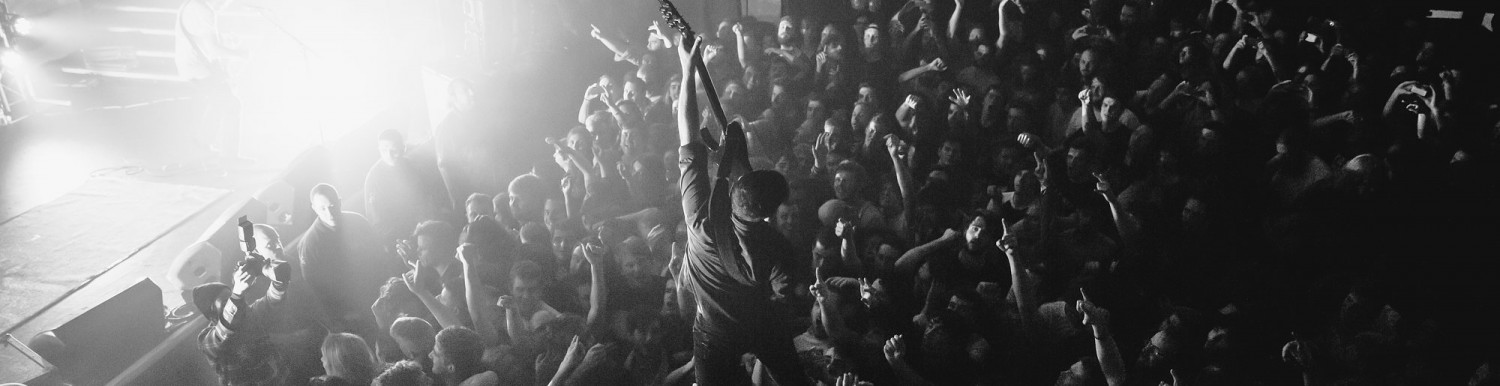
DAVE GROHL TO HEADLINE AUTISM SPEAKS’ THIRD ANNUAL BLUE JEAN BALL

AUTISM SPEAKS BLUE JEAN BALL LOGO

PRESENTED BY THE GUESS? FOUNDATION, WITH SPECIAL PERFORMANCES BY JAMES DURBIN, RICK SPRINGFIELD, RYAN BINGHAM, HONORING CHUCK SAFTLER OF FX NETWORKS

Hosted by Extra’s Maria Menounos and Actor Michael Chiklis


LOS ANGELES, CA, October 20, 2013 – Grammy® Award-winning music legend Dave Grohl

will headline Autism Speaks’ Third Annual BLUE JEAN BALL, presented by The GUESS?

Foundation, on Thursday, October 24, 2013, at Boulevard 3 in Hollywood.

Dave Grohl is the lead vocalist, guitarist, and main songwriter for the Foo Fighters, a band he

founded after being the drummer for the American grunge band Nirvana. Grohl is an eleven-

time Grammy® winner, and was Grammy®-nominated a total of 25 times. He has also taken

home an American Music Award and two MTV Music Video Awards.


Also performing will be rock artist Rick Springfield, who won a Grammy® for his No. 1 hit

“Jessie’s Girl” in 1981 and received an additional three Grammy® nominations. Oscar® and

Grammy®-winning artist Ryan Bingham will be performing as well. He recently wrote and

recorded “Until I’m One With You,” the theme-song for FX’s drama-series, The Bridge. Bingham

performed and co-wrote Crazy Heart’s (2009) award-winning theme song “The Weary Kid,”

earning him an Oscar, Grammy, Golden Globe, and Critics Choice Award, with the American

Music Association naming him “Artist of the Year.”


Also taking the stage will be American Idol finalist James Durbin, who is recognized for placing

in the top four of Season 10, while openly sharing his challenges of living with Aspergers

and Tourettes. In addition, The White Buffalo with singer/songwriter Jake Smith (Shadows,

Greys and Evil Ways) will perform. World-renowned DJ Splyce will be providing entertainment

throughout the evening.


The Third Annual BLUE JEAN BALL is honoring Chuck Saftler, President of Program Strategy

and Chief Operating Officer of FX Networks, and Autism Speaks Board of Directors’ Member.

Saftler will receive the tribute for his dedication to autism awareness. Hosting the event will be

television personality Maria Menounos (Extra) and Emmy® Award-winning Actor Michael Chiklis

(The Shield, Vegas, The Commish).


The Autism Speaks BLUE JEAN BALL is dedicated to raising awareness and funds for

innovative autism research and resources for individuals and families affected by the

disorder. Tickets, sponsorship opportunities and additional information are available at

events.autismspeaks.org/bluejeanball.


“One in 88 children is currently diagnosed with autism, and the annual cost for families living

with the disorder is an average of $60,000,” stated Matt Asner, Executive Director of Southern

California for Autism Speaks. “Now, more than ever, we need to raise awareness and assure

that research, advocacy and family service initiatives continue to be funded. What better way to

make a little noise than with a rock and roll concert?”


Past participants and honorees have included Sarah McLachlan, Toni Braxton, Paul Marciano,

photographer Rob Shanahan, Sinbad, Brooke White, Raphael Saadiq, Sarah Shahi, Beth

Reisgraph, Nikki Reed and Paul MacDonald, among others.


Autism is a general term used to describe a group of complex developmental brain disorders – autism

spectrum disorders – caused by a combination of genes and environmental influences. These disorders

are characterized, in varying degrees, by communication difficulties, social and behavioral challenges, as

well as repetitive behaviors. An estimated one in 88 children in the U.S. is on the autism spectrum – a 78

percent increase in six years that is only partly explained by improved diagnosis.


About Autism Speaks

Autism Speaks is the world’s leading autism science and advocacy organization. It is dedicated to funding

research into the causes, prevention, treatments and a cure for autism; increasing awareness of autism

spectrum disorders; and advocating for the needs of individuals with autism and their families. Autism

Speaks was founded in February 2005 by Suzanne and Bob Wright, the grandparents of a child with

autism. Mr. Wright is the former vice chairman of General Electric and chief executive officer of NBC

and NBC Universal. Since its inception, Autism Speaks has committed nearly $200 million to research

and developing innovative resources for families. Each year Walk Now for Autism Speaks events are

held in more than 100 cities across North America. On the global front, Autism Speaks has established

partnerships in more than 40 countries on five continents to foster international research, services and

awareness. To learn more about Autism Speaks, please visit http://www.AutismSpeaks.org .


Established in 1981, GUESS began as a jeans company and has since successfully grown into a global

lifestyle brand. Today, GUESS designs, markets and distributes full collections of women’s, men’s

and children’s apparel as well as accessories. Throughout the years, the GUESS image has been

portrayed in unforgettable, innovative campaigns that have made the brand a household name. GUESS

is distributed throughout the United States and Canada in fine department stores, its retail specialty and

factory stores, and domestically on its online stores. GUESS has licensees and distributors in South

America, Europe, Asia, Africa and Australia. In addition to shopping online, you can find more information

on GUESS at http://www.guess.com.
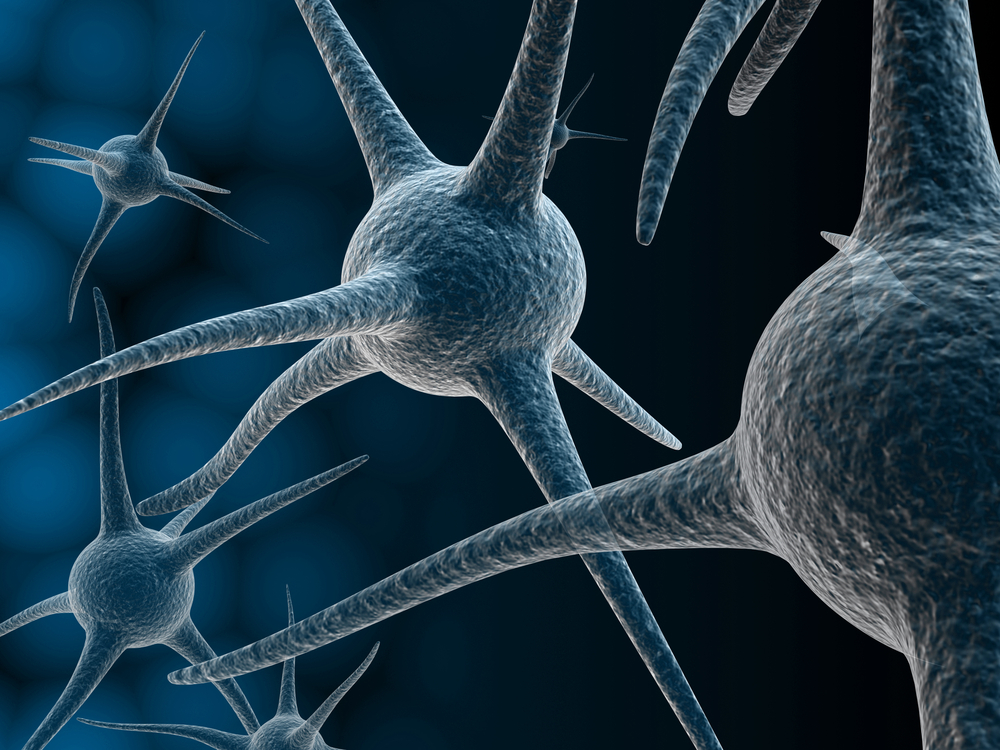
what should we do with our brain – a metaphorical critique

“The brain has always been described by means of technological metaphors.” [1]  neural pathways

One of the first handlings of this idiom occurred in Aristotle’s Rhetoric and Poetics: “Metaphor is the transference of a name from the object to which it has a natural application…” (Aristotle, Poetics, 21). More recently, individuals such as I.A. Richards, Kenneth Burke, and Max Black have made consequential advances in the field of metaphorical criticism, enabling its use to aid heavily in ornamentation and decoration, as structuring principle and discovery and description of the truth.[2]

According to Richards, all thought is metaphoric because when individuals attribute meaning, they are “simply seeing in one context an aspect similar to one [they] encountered in an earlier context.”[3] Though the work of theorists including Michael Osborn and Robert L. Ivie, we have a better understanding of how language relates us to reality, and how we as humans constitute reality through our use of symbols. When we process symbols to better understand reality, we are often using the metaphor. Phenomenological anomalies become accessible to us through the development of a physical materialism that often comes to life via symbols. When we attribute names or symbols to these phenomena, we are using the metaphor.

Along with the above, a number of others have stressed the importance of the metaphor. Nietzsche argued that it is simply the way in which we encounter the world: “A nerve-stimulus, first transformed into percept! First metaphor! The percept again copied into a sound! Second metaphor! And each time he leaps completely out of one sphere right into the midst of an entirely different one.”[4] In these viewpoints, metaphor occurs prior to and generates the discovery of ideas.

Foss explains a great example of this usage in Rhetorical Criticism: Exploration and Practice via the metaphor that “time is money.” By using terminology such as “I’ve invested a lot of time in someone,” “You need to budget your time” and “this gadget will save you time” we begin to equate time through a financial viewpoint; it now shares its level of worth with money. In metaphoric criticism, Max Black has developed an influential method known as interaction theory which juxtaposes two terms in the metaphor generally regarded to belong to two differing classes of experience. The first term is called the tenor, principal subject, or focus, while the second term is called the vehicle, secondary subject, or frame. For example, “The brain is a machine” is a metaphor for which brain is the tenor, and machine is the frame. The process from there then is to discriminate what traits are commonplace by the tenor and vehicle, and form a type of discerning argument. As the associated characteristics of the tenor and vehicle interact, some are accentuated while others are contained. As one goes through this progression of deconstructing tenor and vehicle of the metaphor, it becomes apparent that the metaphor serves an argumentative purpose: metaphor constitutes argument.[5]

To choose a common metaphor and artifact to further describe this process, the human brain has been the target of metaphoric assignments for quite some time: mirror, projector, computer, economy. (Tabbi, 1998) Others have termed the brain central telephone exchange, machine, and even government. While some illustrations appear more accurate than others, there are those who feel as a society that we’ve sorely missed the mark. In Catherine Malabou’s innovative work What Should We Do with Our Brain? (2008) she issues the challenge of deconstructing what we’ve always thought of our brains, and bestows an even greater one: what should we use it for?

Malabou begins the work by repetitiously stating “Our brain is plastic, and we do not know it.” The concept of consciousness is paramount to her: she not only calls attention to the many cities at work neurologically, but the fact that we do not know it. From “know thyself” forward, awareness has been the crux of academic and technological progress. Malabou’s critique of our neuronal dogma is an attempt not only to break away from the ideological presuppositions the field of neuroscience currently includes, but a call to become conscious of them-and of ourselves.

The first method of metaphoric criticism we may employ includes simply dissecting the metaphor. How does it function? In which way is Malabou trying to shake the current opinion of its role? Previously (as mentioned above) common symbols used for the brain include computer, central telephone exchange and machine. However, with Malabou’s concept of plasticity, the rigidity of these allegories will no longer suffice. Machines, computers and central telephone exchanges have a control center; an unyielding and stiff method of prescribing action and processing information. Plasticity is rigidity’s direct anonym, and as we have seen that metaphor not only tells a story but constitutes an argument, new metaphors must come into play. Our brains are no longer known to be entirely genetically determined, static or even simply flexible. “Plasticity, in effect, is not flexibility. Let us not forget that plasticity is a mechanism for adapting, while flexibility is a mechanism for submitting.”[6]  We must ascertain a new meaning, and this is Malabou’s challenge. She must use a metaphoric criticism to tear down the current views and instill the new.

We have now seen how the tenor and vehicle of “brain as machine” will no longer suffice. Let’s take a look at what Malabou uses as alternative: brain as plastic. Taken from the Greek plassein, to mold, plasticity has two basic definitions: one is to receive form, and one is to give form. “Plasticity in the nervous system means an alteration in structure or function brought about by development, experience or injury.”[7]Instead of mindlessly accumulating new metaphors for our brain, Malabou relies on the fact that we are the minds who make the metaphors, and sets out to explain just why the old metaphoric arguments won’t work. She offers perspective and a choice to the audience, just as Foss speaks of in Rhetorical Criticism, “If the audience finds the associated characteristics acceptable and sees the appropriateness of linking the two systems of characteristics, the audience accepts the argument.” In the context of modern day capitalism, Malabou creates a fantastic charge and call to consciousness, taking aide from European metaphysics, political engagement and neuroscience. By changing the terms (linguistically, semantically and literally) of the game, Malabou effectively provides a metaphoric critique to the prevailing comprehension of the function of the human brain.

In conclusion, a metaphoric criticism is best employed here simply because it is what the author employs herself. As Foss further states in Rhetorical Criticism, “Whatever metaphor is used to label and experience a phenomenon, then, suggests evaluations of it and appropriate behavior in response.” The old metaphors used suggest a worldview of a time passed, before the age of functional and real-time neurological imaging. The new formation of the model of our brain must be in line with the modern self: dynamic, transforming and revolutionary. We can no longer think of our brains, our neuronal selves, as but flexible and anonymous; as machine. We must affirm our capacity for change and confess our plasticity: evolutionary, adaptive, explosive. We must no longer consent to depression via disaffiliation; to be “blind to our own cinema.” Our brains tell us a story-whether we choose to listen or not. Karl Marx once stated “Humans make their own history, but they do not know that they make it.” As Malabou so eloquently proves throughout her work that a simple metaphor does not suffice and thus hinders a proper understanding for the plastic brain, she relies on concepts such as ecological, self-creating and emancipatory instead. Plasticity cannot be domesticated. The brain is ever-changing; so then must our conception of it be also.

“…At bottom, neuronal man has not known how to speak of himself. It is time to free his speech.”

-Catherine Malabou


[1] (Jeannerod, 2004).

[2] Foss, Sonja K. Rhetorical Criticism: Exploration and Practice, 2nd Ed. Prospect Heights: Waveland Press, 1996., p. 359

[3] Ibid, p. 359

[4] Friedrich Nietzsche, “On Truth and Falsity in their Ultramoral Sense,” in The Complete Works of Friedrich Nietzsche, ed. Oscar Levy, trans. Maximilian A. Mugge, II. New York: Macmillan, 1911., p. 178

[5] Foss, Sonja K. Rhetorical Criticism: Exploration and Practice, 2nd Ed. Prospect Heights: Waveland Press, 1996., p. 361

[6] Marc Jeannerod, 2004.

[7] See the entry “Plasticity in the Nervous System,” in The Oxford Companion to the Mind, ed. Richard L. Gregory (Oxford: Oxford University Press, 1987), 623.

Plans Within Plans – Sonic Youth, The Cure, and The San Diego Music Thing

_DSC1370Last weekend, I had the immense privilege of being invited to cover the San Diego Music Thing. Bringing together a host of noteworthy music industry professionals and accomplished songwriter veterans, SDMT was a major success. Joined by photographer James Gutierrez, I have experienced one of the coveted moments as a journalist when you realize how very fortunate you are.

The first day was composed of panels including “Music Industry 101,” “Shout It Out: PR & Promoting Your Music,” and “Secrets of Synchronization.” The latter and largest panel included speakers Brett Andersen of The Donnas, as well as various industry vets including Jeff Gray and John Anderson of Hunnypot Unlimited. Hunnypot has established itself as a leading independent music publishing/placement company representing the catalogues of Far East Movement, The Robotanists, Das Tapes, Peachcake, Teenage Bottlerocket, Bonhom, Seven Saturdays and more. The panel explained, in explicit detail, why it’s no longer taboo or “selling out” for bands to seek synchronizations.

Kim Gordon gave the keynote that afternoon, beginning with a storm of prose and wrapping with her sardonic and witty (and obviously obligatory) Q&A. Full coverage of Day One can be found here_DSC1281 (2)

Day Two of the SDMT began on the more responsible side of things. With panels like “Lawyers, Guns and Money” and Every Artist Insured, Finding Affordable Healthcare under Covered California,” aspiring and working musicians could ask advice of top experts in the field on issues of copyright, trademark and medical insurance.

Followed by the “Producers Roundtable,” “Website Demolition Derby” and panel entitled “Bands and Brands,” the conference shifted to some heavy-hitting PR. With the theme notably focusing on cross-marketing and collaboration, more than ever it seems musicians are being asked to take on roles they could never have imaged twenty years ago.

With the afternoon providing a honest and intimate talk with The Cure’s Lol Tolhurst, a very apparent thesis became a constant throughout the conference. Mike Herrera (MxPx, Tumbledown) spoke last, and proved no different. Success, failure and plans within plans proved the premise of the weekend, and each artist lent to this subject matter in their own unique and brilliant way. Check out full coverage of day two.

Talking with Mike HerreraIn summary, aspiring musicians were able to take away some very valuable and pragmatic ideals for action. In the closing talk, Herrera states the following:

“Maybe you didn’t start out executing exactly what you thought you would, and arrive at the conclusion you thought you would, but you’re always going to end up somewhere, and you need to make that your success. You can’t always dictate where life takes you. You can’t plan everything. So Plans Within Plans being my idea…the big plan shouldn’t change too often, but the little plans change every day; constantly. It’s a matter of tackling each thing, and making it happen. Defining success for yourself is so important because you can’t say that what’s good for you is good for everybody. You’ve just got to define for you what it is you’re looking for, what it is you’re going for, and that’s what you work on. How you get there is the most important thing. It’s not where you are; it’s how you’re getting there, and it’s where you’re going.”

Check out my final post and comprehensive highlights here.

Photo credit: James A. W. Gutierrez

City of San Diego Prepares To Launch “Not on My Watch” Campaign

Colleges and Universities Say “Not on My Watch!”

Academic institutions band together in support of the “Not on My Watch” Campaign to prevent deaths by suicide among college students

Suicide Prevention Week will take place from September 8 – 14, 2013 in San Diego County.

The Suicide Prevention Council, convened by Community Health Improvement Partners (CHIP) and participants in its Higher Education Subcommittee have come together to host a myriad of the education, awareness and prevention activities at area colleges and universities in order to reduce suicide among student populations.

The Suicide Prevention Resource Center specifies that there are an estimated 1,100 students affiliated with colleges and universities across the country that die by suicide each year (http://www.sprc.org/collegesanduniversities/campus-data), and participating colleges’ and universities locally like the University of California at San Diego, the University of San Diego, San Diego State University, San Diego City College, Mira Costa College, California State University at San Marcos and Grossmont College want to send this prevention-campaign message to their respective student populations so that they are aware that there are quality resources available to students experiencing mental health problems associated with suicide.

On September 6th, County Supervisor Ron Roberts and Health and Human Services Agency Director Nick Macchione will kick-off Suicide Prevention Week at a “Not on My Watch” event at San Diego State University. While a variety of activities will take place over a one-week period, the San Diego County Suicide Prevention Council would like to highlight a series of events occurring Tuesday, September 10, 2013.  Activities occurring on Tuesday among participating college campuses/universities will range from noon-time table events/leaf-letting activities to special education workshops and/ community health resources fairs. At these activities they will be passing out ‘Not On My Watch’ kits that consist of wristband with the slogan on one side and the Access and Crisis Line on the other and additional resources, these kits were first created and used by Community Research Foundation and this year we are joining them to say ‘Not On My Watch.’  The September 10th events and activities for all six campuses are as follows:

 UCSD –Suicide Prevention Gatekeeper Training in colleges Sixth from 10:30am-12:00pmMuir from 3:00pm-4:30pm University of San Diego- Involvement Fair- Alcala Bazaar in Torero Way (on campus) featuring a Suicide Prevention information table from 11:30am-2:30pm San Diego State University-Suicide Prevention ‘Not On My Watch’ Suicide  Prevention information table from 11:00am-1:30pm  
San Diego City College-Suicide Prevention Fair and Depression Screenings from 11:00am-1:00pm Mira Costa College- Not On My Watch Suicide Prevention Tabling in the Quad during College Hour from 12:00pm-1:15pm California State University San Marcos-“A Light in the Darkness” Day from 11:00am-1:00pm with a panel from 6:00pm-8:00pm
Grossmont College-Hosting a Wellness table with a focus on Suicide Prevention from 11:00am-1:00pm

Mental health problems that are associated with suicide and other adverse outcomes affect a substantial portion of college students.  These problems can negatively affect students’ academic performance and quality of life.  To build momentum for prevention efforts, campuses should start examining current research on campus suicide and mental health problems, and the associated consequences.

About the San Diego County Suicide Prevention Council:

Beginning in 1999, Community Health Improvement Partners (CHIP) facilitated the local Suicide Prevention Work Team. The Work Team disbanded in 2009 and in April 2010, CHIP contracted with the County of San Diego Health and Human Services Agency to facilitate a Suicide Prevention Action Plan Committee (SPAPC). The purpose of the SPAPC was to develop a Suicide Prevention Action Plan (SPAP) for San Diego County.  After the development of the SPAP in 2011, a Suicide Prevention Council (SPC) was formed to guide the implementation of the SPAP and ongoing efforts for stigma-reduction associated with mental health challenges.  CHIP facilitates monthly SPC meetings as well as related sub-committee meetings.


World Suicide Prevention Day 2013 – How You Can Help


world-suicide-prevention-day-banner


WHAT YOU CAN DO TO SUPPORT WORLD SUICIDE PREVENTION DAY

WORLD SUICIDE PREVENTION DAY, September 10th, is an opportunity for all sectors of the community – the public, charitable organizations, communities, researchers, clinicians, practitioners, politicians and policy makers, volunteers, those bereaved by suicide, other interested groups and individuals – to join with the International Association for Suicide Prevention (IASP) and the World Health Organization (WHO) to focus public attention on the unacceptable burden and costs of suicidal behaviours with diverse activities to promote understanding about suicide and highlight effective prevention activities.

Those activities may call attention to the global burden of suicidal behaviour, and discuss local, regional and national strategies for suicide prevention, highlighting cultural initiatives and emphasising how specific prevention initiatives are shaped to address local cultural conditions.

Initiatives which actively educate and involve people are likely to be most effective in helping people learn new information about suicide and suicide prevention. Examples of activities which can support World Suicide Prevention Day include:

• Launching new initiatives, policies and strategies on World Suicide Prevention Day
• Learning about stigma, mental health and suicide prevention (http://goo.gl/rKr8G)
• Holding conferences, open days, educational seminars or public lectures and panels
• Using the WSPD Press Preparation Package that offers media guides (http://goo.gl/zLA3Sm)
• Writing articles for national, regional and community newspapers and magazines
• Holding press conferences
• Placing information on your website and using the IASP World Suicide Prevention Day banner, promoting suicide prevention
in one’s native tongue (www.iasp.info/wspd/2013_wspd_banner.php)
• Securing interviews and speaking spots on radio and television
• Organizing memorial services, events, candlelight ceremonies or walks to remember those who have died by suicide
• Asking national politicians with responsibility for health, public health, mental health or suicide prevention to make relevant
announcements, release policies or make supportive statements or press releases on WSPD
• Holding depression awareness events in public places and offering screening for depression
• Organizing cultural or spiritual events, fairs or exhibitions
• Organizing walks to political or public places to highlight suicide prevention
• Holding book launches, or launches for new booklets, guides or pamphlets
• Distributing leaflets, posters and other written information
• Organizing concerts, BBQs, breakfasts, luncheons, contests, fairs in public places
• Writing editorials for scientific, medical, education, nursing, law and other relevant journals
• Disseminating research findings
• Producing press releases for new research papers
• Holding training courses in suicide and depression awareness
• Using and sharing the Toolkit that contains WSPD resources and links to related Web sites (http://goo.gl/pWWo1r)

• Becoming a Facebook Fan of the IASP (www.facebook.com/IASPinfo)

• Showing your support for the Day on the Official World Suicide Prevention Day Event page on Facebook (www.facebook.
com/events/415169808532653/ by clicking “Attending”
• Following the IASP on Twitter (www.twitter.com/IASPinfo), tweeting #WSPD or #suicide or #suicideprevention
• Creating a video about suicide prevention (www.youtube.com/IASPinfo)
• Lighting a candle, near a window, at 8 PM in support of: World Suicide Prevention Day, suicide prevention awareness,
survivors of suicide and for the memory of loved lost ones. Find “Light a Candle Near a Window at 8 PM” postcards in over
40 languages at: http://www.iasp.info/wspd/light_a_candle_on_wspd_at_8PM.php
• Participating in the first World Suicide Prevention Day – Cycle Around the Globe (http://www.iasp.info/wspd/cycle_around_
the_globe.php)

If anyone in the greater Los Angeles area is interesting in organizing or attending an event or vigil, please do not hesitate to get in touch.


The State of Music Psychology

The State of Music Psychology

By Diana C. Hereld | @pathwaysinmusic

The psychological conversation surrounding music has boomed.

In a few short years, the studies of music therapy and the applied neuroscience of music have hugely invaded the mainstream — the question is, why? As many publications have noted, the initiative that music may be used in rehabilitation has been around for a century or more. What then has catalyzed the influx of media coverage in the last few years? One reason may simply be that as the success of these techniques become popularized via persons in the public eye, many of us are beginning to understand that music may be used for far more than we had ever imagined.

During the 2nd World Congress of Clinical Neuromusicology in Vienna last November, research was presented by Dr. Gottfried Schlaug (Harvard Medical School), who had performed an experiment to test the shared neural correlation of singing and speech. It was found that by actually singing the words or phrase, and not simply speaking or humming (referred to as ‘intoned speaking’), there occurred additional right lateralized activation of the superior temporal gyrus, inferior central operculum, and inferior frontal gyrus. What this means for the rest of us?  This activation is now more than ever believed to be reason that while patients suffering from aphasia due to stroke or other varying brain damage may be unable to speak, they are able to sing.

It was less than a year ago that NPR released the news story on the effectiveness and use of singing therapy on stroke patients. You may recall the Gabrielle Giffords story with regard to her suffering major brain trauma and later a surprising recovery. This story immediately caught my attention as this was precisely the groundbreaking research Dr. Schlaug presented at the conference in Vienna (originally tested and performed on nonverbal autistic children). It is through the sharing of success stories such as this via the media that the infusion of music, psychology, and neuroscience are coming to light.

Medical resilience, however, is only one facet of this field. In addition to all of the rehabilitative functions music is being found to support, there exist many others. For the music industry, it may prove profitable to look toward music psychology as a potential market sector. Companies such as Prescriptive Music develop “branded-music” programming which they believe can increase sales.

Marketing through music is a relatively new advertising theme. That being said, experts in neuroscience and emotion studies are being called upon more and more as sales consultants in a variety of venues including hotels, restaurants, and major retailers. Previous studies have shown increases in sales in resultants when the right music is carefully selected; one test conducted by marketing professor Ronald E. Milliman exhibited an 11.6% sales increase when up-tempo music was played during the lunch hour.

What does this mean for the music industry? Is it possible that via the study of our decision making, analysts will be able to discern the types of music that affect consumer behavior in a wide variety of markets? Diana Hereld for Sidewinder.fm has asked Dr. Victoria Williamson, a music psychology lecturer and course co-director on the “Music, Mind, and Brain” program at Goldsmiths, University of London, for her take on these questions.

* * *

Fifty years ago, people might appear at a loss if you mentioned “music psychology,” or simply the act of synthesizing music and neuroscience, or music and psychology. What exactly is this field, and how has it become a mainstream topic in recent years?

Dr. Victoria Williamson: People are still often a little lost when you mention music and psychology/neuroscience together although it is of course more well-known now than it was fifty years ago. I come from a psychological interest and I wrote an article called “Thank You for the Music” a few years ago that outlined the kind of things that are studied in this field and why. Essentially, music is a universal human activity whether we chose to play or to listen. Therefore, as a psychologist, music is my chosen tool for learning more about the human mind and behavior. Studying the way we perceive, process, generate, and respond to music can therefore tell us something unique about what it means to be human.

What are some of the field’s most impacting accomplishments?

Dr. Victoria Williamson: Tricky one. I like to think that using music in psychological paradigms has taught us a great deal about how we learn both as babies and adults, how our memories work (or don’t work sometimes!) and how our emotions can impact on cognition. Using music in brain imaging has revealed a lot about the activity of the mind both when we are listening to sounds and when we are simply thinking about them. And there are a number of cases, such as with autism, where studying music psychology has given us new insights into different people’s worlds. The new horizon for music psychology, which is just beginning to be touched upon, is the power of music to help us deal with both everyday and extraordinary life situations.

Along with all of the neurological and therapeutic implications of the field, knowledge is become wider spread of the power of music to influence the minds and behavior of consumers. These behaviors can obviously affect their purchasing decisions, inside and outside of the music industry. Who is driving this research? Is there market incentive from large corporations?

Dr. Victoria Williamson: I can only answer for the UK, but this is actually a relatively small field of research with few published papers. It is hard to do genuine consumer research because it requires long-term and effective collaboration between academia and industry, which can be tricky to manage from both sides. The situation may change in the future but in most cases commercial interests are happy to learn from the music psychology that has been conducted in more controlled conditions and extrapolate the findings to their own environments.

One important point I want to make here is that when you talk about the influence of music it should be clear that there is no evidence that I know of that music can make people want to do something they do not want to do. Music has a subtle influence that works in combination with all the other factors in the environment. It is no magic bullet.

As a leading researcher in the field, what are some of the long-term goals this field hopes to accomplish? Do you think music psychology has the potential to become a major sector in the music industry?

Dr. Victoria Williamson: My long term aim is to learn more about the human mind and behavior by studying how we interact with music. From this level of understanding will come the tools for improved communication, wellbeing, and happiness. I think the music industry could learn a lot from interacting with music psychologists and of course vice versa. Most music psychologists (including me) know very little about the process by which music is produced as a commercial product and it would be really interesting to know more about how decisions are made, artists are chosen, and end products compiled. I think the potential is there for many exciting collaborations that will reveal more about how and why we are such a musical animal.

(Photo Credit: Flickr)

Diana Hereld (@christypaffgen) is a Los Angeles based singer-songwriter and music psychology/neuroscience researcher. She blogs at As The Spirit Wanes The Form Appears.

All That Jazz

As I’ve recently scored some jazz gigs and representation in Los Angeles, here’s a couple of tunes I’ve been rehearsing for my first gig this Wednesday:


In case you’d like to keep up with what I’m working on, you can follow my ‘artist page’ here.

Cheers


calling moon and moon, shoot the big bad hand

Moon and Moon (Bat for Lashes cover)

played/sung by myself


I’m not sure why it’s taken me 27 years to learn this, but there exists an incomparable chasm between the act of losing someone forever due to natural causes, and the forced question of letting another go. There is nothing more painful than the unresolve.

Request For Feedback – When Tragedy Strikes: A Music Behavioral Analysis

Dear friends,

Thus far, my research interests have lain in the children I’ve tested and taught in person, and I have had little use for gathering data from anyone over the age of 18. As I craft together my first pitch, however, I’d like to ask for some feedback. I’ve been given the opportunity to write about two subjects I find very fascinating. In fact, I believe anyone else has yet to combine them in quite this way. I’m attempting to piece together the music industry and psychological resilience. In the end, it all boils down to music behavior analysis. In this vein, I find myself happily at home. When venturing toward the music industry and modern practice, however, I’m treading on new ground.

 So I ask you, dear reader, if you have ever gone through a period of immense stress (i.e. one’s senior year of college or an audit at work), lost a loved one due to natural or unnatural causes, or experienced a major trial of any kind, to lend me your feedback. If you have ever streamed music using Spotify, Grooveshark, Songza, 8track, LastFM (etc.), or elected not to, I ask for your feedback. 


It’s been a few weeks since I really sat down on meditated on these concepts. This weekend, however, tragedy struck. A friend of mine lost his father, and I lost someone very dear to me. I suppose now is as good a time as ever, then, to write about loss, and how we respond to it.

I am interested in the way we respond to trauma/loss through the psychological lenses of music behavior with a special emphasis on playback. Because the debate of ownership vs. streaming is relatively new, there is precious little data available in the area I’m seeking. In terms of loss, this natural phenomenon has always existed. As for the modes and vices with which we counter this loss, our outlets would seem to expand on a daily basis. We grow at the speed of modern technology.

How has the ability to stream music affected stress/pain culture in the industry? Has it been altered in the least in terms of our music listening habits (ownership vs. access)? Is streaming saved for the young in age and young at heart, those without the worries of time and weather? In occasions of strife, do we turn to a new and fresh outlet which resigns our need and right of control? Or in a subconscious search for the regulation of external chaos do we flee from such an idea, clinging heavily to those old safe tunes proven time and time again to get us through?


I would appreciate any and all feedback in the aid of my essay. You may leave a comment, or if you wish to reach me privately, you may contact me on Facebook.