Rest In Peace, Benjamin Curtis.

IMG_1586A couple years ago, a friend took me to see one of my all time favorite bands, Silversun Pickups. Living in LA, I had seen the band around, but never seen them play live. I was making music with my friend at the time, and he joked that any bandmate of his should get to see SSPU live at least once. That show was musical magic for me, but for more than just meeting the band after. 

That night, School of Seven Bells opened. I’d never seen them, or even heard any of their music. I was simply patiently waiting to hear Future Foe Scenarios or the like later on. However, School of Seven Bells began, and I was immediately mesmerized. I left my friends, and went awkwardly closer. As I watched them perform, I had one of those feelings I experience only every couple of years or so- the feeling of being completely intoxicated by musical and visual movement. I later learned the song I had seen and heard was called “Scavenger.”

If you know me or have been around me in the past couple of years, you know this song, whether you realize it or not. You know it, because you have heard it in my car, on a mix I made you, or in my apartment at a party. You know it because I have listened to it at least a thousand times, in a literal sense. My favorite song in 2013 was Where Do My Bluebird Fly by The Tallest Man On Earth. My favorite of 2012 was Scavenger, and I can’t stop listening to it. I have never tired of this beautiful, driving rhythm. I need not say anything of these dark, brutally honest lyrics, because they speak for themselves. They have jaggedly carried me in solidarity through more frustration and turmoil than I can convey. And I am a better person for it.

A mutual friend who also attended the SSPU concert alerted me earlier this year that they were on hiatus because Benjamin had fallen ill. LA Weekly explains that in February, School of Seven Bells announced Curtis’ cancer diagnosis, and artists including Devendra Banhart, and members of the Strokes and Interpol participated in fundraising efforts for his treatment. In October, bands including Silversun Pickups, M83, Cocteau Twins and Blonde Redhead wrote messages of support for Benjamin during his treatment.

I never met Benjamin. Even though I grew up in the Fort Worth/Dallas music scene, and was also an avid fan of Secret Machines, I knew nothing about him. What I do know is what it feels like to lose someone to cancer. He was far too young, and I humbly share that my heart breaks for so many others in learning this shattering news.

I know I am not alone when I say that it seems that every time I turn around this year, there is a death of a loved one. A devastation and losing of something that cannot be replaced. As we ring in another year, God help us take nothing for granted. May we love one another, support one another, and be there for one another. There’s no time not to.

I gave you the tide You didn’t stay You didn’t want it You let the day slide Into a drain Until you lost it You took me like a drug To make you feel loved To make you feel wanted To make you feel fire To make you feel like I made you feel something ‘Cause you can feel nothing I know what you are And you’re a fake You’re a scavenger Too scared to take part You only take ‘Cause you’re a coward On your own, You have no love On your own, You’re not enough You took me like a drug To make you feel loved To make you feel wanted To make you feel fire To make you feel like I made you feel something
Ground-breaking study shows music capable of evoking memories in patients with acquired brain injuries

Music has long been shown to aid in the recollection of autobiographical memories in the general population. In recent years, it’s also been proven beneficial to those with Alzheimer’s, or those who have suffered a stroke. However, a recent study proves this process valuable for patients with acquired brain injuries (ABIs). This study is the very first of its kind to examine the possibility of triggering music-evoked autobiographical memories (MEAMs) in patients of this nature.

In the recent issue of Neuropsychological Rehabilitation, Amee Baird and Séverine Samson explain how they have used popular music to help patients with severe brain injuries recall personal memories. The study began with playing extracts from “Billboard Hot 100” number-one songs in random order to five patients taken from the entirety of the patient’s lifespan (commencing age five). These songs were also played to five control participants with no brain injuries. Following the procedure, all subjects were ask to record their familiarity with the given songs, whether or not they was pleasing to hear, and what memories they evoked. The following findings were provided by the Taylor & Francis group:

Doctors Baird and Samson found that the frequency of recorded MEAMs was similar for patients (38%–71%) and controls (48%–71%). Only one of the four ABI patients recorded no MEAMs. In fact, the highest number of MEAMs in the whole group was recorded by one of the ABI patients. In all those studied, the majority of MEAMs were of a person, people or a life period and were typically positive. Songs that evoked a memory were noted as more familiar and more liked than those that did not.

As a potential tool for helping patients regain their memories, Baird and Samson conclude that: “Music was more efficient at evoking autobiographical memories than verbal prompts of the Autobiographical Memory Interview (AMI) across each life period, with a higher percentage of MEAMs for each life period compared with AMI scores.”

The full study may be found here.

The implications of these findings, in terms of neurological rehabilitation through music, memory, and emotion, are simply enormous. I look very forward to learning more of what the inimitable effects of music may have for those whose hope relies in neurological and psychological resilience.

Essential Limitations in current Neurochemical Studies of Music

Essential Limitations in current Neurochemical Studies of Music

by James A. W. Gutierrez, Azusa Pacific University, college of music and art, adjunct prof.

In April, 2013, Mona Lisa Chanda and Daniel Levitin published “The Neurochemistry of Music”, which presents “peer-reviewed scientific evidence” supporting claims that musical influences may correspond directly with neurochemical changes, specifically correlating “musical reward” with dopamine/opioids, stress relief with cortisol, and musical “social bonding” with oxytocin/vasopressin. Ideally, the music-as-medicine pursuit is pure in its intent toward the relief of human suffering, be it behavioral/emotional//physical/social, through a more natural medium than, say, pychosomatic drugs. However, such a strong quantification of music, and generalization of musical elements, invokes the familiar pharmaceutical path where an ambitious medical community responds to a irreducibly complex system of sociobehavioral situations with a grossly oversimplified, pill-sized answer. While there are certainly clinical uses for music, the first mistake a clinician could make, and hence the primary abuse of both music and a patient, would be to attempt to incarnate, confine to physical flesh, the essentially abstract expressive form that is music.

Such extreme reductions in musical semiotics are prevalent throughout current experimentation involving dopamine and opioids. Levitin reports: “Pleasant (consonant) and unpleasant (dissonant) music were contrasted, and the results conformed activation of the ventral striatum during pleasurable music listening.”[2] In tests examining the effect of music on the stress hormone cortisol Levitin reports: “Relaxing music mimics soothing natural sounds such as maternal vocalizations, purring and cooing (soft, low-pitched sounds with a gradual amplitude envelope), which decrease sympathetic arousal.”[3] When observing levels of polypeptides serum oxytocin and vasopressin (currently thought to regulate social behavior) Levitin reports: “a single 30-minute voice lesson was associated with an increase in serum oxytocin levels relative to a pre-lesson baseline in both professional and amateur singers” and “open-heart surgery patients who listened passively to experimenter-selected soothing music for 30 minutes one day after surgery has higher levels of serum oxytocin compared to bed-rest alone.” [4]

The systematic placement of music in such generalized categories as consonant=pleasure/dissonant=stress, “relaxing” music, etc., with the expectation of uniform results only demonstrates the assumption on the part of the experimenter that music, as represented by a particular style/tempo/dynamic range/etc., should behave as a static unit even in the testing of a broad diversity of listeners. Not only does this ignore the music biases of the experimenter, the testing environment all but extinguishes the affective contexts in which real music listening would be experienced. Could not a familiar yet up-tempo progressive rock song be “relaxing”? Perhaps the oxytocin levels post-singing lesson involved factors such as familiarity, personal connection/association, successful performance in front of an intimidating tester, or perhaps it could just maybe have been the lyrics of the song? Could not “dissonant” music be “pleasurable”? It is precisely the paradoxical nature of musical pleasure that makes musical expression unique, and problematizes this whole method of research. As Oscar Wilde observes- “After playing Chopin, I feel as if I had been weeping over sins that I had never committed, and mourning over tragedies that were not my own.”[5] Would this response be observable in his dopamine/opioid levels?

It could be objected that it is merely seeing music in the context of scientific scrutiny that makes a musician uncomfortable, a kind of ‘we don’t belong here’ awkwardness. Could it be that I am simply afraid that music may be demystified if subjected to an empirical testing environment? Absolutely not. Even the previously stated testing is not completely void of value. The last ten years of testing the brain in all subjects surrounding music have yielded a trove of useful information. Laboratory mice have been included in the research: “Two species of ‘singing mice’ which display an unusually complex vocal repertoire exhibit high oxytocin receptor binding within regions related to social memory. Injection of oxytocin increased vocalization levels while oxytocin receptor infant knockout mice engage in fewer vocalization and show marked social deficits and higher stress levels.” [6] These findings at least establish the biological basis for a social component in music, and maybe even supports the notion that music plays an important role in creating social bonds.

Neuroscientists essentially portend to deal with ‘universal’ structures, by nature of their scope. The more they universalize musical elements, the less they are observing actual music, and they run the risk of trivialization all ‘findings’ therein. The ideal of music-based treatments is that they are noninvasive, have minimal or no side-effects, are inexpensive, convenient, and are completely ‘natural’. While the merit of this endeavor cannot be denied, let researchers admit that this reverse-engineering is in its fetal stages of development, where I contend it will remain until a more advanced treatment of musical elements can be introduced into testing. While it is delusional to attempt to incarnate an abstraction, to acknowledge an enigma and conduct research while remaining subject to it can be a step toward real understanding.


[1] Subotnik, Developing Variations: Style and Ideology in Western Music., Univ. of Minnesota Press, 1991, pg. 199

[2] Mona Lisa Chanda and Daniel J. Levitin, The Neurochemistry of Music, Trends in Cognitive Sciences, April 2013, Vol. 17, No.4, pg. 181

[3] Ibid. pg 186

[4] Ibid. pg 199

[5] Oscar Wilde, 1891

[6] Ibid. pg 188

autism speaks through music: dave grohl reaches out

By Diana Hereld | @pathwaysinmusic

IMG_2487

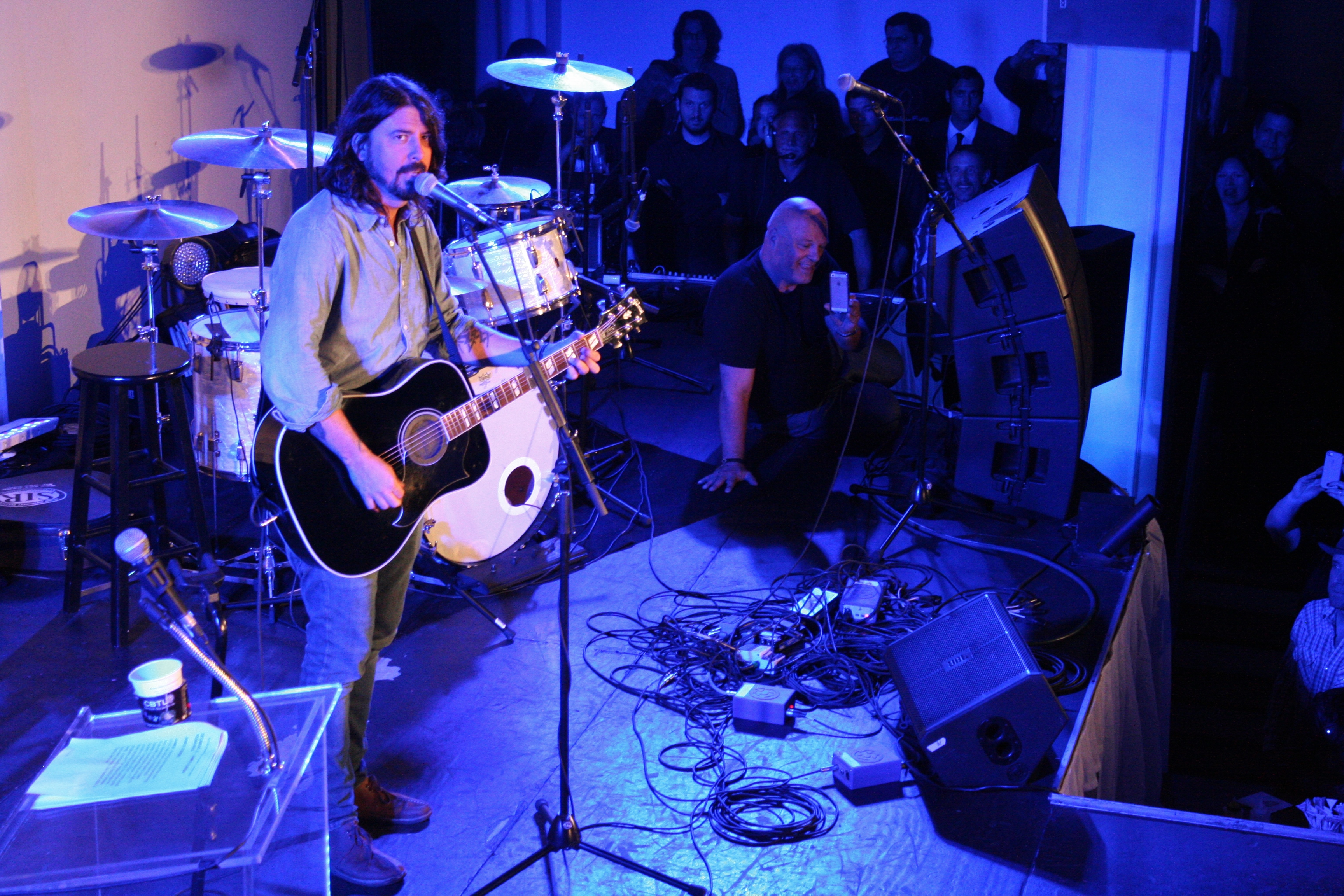
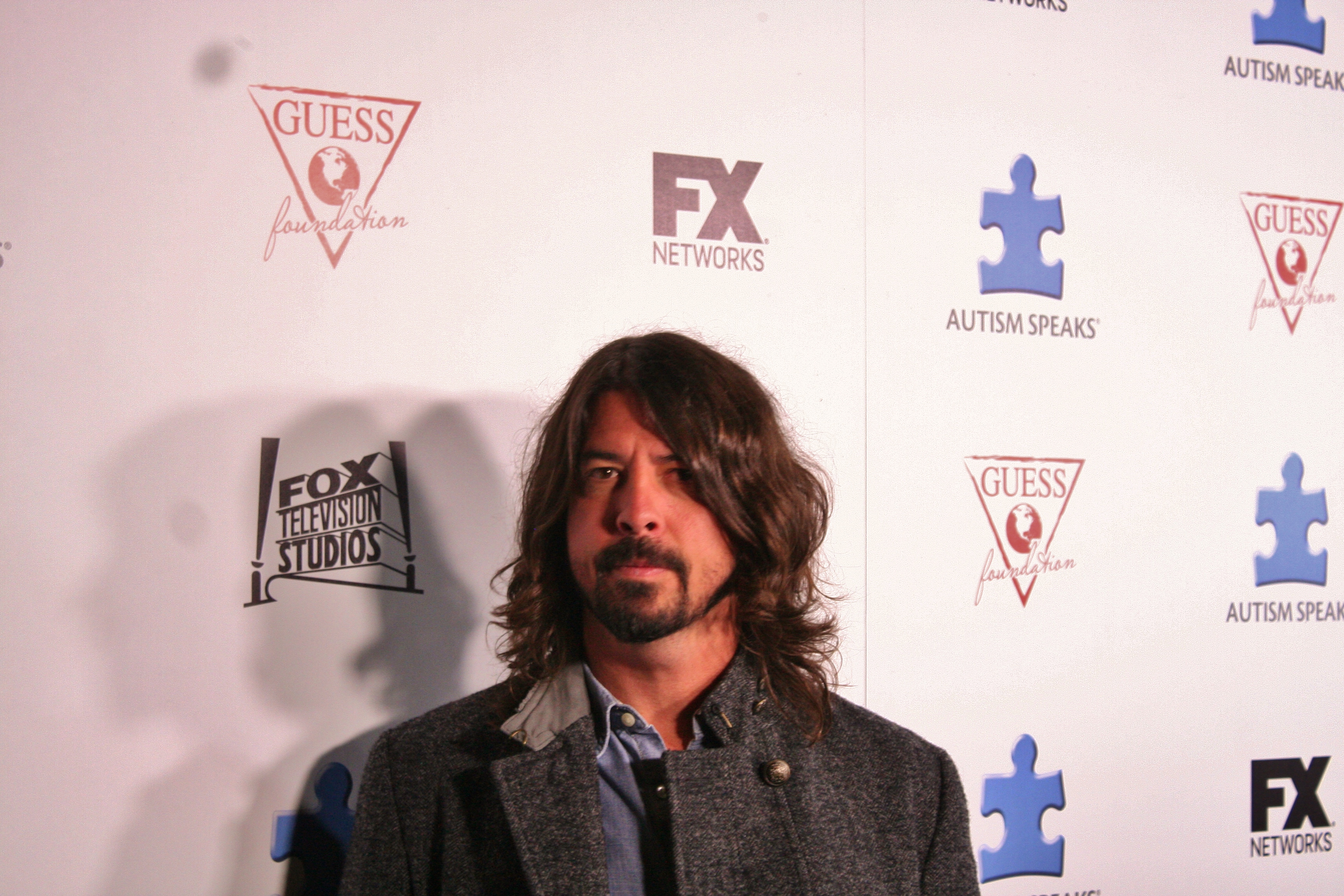
On Thursday, Autism Speaks held their Third Annual Blue Jean Ball at Boulevard3 in Hollywood. The evening began with a star-studded blue carpet, including appearances from Joshua Jackson, Diane Kruger, J.K. Simons and Dave Grohl. Hosted by TV personality Maria Menounos (Extra) and Michael Chiklis (The Shield), the ball included musical performances by Rick Springfield, Ryan Bingham and Dave Grohl, a live auction and the honoring of Chuck Saftler (FX Networks) for his dedication and work in the field of autism awareness, and testimony of Saftler’s son’s personal journey as a child on the autism spectrum.

IMG_2449

IMG_2554

Only a decade ago, the diagnostic percentage of ASD (Autism Spectrum Disorder) was 1 in 10,000. By 2013, this figure leapt to 1 in 88. While the cause of this alarming growth, treatment and a cure for autism continue to be a heavily debated and controversial issue, the fact remains that the disorder is growing, and attention to this circumstance is no longer optional.

During the event, a few attendees on the spectrum were graced with a photo op with Dave Grohl. One such young man, Andrew Hain, 21, had much to say on why Autism Speaks is a great organization deserving of celebrity endorsement and attention.

“It’s amazing – they do amazing things. Autism Speaks’ main focus is on four things: research, advocacy, family services and awareness. Advocacy can come in the form of insurance reform, where the government can chip in. Research can be raising money for genetic exploration, and awareness…people need to know now that Autism affects 1 in 88 families. We have to get the word out to the general public that it’s more common that in used to be. When I was first diagnosed, it was 1 in 10,000.” photo (51)

Andrew’s father, Phillip Hain, originally became involved with Autism Speaks as a volunteer. He has since served as the national director of Team Up! with Autism Speaks for 6 years.

“I was drawn to it because of its reach into the community, its ability to fund wonderful research and provide tools and resources to help families navigate a very complicated system.”

(For fascinating story Music Makes the Difference on Andrew, ASD and music, please visit the Autism Speaks Blog).

The evening concluded with a rousing and poignant acoustic performance by Dave Grohl. Interspersing hits including “Times Like These,” “My Hero” and “Everlong,” the packed nightclub fell quiet when Grohl shared words on why he was thankful to be in the position to give back to organizations like Autism Speaks. “One of the greatest things about being a musician – I write a song for one reason, and I sing it to you guys, and then you sing it back to me for eighty thousand difference reasons.”

IMG_2639

When so many on the spectrum can be aided by therapies in music developing social skills, memory, abilities in empathy and stimulating cognitive functioning needed for elements like speech, sensory-motor and overall communication, those with the means and reach – especially musicians – should care. People universally connect to and are healed by music in thousands of different ways, and when we have the resources, we need leave no one behind.

Photo 1, 2, 3 and 5 credit – Diana C. Hereld

Photo 2 credit – Phillip Hain

DAVE GROHL TO HEADLINE AUTISM SPEAKS’ THIRD ANNUAL BLUE JEAN BALL

AUTISM SPEAKS BLUE JEAN BALL LOGO

PRESENTED BY THE GUESS? FOUNDATION, WITH SPECIAL PERFORMANCES BY JAMES DURBIN, RICK SPRINGFIELD, RYAN BINGHAM, HONORING CHUCK SAFTLER OF FX NETWORKS

Hosted by Extra’s Maria Menounos and Actor Michael Chiklis


LOS ANGELES, CA, October 20, 2013 – Grammy® Award-winning music legend Dave Grohl

will headline Autism Speaks’ Third Annual BLUE JEAN BALL, presented by The GUESS?

Foundation, on Thursday, October 24, 2013, at Boulevard 3 in Hollywood.

Dave Grohl is the lead vocalist, guitarist, and main songwriter for the Foo Fighters, a band he

founded after being the drummer for the American grunge band Nirvana. Grohl is an eleven-

time Grammy® winner, and was Grammy®-nominated a total of 25 times. He has also taken

home an American Music Award and two MTV Music Video Awards.


Also performing will be rock artist Rick Springfield, who won a Grammy® for his No. 1 hit

“Jessie’s Girl” in 1981 and received an additional three Grammy® nominations. Oscar® and

Grammy®-winning artist Ryan Bingham will be performing as well. He recently wrote and

recorded “Until I’m One With You,” the theme-song for FX’s drama-series, The Bridge. Bingham

performed and co-wrote Crazy Heart’s (2009) award-winning theme song “The Weary Kid,”

earning him an Oscar, Grammy, Golden Globe, and Critics Choice Award, with the American

Music Association naming him “Artist of the Year.”


Also taking the stage will be American Idol finalist James Durbin, who is recognized for placing

in the top four of Season 10, while openly sharing his challenges of living with Aspergers

and Tourettes. In addition, The White Buffalo with singer/songwriter Jake Smith (Shadows,

Greys and Evil Ways) will perform. World-renowned DJ Splyce will be providing entertainment

throughout the evening.


The Third Annual BLUE JEAN BALL is honoring Chuck Saftler, President of Program Strategy

and Chief Operating Officer of FX Networks, and Autism Speaks Board of Directors’ Member.

Saftler will receive the tribute for his dedication to autism awareness. Hosting the event will be

television personality Maria Menounos (Extra) and Emmy® Award-winning Actor Michael Chiklis

(The Shield, Vegas, The Commish).


The Autism Speaks BLUE JEAN BALL is dedicated to raising awareness and funds for

innovative autism research and resources for individuals and families affected by the

disorder. Tickets, sponsorship opportunities and additional information are available at

events.autismspeaks.org/bluejeanball.


“One in 88 children is currently diagnosed with autism, and the annual cost for families living

with the disorder is an average of $60,000,” stated Matt Asner, Executive Director of Southern

California for Autism Speaks. “Now, more than ever, we need to raise awareness and assure

that research, advocacy and family service initiatives continue to be funded. What better way to

make a little noise than with a rock and roll concert?”


Past participants and honorees have included Sarah McLachlan, Toni Braxton, Paul Marciano,

photographer Rob Shanahan, Sinbad, Brooke White, Raphael Saadiq, Sarah Shahi, Beth

Reisgraph, Nikki Reed and Paul MacDonald, among others.


Autism is a general term used to describe a group of complex developmental brain disorders – autism

spectrum disorders – caused by a combination of genes and environmental influences. These disorders

are characterized, in varying degrees, by communication difficulties, social and behavioral challenges, as

well as repetitive behaviors. An estimated one in 88 children in the U.S. is on the autism spectrum – a 78

percent increase in six years that is only partly explained by improved diagnosis.


About Autism Speaks

Autism Speaks is the world’s leading autism science and advocacy organization. It is dedicated to funding

research into the causes, prevention, treatments and a cure for autism; increasing awareness of autism

spectrum disorders; and advocating for the needs of individuals with autism and their families. Autism

Speaks was founded in February 2005 by Suzanne and Bob Wright, the grandparents of a child with

autism. Mr. Wright is the former vice chairman of General Electric and chief executive officer of NBC

and NBC Universal. Since its inception, Autism Speaks has committed nearly $200 million to research

and developing innovative resources for families. Each year Walk Now for Autism Speaks events are

held in more than 100 cities across North America. On the global front, Autism Speaks has established

partnerships in more than 40 countries on five continents to foster international research, services and

awareness. To learn more about Autism Speaks, please visit http://www.AutismSpeaks.org .


Established in 1981, GUESS began as a jeans company and has since successfully grown into a global

lifestyle brand. Today, GUESS designs, markets and distributes full collections of women’s, men’s

and children’s apparel as well as accessories. Throughout the years, the GUESS image has been

portrayed in unforgettable, innovative campaigns that have made the brand a household name. GUESS

is distributed throughout the United States and Canada in fine department stores, its retail specialty and

factory stores, and domestically on its online stores. GUESS has licensees and distributors in South

America, Europe, Asia, Africa and Australia. In addition to shopping online, you can find more information

on GUESS at http://www.guess.com.

Effects of voice on emotional arousal

(From the Department of Neurology, Beth Israel Deaconess Medical Center and Harvard Medical School, Boston MA, USA; Department of Psychology, Wesleyan University, Middletown CT, USA).

Effects of voice on emotional arousal – Loui P, Bachorik JP, Li HC, Schlaug G

In December 2011, as a slight detour from some graduate school meetings, I traveled to Vienna to attend the 2nd World Congress of Clinical Neuromusicology. It was here that I met Dr. Gottfried Schlaug and witnessed his intriguing presentation on Melodic Intonation Therapy (MIT). This groundbreaking work has since proved to be a useful form of therapy in a variety of pragmatic ways across the general public. 

He comes to us now with results from a study investigating the effects of the human voice and lyricism have on emotional valence and arousal, and though the results may prove less than shocking, the implications for the continued study of emotion and music should be:

Music is a powerful medium capable of eliciting a broad range of emotions. Although the relationship between language and music is well documented, relatively little is known about the effects of lyrics and the voice on the emotional processing of music and on listeners’ preferences. In the present study, we investigated the effects of vocals in music on participants’ perceived valence and arousal in songs. Participants (N = 50) made valence and arousal ratings for familiar songs that were presented with and without the voice. We observed robust effects of vocal content on perceived arousal. Furthermore, we found that the effect of the voice on enhancing arousal ratings is independent of familiarity of the song and differs across genders and age: females were more influenced by vocals than males; furthermore these gender effects were enhanced among older adults. Results highlight the effects of gender and aging in emotion perception and are discussed in terms of the social roles of music.

For my Italian friends: 

La musica è un mezzo potentissimo capace di sollecitare un’ampia varietà di emozioni. Sebbene la relazione tra il linguaggio e la musica sia ben documentata, si sa relativamente poco circa gli effetti delle parole e della voce sull’elaborazione delle emozioni musicali e delle preferenze dell’ascoltatore. In questo studio, gli Autori indagano l’effetto della voce cantata sulla percezione della valenza emotiva e dell’arousal sugli ascoltatori. 50 partecipanti sono stati invitati a esprimere un giudizio sulla valenza emotiva delle canzoni familiari che venivano loro presentate, con o senza voce. Gli Autori hanno osservato un potente effetto del contenuto delle parole sull’arousal percepito. Inoltre, gli Autori hanno rilevato che l’effetto delle parole nell’aumentare i punteggi di arousal era indipendente dalla familiarità del pezzo ed era differente tra individui di sesso ed età diversi. Le donne erano più influenzate dalle parole rispetto agli uomini, e questi effetti dipendenti dal genere aumentavano con l’aumentare dell’età dei soggetti. I risultati sottolineano l’importanza del genere e dell’età nella percezione delle emozioni nella musica e vengono discussi in termini di ruolo sociale della musica.

For further inquiry into the study, please visit Frontiers.

Plans Within Plans – Sonic Youth, The Cure, and The San Diego Music Thing

_DSC1370Last weekend, I had the immense privilege of being invited to cover the San Diego Music Thing. Bringing together a host of noteworthy music industry professionals and accomplished songwriter veterans, SDMT was a major success. Joined by photographer James Gutierrez, I have experienced one of the coveted moments as a journalist when you realize how very fortunate you are.

The first day was composed of panels including “Music Industry 101,” “Shout It Out: PR & Promoting Your Music,” and “Secrets of Synchronization.” The latter and largest panel included speakers Brett Andersen of The Donnas, as well as various industry vets including Jeff Gray and John Anderson of Hunnypot Unlimited. Hunnypot has established itself as a leading independent music publishing/placement company representing the catalogues of Far East Movement, The Robotanists, Das Tapes, Peachcake, Teenage Bottlerocket, Bonhom, Seven Saturdays and more. The panel explained, in explicit detail, why it’s no longer taboo or “selling out” for bands to seek synchronizations.

Kim Gordon gave the keynote that afternoon, beginning with a storm of prose and wrapping with her sardonic and witty (and obviously obligatory) Q&A. Full coverage of Day One can be found here_DSC1281 (2)

Day Two of the SDMT began on the more responsible side of things. With panels like “Lawyers, Guns and Money” and Every Artist Insured, Finding Affordable Healthcare under Covered California,” aspiring and working musicians could ask advice of top experts in the field on issues of copyright, trademark and medical insurance.

Followed by the “Producers Roundtable,” “Website Demolition Derby” and panel entitled “Bands and Brands,” the conference shifted to some heavy-hitting PR. With the theme notably focusing on cross-marketing and collaboration, more than ever it seems musicians are being asked to take on roles they could never have imaged twenty years ago.

With the afternoon providing a honest and intimate talk with The Cure’s Lol Tolhurst, a very apparent thesis became a constant throughout the conference. Mike Herrera (MxPx, Tumbledown) spoke last, and proved no different. Success, failure and plans within plans proved the premise of the weekend, and each artist lent to this subject matter in their own unique and brilliant way. Check out full coverage of day two.

Talking with Mike HerreraIn summary, aspiring musicians were able to take away some very valuable and pragmatic ideals for action. In the closing talk, Herrera states the following:

“Maybe you didn’t start out executing exactly what you thought you would, and arrive at the conclusion you thought you would, but you’re always going to end up somewhere, and you need to make that your success. You can’t always dictate where life takes you. You can’t plan everything. So Plans Within Plans being my idea…the big plan shouldn’t change too often, but the little plans change every day; constantly. It’s a matter of tackling each thing, and making it happen. Defining success for yourself is so important because you can’t say that what’s good for you is good for everybody. You’ve just got to define for you what it is you’re looking for, what it is you’re going for, and that’s what you work on. How you get there is the most important thing. It’s not where you are; it’s how you’re getting there, and it’s where you’re going.”

Check out my final post and comprehensive highlights here.

Photo credit: James A. W. Gutierrez

San Diego Takes A Stand Against Suicide, Launches Not On My Watch Campaign

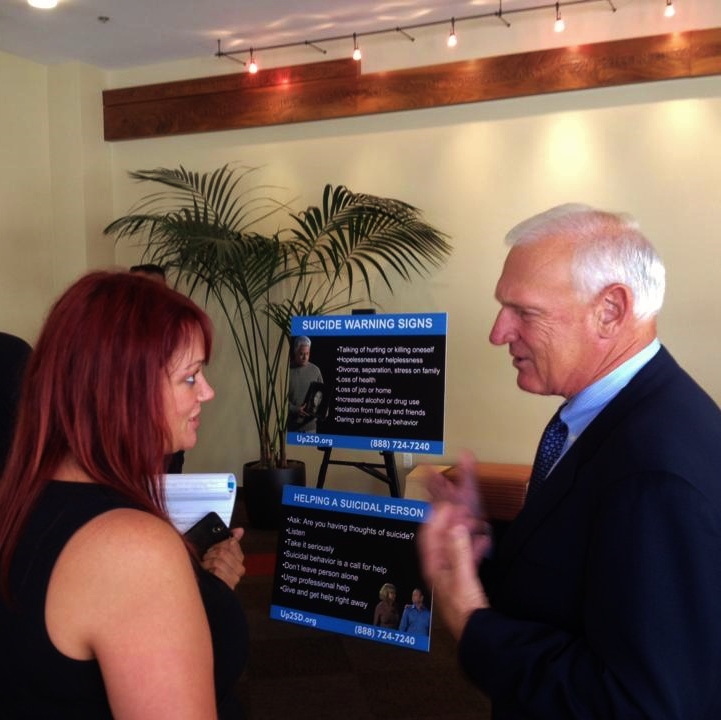
Diana Hereld speaks with County Supervisor Ron Roberts regarding Not On My Watch campaign

Diana Hereld speaks with County Supervisor Ron Roberts regarding Not On My Watch campaign

In 2013, four hundred and thirteen suicides were reported in San Diego County, making it a record year in the region. Of these, seventy five percent were male, and twenty five percent were female. Given these statistics, County officials joined mental health providers and local higher education officials on Friday to remind the public that knowing the warning signs of suicide can help save someone’s life.

In 2010, the county launched the It’s Up To Us campaign to prevent suicide by raising awareness about the warning signs. The county is also supporting the Not On My Watch campaign aimed toward raising awareness concerning suicide prevention across college campuses in San Diego.

One of the central themes of the campaign is recognition- knowing how to identify signals and where to find help can make the difference between life and death. Most people who attempt or die by suicide show one or more indications prior to the attempt. People tend to think of suicide in association with feelings of hopelessness or powerlessness. These individuals may have recently experienced the loss of a job or loved one, ended a relationship, or lost their home. “Recognizing the warning signs is key to preventing someone from ending their life,” said Nick Macchione, director of the County Health and Human Services Agency.  “Suicide can be prevented. It’s important to know how to assist a suicidal person.”

Some warning signs of suicide include:

  • History of mental illness, such as major depression, Bipolar disorder, Schizophrenia and post-traumatic stress disorder
  • Expressing a desire to hurt oneself or end one’s life
  • Divorce, separation, stress on family
  • Loss of health
  • Loss of home, job, or personal security
  • Increased alcohol or drug use
  • Isolation from family or friends
  • Potentially reckless behavior, such as excessive spending or engaging in unsafe sex
  • Sudden calmness after a period of depression or moodiness
  • Undergoing a recent trauma or life crisis

“Suicide is doubly tragic because of the lives lost and the emotional heartbreak to family members and other loved ones,” said San Diego County Supervisor Ron Roberts. “To some, suicide may seem like the only solution to their problems. It is not. Help is available for anyone considering ending their lives.”

Regarding the lack of suicide awareness across the state, Roberts believes it us up to us to educate each other, spread the word, and combat the stigma of what is too oft treated as taboo.

“First of all, there is the issue of mental illness and the stigma-we accept going to a doctor to get better if you’re suffering from some type of physical illness. We don’t say that that person is chronically ill, so we need to do the same thing with mental health. The really important part of this is that we recognize those symptoms where friends can step in with a little help, and maybe make a connection. We have the services available. It’s a willingness to talk about it…There is hope, there is somewhere to turn.” 

Creativity in Constraint: Exploiting the Boundaries

Daniel LevitinIf one were to Google “This Is Your Brain On…”(fill in the blank), they would find everything from drugs, to football, to Jane Austen. This Is Your Brain On Music spent over a year on the New York Times bestseller list. Empathetic humans have a basic need and survival tendency to understand ourselves, and our behavior. Music has proven to be somewhat of an outlier and unifier simply due to the capability for a universal method of notation and expression. The expansion and sharing of music leaps from country to country, from people group to the academy and back again like wildfire. In culture, it is often a greatest common factor.

On July 11, 2013, Stanford University’s Center for the Advanced Study of Behavioral Sciences held its second annual Behavioral Science Summit. The daylong, invite-only event examines the state of behavioral science and its role in technology, the arts, business, and society as seen through the lens of creativity and innovation. Over the duration of the summit, fifteen noted speakers gave presentations on the arts, technology, neuroscience, culture, product design and workplace productivity.

Nobel laureate Daniel Kahneman (Thinking Fast and Slow) delivered the opening keynote. The recurring theme of the summit proved to be collaboration, integration and originality. Kahneman explains that in order to develop new methodologies and vocabularies to bring to their home institutions and fields, innovators across a wide variety of professions have begun coming together to exchange ideas, and open up a dialogue.

Following the keynote, Daniel Levitin (This Is Your Brain On Music) took the stage. His talk, entitled “Creativity in music: Constraints and innovation” was of particular interest to the creativity gurus in attendance. He began with a simple definition of creativity. “Works of art that we judge to be the most creative involve the artists working under constraints to produce something novel, or something that pushes the edges of these assumed constraints.” Levitin brings up an interesting point: Some of the most creative music has come to exist not in result of revolution, but by way of evolution. It’s not really true invention, but a wide blending of previous work. Levitin reminds us that Mozart didn’t invent the symphony or the sonata-what Mozart is recognized for is his ability to work within the tight constraints provided, and yet still be able to come up with such ground-breaking musical statements.

To illustrate his point, Levitin gave a series of examples in order to showcase his theory regarding evolution v. revolution.

  • “Rocket 88” – Jackie Brenston, 1951
  • “Sweet Little 16” – Chuck Berry, 1957
  • “Surfin’ U.S.A.” – The Beach Boys 1963
  • “Back In The U.S.S.R.” – The Beatles, 1968

When listening and comparing these examples, even the untrained ear is hard pressed not to note the similarities from beginning to end. The journey of these songs is very clearly not revolution, but evolution. By taking similar (or in Brian Wilson’s case, nearly identical) chord structures and progressions, the songwriter is able to reinvent a past work with a fresh perspective. The Beatles are notorious for this, having released countless records that may be unashamedly traced back to artists such as Buddy Holly, Elvis and The Beach Boys. Levitin elaborates, “New concepts are anchored in terms of old concepts. That’s why we so appreciate music that’s built on something that came before.” He went on to explain that links between pieces associated with preexisting others tends to be stronger than novel and isolated links in memory. By acknowledging and exercising limitations in the formative process, the creator is able to push limits in a more precise scope, often resulting in unique creative inspiration via unambiguous problem solving.

Regarding individuality in musicianship and songwriting, Levitin calls attention to the large role boundaries play in identity. “An individual musician’s style varies to the extent that you recognize Ella Fitzgerald or Paul McCartney or Arthur Rubinstein because of their own limitations. If every musician were flawless, they’d have less personality. Musicians sound the way they do because they can’t do everything they want to be able to do, and they do it in this flawed, human way. Many of the musicians we find most compelling – Springsteen, Neil Young, Bob Dylan – the really emotive singers – were responding to vast constraints to their technical ability, and you hear them fighting against it.”

How does one then use constraint to stimulate creativity? The Behavioral Science Summit aims to unite and diversify varies field strategies and project tactics. The question we need to be asking is this: How can creative persons benefit from adhering to traditional business models such as the process of phasing out, minimizing scope creep and avoiding uncontrollable expansion? William James states it well: “Nothing is so fatiguing as the eternal hanging on of an uncompleted task (letter to Carl Stumpf, 1886). Without an ultimate goal, creativity left unchecked may spin out of control, only to end in the failure to produce a tangible work. Music is not idiosyncratic in terms of how creativity is addressed or assessed – this subtle concept is utilized over many different arenas. Every song in the Western world comes from a chromatic scale of but twelve notes. Every mixed and melted color comes from red, blue and yellow; every sonnet from a mere fourteen lines.

In a recent post in Forbes magazine, entitled “Creativity: How Constraints Drive Genius” David Sturt (VP, O.C. Tanner ) calls attention to a study undertaken on 1.7 million people with award-winning work. Based on O.C. Tanner’s findings, it seems that “people who create new value on the job are often inspired by their constraints” (Sturt, 2013). When Frank Gehry set out to design the Guggenheim in Bilbao or the Disney Concert Hall in Los Angeles, he reported limitations and constraints as the most inspirational tools in his work. When an artist, project manager or designer sits down to create a work, they must begin by asking, “What problem am I trying to solve?” In doing this we are able to better perceive that true freedom can only be exerted within limits. Not unlike the music theory student setting out to compose within a tight set of guidelines, one must first learn and observe specific statutes. Once understood, we may begin looking beyond the rules, embracing the “benefit of limitations and necessity of structure to the creative process” (Gutierrez, 2013).

In conclusion, we are left then with the following: Regarding individuals with IQs categorized as genius or savant, we must ask ourselves if some of the most celebrated inventions in technology, medicine and the arts would exist with a ceiling. Can constraint be a catalyst, or is it necessary to defy the norm in order to achieve true greatness? Imitation versus innovation, evolution or revolution, restriction and an endless realm of possibilities remain to ponder. Looking back to the creativity of Beethoven versus Mozart, Picasso versus Monet, and Baryshnikov versus Fosse, these hypotheses are no longer so transparent. Is constraint essential for effective creative production, or have our greatest visions come from pushing the limits?

(Photo Credit: Matt Beardsley

Diana Hereld (@christypaffgen) is a Los Angeles based singer-songwriter, music educator and music psychology/neuroscience researcher. She blogs at As The Spirit Wanes The Form Appears.

All of Us Are Searching for an Open Arm: The Uprising of Sad Music in the Media

Ever since the great tearjerker of ’11, the media has seemingly at last seen fit to begin a shift in focus toward a more somber melody. With a growing spotlight on artists such as Adele, Muse and Interpol to Chelsea Wolfe and Zola Jesus, songwriters would seem, in some cases, to be enjoying a more visible success specifically due to the inclusion of the melancholy than in recent years. For some, largely gone are the days of the I, IV, V and in are the repeated inclusion of the appoggiaturas and resolving minors. 

John Sloboda, a professor of music psychology from my alma mater (Guildhall School of Music and Drama, London) states it like this: “Your hair’s standing up on end, shivers going down your spine, a lump coming into your throat, even tears running down your eyes.” And how is this? These effects are not solely felt, they are physiological responses to a specific perception-but do we even know what we’re perceiving? Just yesterday, Research Digest brought attention to a bit of qualitative research being done by Annemieke Van den Tol and Jane Edwards (University of Limerick) regarding the negative experiences of 65 individuals, and the music they chose to listen to. The research then would obviously fall into two separate themes or categories-the strategy adopted in music selection, and the function the music serves.

Without regurgitating the large amount of insight that many other researchers have almost simultaneously come across, there are definitely a few reoccurring themes in explanation of why people gravitate toward sad music:

  • Distancing (the act of distancing oneself from a sad experience via listening to sad music)
  • Desire for connection (in order to connect life events and current mood with a choice in music)
  • Trigger (in order to connect with an experience or person lost via nostalgia and emotive progressions)
  • “As The Spirit Wanes The Form Appears” (my personal favorite, exhibiting belief that when the spirit is most tried and tested, one is able to more fully come to grips with the state of things around and within them, and reach out for either a  perceived or real hope)
  • Common humanity (in order to feel part of a greater puzzle-instead of feeling isolated and alone, one may feel they are being reached out to via the lyricism or voice of the music and are thus part of a “larger human experience”)
  • Control (although sad music obviously often evokes melancholy emotions, they would seem to be separate from reality. These sad events are not actually happening in real-time, not unlike when we read sad fiction. We are able to experience sadness without any real threat to our safety, mental state or well being. Richard Kunert has written a great post on precisely this over at Brain’s Idea which walks through this a bit more in depth. Richard states:

Prolactin is a hormone associated with feelings of tranquillity, calmness, well-being, or consolation. Huron (2011) suggests that the body uses it to counteract grief and thus avoid descending into an uncontrollably depressive episode. Such hormonal counter-measures to negative environmental inputs are also found for physical pain. Physical pain is reduced by endorphins. Such a bodily mechanism can be exploited – as when heroin addicts fool the brain’s response to pain. Huron (2011) proposes that sad music can activate the counter-measures to actual sadness – i.e. prolactin production – without any real sadness being present. One gets the hormone’s consoling effect without the sadness and might thus actually enjoy it. (Kunert, 2012).


I’d like to briefly focus on the last theme of control: what does this say for people who suffer from mental illness, post traumatic stress or major trauma? These circumstances largely represent a loss of control for the subject. This loss of control is often to blame for irrational and impulsive behaviors. Suicide, acts of self-inflicted harm and many crimes of passion are the ultimate act and statement of control-which is the very override we’re trying to buy time against in the amygdala when thinking in terms of behavioral manipulation.

My friend and fellow music psychology comrade Kelty Walker put it this way: “Same goes for any emotion, song, genre, movie, book, person, car, job, and yes, belief system. Anything that elicits a response in the amygdala can be used to condition ourselves into our desired state. Now, if only we were more widely aware of it…”


In the spirit of “sad” music and emotional/physiological response, I’m enclosing one of the most powerful songs (and experiences) of my life. There are few songs which elicit the type of response this work is capable of in me-in any situation, mindset or setting. Come 3:15, the response is quite Pavlovian.