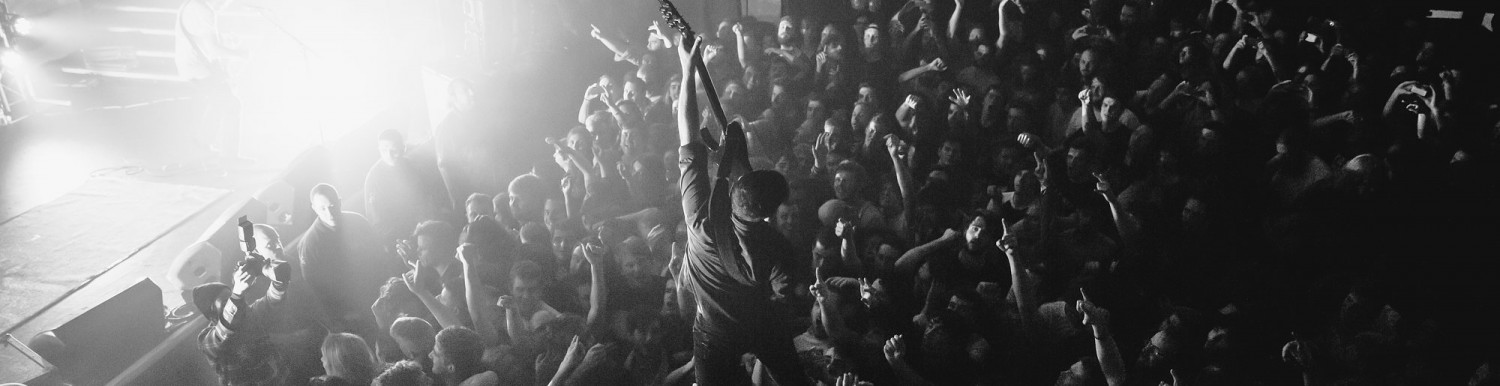
All of Us Are Searching for an Open Arm: The Uprising of Sad Music in the Media

Ever since the great tearjerker of ’11, the media has seemingly at last seen fit to begin a shift in focus toward a more somber melody. With a growing spotlight on artists such as Adele, Muse and Interpol to Chelsea Wolfe and Zola Jesus, songwriters would seem, in some cases, to be enjoying a more visible success specifically due to the inclusion of the melancholy than in recent years. For some, largely gone are the days of the I, IV, V and in are the repeated inclusion of the appoggiaturas and resolving minors. 

John Sloboda, a professor of music psychology from my alma mater (Guildhall School of Music and Drama, London) states it like this: “Your hair’s standing up on end, shivers going down your spine, a lump coming into your throat, even tears running down your eyes.” And how is this? These effects are not solely felt, they are physiological responses to a specific perception-but do we even know what we’re perceiving? Just yesterday, Research Digest brought attention to a bit of qualitative research being done by Annemieke Van den Tol and Jane Edwards (University of Limerick) regarding the negative experiences of 65 individuals, and the music they chose to listen to. The research then would obviously fall into two separate themes or categories-the strategy adopted in music selection, and the function the music serves.

Without regurgitating the large amount of insight that many other researchers have almost simultaneously come across, there are definitely a few reoccurring themes in explanation of why people gravitate toward sad music:

  • Distancing (the act of distancing oneself from a sad experience via listening to sad music)
  • Desire for connection (in order to connect life events and current mood with a choice in music)
  • Trigger (in order to connect with an experience or person lost via nostalgia and emotive progressions)
  • “As The Spirit Wanes The Form Appears” (my personal favorite, exhibiting belief that when the spirit is most tried and tested, one is able to more fully come to grips with the state of things around and within them, and reach out for either a  perceived or real hope)
  • Common humanity (in order to feel part of a greater puzzle-instead of feeling isolated and alone, one may feel they are being reached out to via the lyricism or voice of the music and are thus part of a “larger human experience”)
  • Control (although sad music obviously often evokes melancholy emotions, they would seem to be separate from reality. These sad events are not actually happening in real-time, not unlike when we read sad fiction. We are able to experience sadness without any real threat to our safety, mental state or well being. Richard Kunert has written a great post on precisely this over at Brain’s Idea which walks through this a bit more in depth. Richard states:

Prolactin is a hormone associated with feelings of tranquillity, calmness, well-being, or consolation. Huron (2011) suggests that the body uses it to counteract grief and thus avoid descending into an uncontrollably depressive episode. Such hormonal counter-measures to negative environmental inputs are also found for physical pain. Physical pain is reduced by endorphins. Such a bodily mechanism can be exploited – as when heroin addicts fool the brain’s response to pain. Huron (2011) proposes that sad music can activate the counter-measures to actual sadness – i.e. prolactin production – without any real sadness being present. One gets the hormone’s consoling effect without the sadness and might thus actually enjoy it. (Kunert, 2012).


I’d like to briefly focus on the last theme of control: what does this say for people who suffer from mental illness, post traumatic stress or major trauma? These circumstances largely represent a loss of control for the subject. This loss of control is often to blame for irrational and impulsive behaviors. Suicide, acts of self-inflicted harm and many crimes of passion are the ultimate act and statement of control-which is the very override we’re trying to buy time against in the amygdala when thinking in terms of behavioral manipulation.

My friend and fellow music psychology comrade Kelty Walker put it this way: “Same goes for any emotion, song, genre, movie, book, person, car, job, and yes, belief system. Anything that elicits a response in the amygdala can be used to condition ourselves into our desired state. Now, if only we were more widely aware of it…”


In the spirit of “sad” music and emotional/physiological response, I’m enclosing one of the most powerful songs (and experiences) of my life. There are few songs which elicit the type of response this work is capable of in me-in any situation, mindset or setting. Come 3:15, the response is quite Pavlovian.

The State of Music Psychology

The State of Music Psychology

By Diana C. Hereld | @pathwaysinmusic

The psychological conversation surrounding music has boomed.

In a few short years, the studies of music therapy and the applied neuroscience of music have hugely invaded the mainstream — the question is, why? As many publications have noted, the initiative that music may be used in rehabilitation has been around for a century or more. What then has catalyzed the influx of media coverage in the last few years? One reason may simply be that as the success of these techniques become popularized via persons in the public eye, many of us are beginning to understand that music may be used for far more than we had ever imagined.

During the 2nd World Congress of Clinical Neuromusicology in Vienna last November, research was presented by Dr. Gottfried Schlaug (Harvard Medical School), who had performed an experiment to test the shared neural correlation of singing and speech. It was found that by actually singing the words or phrase, and not simply speaking or humming (referred to as ‘intoned speaking’), there occurred additional right lateralized activation of the superior temporal gyrus, inferior central operculum, and inferior frontal gyrus. What this means for the rest of us?  This activation is now more than ever believed to be reason that while patients suffering from aphasia due to stroke or other varying brain damage may be unable to speak, they are able to sing.

It was less than a year ago that NPR released the news story on the effectiveness and use of singing therapy on stroke patients. You may recall the Gabrielle Giffords story with regard to her suffering major brain trauma and later a surprising recovery. This story immediately caught my attention as this was precisely the groundbreaking research Dr. Schlaug presented at the conference in Vienna (originally tested and performed on nonverbal autistic children). It is through the sharing of success stories such as this via the media that the infusion of music, psychology, and neuroscience are coming to light.

Medical resilience, however, is only one facet of this field. In addition to all of the rehabilitative functions music is being found to support, there exist many others. For the music industry, it may prove profitable to look toward music psychology as a potential market sector. Companies such as Prescriptive Music develop “branded-music” programming which they believe can increase sales.

Marketing through music is a relatively new advertising theme. That being said, experts in neuroscience and emotion studies are being called upon more and more as sales consultants in a variety of venues including hotels, restaurants, and major retailers. Previous studies have shown increases in sales in resultants when the right music is carefully selected; one test conducted by marketing professor Ronald E. Milliman exhibited an 11.6% sales increase when up-tempo music was played during the lunch hour.

What does this mean for the music industry? Is it possible that via the study of our decision making, analysts will be able to discern the types of music that affect consumer behavior in a wide variety of markets? Diana Hereld for Sidewinder.fm has asked Dr. Victoria Williamson, a music psychology lecturer and course co-director on the “Music, Mind, and Brain” program at Goldsmiths, University of London, for her take on these questions.

* * *

Fifty years ago, people might appear at a loss if you mentioned “music psychology,” or simply the act of synthesizing music and neuroscience, or music and psychology. What exactly is this field, and how has it become a mainstream topic in recent years?

Dr. Victoria Williamson: People are still often a little lost when you mention music and psychology/neuroscience together although it is of course more well-known now than it was fifty years ago. I come from a psychological interest and I wrote an article called “Thank You for the Music” a few years ago that outlined the kind of things that are studied in this field and why. Essentially, music is a universal human activity whether we chose to play or to listen. Therefore, as a psychologist, music is my chosen tool for learning more about the human mind and behavior. Studying the way we perceive, process, generate, and respond to music can therefore tell us something unique about what it means to be human.

What are some of the field’s most impacting accomplishments?

Dr. Victoria Williamson: Tricky one. I like to think that using music in psychological paradigms has taught us a great deal about how we learn both as babies and adults, how our memories work (or don’t work sometimes!) and how our emotions can impact on cognition. Using music in brain imaging has revealed a lot about the activity of the mind both when we are listening to sounds and when we are simply thinking about them. And there are a number of cases, such as with autism, where studying music psychology has given us new insights into different people’s worlds. The new horizon for music psychology, which is just beginning to be touched upon, is the power of music to help us deal with both everyday and extraordinary life situations.

Along with all of the neurological and therapeutic implications of the field, knowledge is become wider spread of the power of music to influence the minds and behavior of consumers. These behaviors can obviously affect their purchasing decisions, inside and outside of the music industry. Who is driving this research? Is there market incentive from large corporations?

Dr. Victoria Williamson: I can only answer for the UK, but this is actually a relatively small field of research with few published papers. It is hard to do genuine consumer research because it requires long-term and effective collaboration between academia and industry, which can be tricky to manage from both sides. The situation may change in the future but in most cases commercial interests are happy to learn from the music psychology that has been conducted in more controlled conditions and extrapolate the findings to their own environments.

One important point I want to make here is that when you talk about the influence of music it should be clear that there is no evidence that I know of that music can make people want to do something they do not want to do. Music has a subtle influence that works in combination with all the other factors in the environment. It is no magic bullet.

As a leading researcher in the field, what are some of the long-term goals this field hopes to accomplish? Do you think music psychology has the potential to become a major sector in the music industry?

Dr. Victoria Williamson: My long term aim is to learn more about the human mind and behavior by studying how we interact with music. From this level of understanding will come the tools for improved communication, wellbeing, and happiness. I think the music industry could learn a lot from interacting with music psychologists and of course vice versa. Most music psychologists (including me) know very little about the process by which music is produced as a commercial product and it would be really interesting to know more about how decisions are made, artists are chosen, and end products compiled. I think the potential is there for many exciting collaborations that will reveal more about how and why we are such a musical animal.

(Photo Credit: Flickr)

Diana Hereld (@christypaffgen) is a Los Angeles based singer-songwriter and music psychology/neuroscience researcher. She blogs at As The Spirit Wanes The Form Appears.

Music Therapy Advocacy Month is here!

I’m not sure who declared it, but January would seem to be Social Media Advocacy Month, and thus many have taken strides to in turn declare Music Therapy Advocacy month. Though I tend to work in the realm of music and psychology or music and neuroscience, the fields are extremely interconnected and this is a source of great excitement. We are very lucky to have renowned musician Ben Folds recently tweeting under the hashtag #FollowMTWeek and bringing attention to the field in general during this time. Many conversations and stories have begun to surface through this call to awareness, and I would encourage you to pop over to Twitter to see what’s going on.

Three lovely women over at Wholesome Harmonies, LLC have created the joint AMTA/CBMT Social Media Advocacy project to help spread the word about music therapy as well as create traffic to colleagues’ websites. If you are a working professional or researcher in the field, I would strongly encourage you to have a look at what is going on over there-very exciting stuff.

Here are some of my personal favorite resources for more information on the field:

Music Psychology -Dr. Victoria Williamson

American Music Therapy Association

Certification Board for Music Therapists

SEMPRE – Society for Education, Music and Psychology Research 

Finally, for a bit of introductory information, there is the piece I wrote on the current state of music psychology.

Let’s do this!

Request For Feedback – When Tragedy Strikes: A Music Behavioral Analysis

Dear friends,

Thus far, my research interests have lain in the children I’ve tested and taught in person, and I have had little use for gathering data from anyone over the age of 18. As I craft together my first pitch, however, I’d like to ask for some feedback. I’ve been given the opportunity to write about two subjects I find very fascinating. In fact, I believe anyone else has yet to combine them in quite this way. I’m attempting to piece together the music industry and psychological resilience. In the end, it all boils down to music behavior analysis. In this vein, I find myself happily at home. When venturing toward the music industry and modern practice, however, I’m treading on new ground.

 So I ask you, dear reader, if you have ever gone through a period of immense stress (i.e. one’s senior year of college or an audit at work), lost a loved one due to natural or unnatural causes, or experienced a major trial of any kind, to lend me your feedback. If you have ever streamed music using Spotify, Grooveshark, Songza, 8track, LastFM (etc.), or elected not to, I ask for your feedback. 


It’s been a few weeks since I really sat down on meditated on these concepts. This weekend, however, tragedy struck. A friend of mine lost his father, and I lost someone very dear to me. I suppose now is as good a time as ever, then, to write about loss, and how we respond to it.

I am interested in the way we respond to trauma/loss through the psychological lenses of music behavior with a special emphasis on playback. Because the debate of ownership vs. streaming is relatively new, there is precious little data available in the area I’m seeking. In terms of loss, this natural phenomenon has always existed. As for the modes and vices with which we counter this loss, our outlets would seem to expand on a daily basis. We grow at the speed of modern technology.

How has the ability to stream music affected stress/pain culture in the industry? Has it been altered in the least in terms of our music listening habits (ownership vs. access)? Is streaming saved for the young in age and young at heart, those without the worries of time and weather? In occasions of strife, do we turn to a new and fresh outlet which resigns our need and right of control? Or in a subconscious search for the regulation of external chaos do we flee from such an idea, clinging heavily to those old safe tunes proven time and time again to get us through?


I would appreciate any and all feedback in the aid of my essay. You may leave a comment, or if you wish to reach me privately, you may contact me on Facebook.


Music training for the development of speech segmentation

The latest from my friends at Neuromusic News (ed. by Fondazione Mariani).

Contributors: Luisa Lopez, Giuliano Avanzini, Maria Majno and Barbara Bernardini.

This week’s digest regarding music and speech includes much of the same of what we already know: the implications of musical exposure in children with speech perception issues grow greater by the day. This study specifically compares the use of music as opposed to the use of art in 8 year old children.

Cereb Cortex 2012 Jul 10

Music training for the development of speech segmentation

François C, Chobert J, Besson M, Schön D
Institut de neurosciences des systèmes, INSERM and Aix-Marseille University, Marseille, France

The role of music training in fostering brain plasticity and developing high cognitive skills, notably linguistic abilities, is of great interest from both a scientific and a societal perspective. Here, we report results of a longitudinal study over 2 years using both behavioral and electrophysiological measures and a test-training-retest procedure to examine the influence of music training on speech segmentation in 8-year-old children. Children were pseudo-randomly assigned to either music or painting training and were tested on their ability to extract meaningless words from a continuous flow of nonsense syllables. While no between-group differences were found before training, both behavioral and electrophysiological measures showed improved speech segmentation skills across testing sessions for the music group only. These results show that music training directly causes facilitation in speech segmentation, thereby pointing to the importance of music for speech perception and more generally for children’s language development. Finally these results have strong implications for promoting the development of music-based remediation strategies for children with language-based learning impairments.

And for our Italian friends:

Il ruolo del training musicale nel promuovere la plasticità cerebrale e lo sviluppo di capacità cognitive linguistiche è di grande interesse sia dal punto di vista scientifico sia sociale. In questo studio, gli Autori riportano i risultati di uno studio longitudinale, durato oltre due anni, effettuato usando sia misure elettrofisiologiche sia comportamentali per verificare l’influenza del training musicale sulla segmentazione del linguaggio in bambini di 8 anni. I bambini sono stati assegnati con pseudo-randomizzazione a due gruppi di studio, uno sottoposto a training musicale, l’altro a lezioni di pittura, e testati periodicamente sulla capacità di estrarre parole senza significato da un flusso continuo di sillabe di un linguaggio artificiale. Le valutazioni dimostrano che solo i bambini esposti a training musicale aumentano la capacità di segmentazione del linguaggio, suggerendo l’importanza fondamentale del training musicale per lo sviluppo linguistico. Questi risultati hanno forti implicazioni nel promuovere l’elaborazione di strategie basate sul training musicale per aiutare i bambini con disturbi di apprendimento su base linguistica.mu

Music therapy success in redirection of fight-or-flight behaviors in children with ASD

Sent to me from my friends at the Fondazione Mariani in Italy, this small article update caught my eye specifically because of my recent experiences with children with ASD and music. My lower post (My pilot in music and autism: thoughts on empathy, mirroring and rapport) goes into some detail about my experience, but suffice it to say here that I’ve only found time and time again that music proves to be a brilliant ice-breaker and way to put kids at ease, especially when they suffer from some type of social anxiety. Taken from the Journal of Biomusical Engineering,  the following illustrates some recent findings in the world of music and ASD:

Journal of Biomusical Engineering Vol. 2 (2012)
Pilot study investigating the efficacy of tempo-specific rhythm interventions in music-based treatment addressing hyper-arousal, anxiety, system pacing, and redirection of fight-or-flight fear behaviors in children with Autism Spectrum Disorder (ASD)

Berger DS
The Music Therapy Clinic, Norwalk, CT 06850, USA

Many behaviors in children diagnosed with autism spectrum disorder (ASD) resemble fight-or-flight avoidance responses resulting from habitual states of fear, possibly induced by sensory processing issues, causing on-going stress and deregulation of systemic pacing. This study hypothesized that patterned, tempo-based, rhythm interventions, at 60-beats per minute (pbm), can regulate and induce systemic pacing, reduce repetitive anxiety behaviors and enable focus and calm in persons with ASD. Eight-week pilot study investigated the influence of four sensorimotor rhythm interventions for habituation (entrainment) of systemic inner rhythms, pacing, stress, anxiety, and repetitive behavior reduction, ultimately yielding eye-contact, attention, motor planning, and memory. Six subjects (n = 6) ages 8–12, with ASD and minimal expressive language, were treated in 45-minute weekly one-on-one music therapy session, over eight weeks. A rating scale tracked responses and progress in vivo per session, and on video-tape. Lifeshirt heart-monitor vest with embedded wireless sensors, worn by each subject during the first, fifth and eight sessions, tracked heart-rate data. Results support the hypothesis that highly structured rhythmic interventions at a slow tempo can yield levels of systemic pacing, motor planning, visual contact, attention, reduction of anxiety and repetitive behaviors, and functional adaptation.

And for my Italian friends:

I bambini affetti da disordini dello spettro autistico (ASD) mostrano comportamenti di evitamento, causati da uno stress cronico determinato dalla cattiva regolazione del ritmo interiore. Questo studio ipotizza che un intervento di musicoterapia basato su strutture ritmiche a 60 battiti per minuto possa regolare il ritmo interiore del bambino, diminuendo i comportamenti ansiosi e facilitando la concentrazione. È stato effettuato uno studio pilota di 8 settimane per indagare l’influenza di 4 diversi tipi di intervento ritmico per il miglioramento del contatto visivo, dell’attenzione e della memoria. Sei bambini di età compresa tra gli 8 e i 12 anni, affetti da ASD e con scarso linguaggio espressivo, sono stati trattati con sessioni individuali di musicoterapia per 45 minuti alla settimana, per 8 settimane consecutive. I progressi sono stati riportati su una scala e i comportamenti sono stati videoregistrati per una successiva analisi. Il battito cardiaco è stato monitorato nelle sessioni 1, 5 e 8 attraverso una maglietta dotata di sensori wireless. I risultati supportano la tesi che un intervento di musicoterapia prolungata con un tempo lento possa ridurre l’ansia e i comportamenti ripetitivi e migliorare il contatto visivo, la programmazione motoria e l’attenzione.

My pilot in music and autism: thoughts on empathy, mirroring and rapport

I’ve been employed at California State University, Northridge since last September as a research assistant in the psychology department working on a study in autism, working memory and music. I completed my training and began administration of the study in January of this year. I’ve tested ten clinical subjects, three control subjects, and loved nearly every moment. What I’d like to speak about is a fairly recent observation.

It’s nothing short of ironic that I am almost identically following in the academic footsteps of my mother. Despite the fact that she was not satisfied until the completion of her second doctorate in phenomenological and existential psychology, she spent a great deal of time before and after as an independently contracted school diagnostician. When I told her I was to be trained on how to properly administer the Wechsler Intelligence Scale for children, she was beside herself. I suppose it should not be ironic, then, that the one thing I’ve come to enjoy most in the process is what I’d heard years of stories pertaining to when I was a child. That aspect is the outcome when one properly executes and achieves psychological rapport.

The concept of rapport can obviously be applied in a number of contexts and situation, and like most things, can be pursued and established for good or ill. It is a technique used in manipulation, in sales, and in seduction. It can also used to coax out life-saving information from victims in the midst trauma, to bond with strangers in a new environment, and closest to home for me, to comfort and elicit high performance qualities from nervous children brought in for an extensive battery of psychoeducational evaluation. As they frequently wonder “What is wrong with me?” or “Why am I here?” I have learnt a bit of understanding and reaching out can go for miles. One of the most interesting features  I’ve observed thus far as that the children on the ASD scale-children thought to commonly possess a ‘faulty’ mirror neuron system that would keep them from typically developed empathy responses- should seem so sensitive to their surroundings.

Every child, with the exception of one (who in the end did not meet the criteria for the study), has not only displayed a warm demeanor and trusting disposition, but also has volunteered to sing back to me in my pilot study. After testing my first two control subjects, I realized that asking high school boys to sing to me may as well have been climbing Mt.Everest (or so I thought).  However, nine out of ten of my clinical subjects, after my initial singing the pilot study to them, felt comfortable enough to sing it right back to me, as my original protocol dictates. This reasoning can be due to a number of things, but it’s an achievement I was unable to make with any control subjects. All I know is had the first autistic male not simply asked that instead of speaking the phrases after me, “Can I sing it out loud like you did?” I never would have continued the pilot in that manner, and heard the other 8 boys sing.

It is small testing group thus far to be sure. I’m still sorting through data, and trying to discern exactly what it shows about the empathy, musicianship and working memory of the young, high-functioning autistic population. Until I do, I simply wanted to share the portion of it that made me so incredibly happy. While the most difficult part of the project was reading through each individual IEP and noting every social and emotional setback the child had experienced, the easiest part was talking and joking with the boys about how much they played video games, that they were eating all the oreos and juice set aside for their parents, and what lovely singing voices they had. I do not always love the computational administration, or working with personnel who do not share my passion for children. I do, however, love these kids, and have all the hope for them in the world. Rapport does not have to be a dangerous method of transference and countertransference that sets the psychologist on the path of no return. It does not have to be an empty therapeutic tactic to secure a goal with little regard of what the patient really needs. It really can just be taking a short amount of time out of your day, and looking at life through another’s perspective. One will often be amazed with what they find.

Krzysztof Penderecki, Jonny Greenwood, Mental Illness and Encephalography

I ran across something rather intriguing the other day, thanks to this friend and music enthusiast. It is a collaboration between two highly respected musicians:  Krzysztof Penderecki and Jonny Greenwood. Imaginative, provocative and innovate as these string arrangements may be, it is in a very small component of the composing process which lies the real fascination for me:

Penderecki’s Polymorphia also had a fascinating birth. The composer played a recording of Threnody for patients with mental illnesses at the Krakow Medical Center while the patients had encephalographs (brain-wave charts) made; he then based Polymorphia‘s musical lines around the shapes on their charts. In his reply to Polymorphia, Greenwood takes up that big, glorious and triumphant C Major chord — and then shatters that harmonic glow into smithereens. He begins with a strangely Bach-reminiscent chorale (“Es Ist Genug,” or “It Is Enough,” which is also the name of a famous Bach chorale) that Greenwood then distorts and dissolves over and over again. He builds tension and lets it drain away, takes up an idea and then lets it go in swirling eddies of motion.

The original article on NPR may be found here.

The “Anatomy of a Tear-Jerker” and my cover of Adele

In futile effort of keeping up with the Joneses of pop culture and music psychology, consider this my token post on Adele. Why?

 A) She’s fabulous

B) She just won big at the Grammys

C) WSJ Online has just released a major post largely on her hit Someone Like You entitled Anatomy of a Tear-Jerker 

D) I have covered her countless times, and her piano songs are a part of my teaching repertoire

In terms of the post WSJ released, I strongly recommend giving it a good read. The research was originally conducted at McGill, a university widely celebrated for their Music Perception and Cognition program, and home to celebrity writer Daniel Levitin, author of This Is Your Brain on Music. In light of Adele’s recent superstardom and the widening knowledge and appreciation of music psychology as a whole, I’d wager this article is going to get some serious attention. While I wholeheartedly agree with it’s main premise, I find something deeply awry here, and it is found the in subtitle itself:

Why does Adele’s ‘Someone Like You’ make everyone cry? Science has found the formula.

As a twenty-something young woman who has not only sung since age three, composed angsty love ballads on the piano for years but also been left by a lover in the worst way, I love Adele. Let me be clear on this: I love Adele. Someone Like You and Hometown Glory (as well as Rollin’ In The Deep, which I will teach tomorrow) are also favorites of my young vocal and piano students. However, I think if we look at that tag line again of this post-‘science has found the formula’- we will see that something is very wrong. I may be alone in my feeling here, but I doubt it. With the way EEG, MRI, fMRI and now even rtfMRI are developing, we know more about the human brain and it’s reactions to stimuli than ever before-more than we ever dreamed possible. I have a couple problems with the way the article glorifies grace notes and appoggiaturas-but most of all, how they glorify her. Yes, she and Dan Wilson have crafted a brilliant combination of soul, melodic intonation and dissonance in all the right suspended instances-but at the end of the day, I would be cautious in how objective we lean in quantifying beauty. There is a line to be drawn-there necessarily is. In saying “science has found the formula,” we have inadvertently taken the ‘magic’ (for lack of a better word) out of her song, and made it just that: a scientific formula. It should not be a commercial marketing scheme, however, and God forgive us should we ever make it one. It’s a great article, yes, and I hope everyone reads it. I only hope we can all take a step back from the science behind every mathematical placement of every ornamentation and remember why this lovely woman crafted the song in the first place.

And now, just for fun, a rough cover I did of Adele’s Hometown Glory in 2011.

Neural systems for speech and song in autism

In commencement of the administration of my pilot study (as well as my primary investigator’s full experiments) in working memory, autism and music, here is an interesting article I came across today. The idea simply drives forward what we already know: where subjects who suffer from aphasia and other language difficulties falter in normative speech patterns, music provides a far higher stimulation in areas of the brain (this study concentrating on the left inferior frontal gyrus in particular) and thus lends to speech development which ordinarily may not have been possible.

Abstract:

Despite language disabilities in autism, music abilities are frequently preserved. Paradoxically, brain regions associated with these functions typically overlap, enabling investigation of neural organization supporting speech and song in autism. Neural systems sensitive to speech and song were compared in low-functioning autistic and age-matched control children using passive auditory stimulation during functional magnetic resonance and diffusion tensor imaging. Activation in left inferior frontal gyrus was reduced in autistic children relative to controls during speech stimulation, but was greater than controls during song stimulation. Functional connectivity for song relative to speech was also increased between left inferior frontal gyrus and superior temporal gyrus in autism, and large-scale connectivity showed increased frontal–posterior connections. Although fractional anisotropy of the left arcuate fasciculus was decreased in autistic children relative to controls, structural terminations of the arcuate fasciculus in inferior frontal gyrus were indistinguishable between autistic and control groups. Fractional anisotropy correlated with activity in left inferior frontal gyrus for both speech and song conditions. Together, these findings indicate that in autism, functional systems that process speech and song were more effectively engaged for song than for speech and projections of structural pathways associated with these functions were not distinguishable from controls.

The open access html doc may be found here and for those interested:

DOI: 10.1093/brain/awr335

As I begin my very first experimental session, I’ll do my best to keep a log here, simply because I very much enjoy the feedback, and it helps to keep my thoughts aligned.