Essential Limitations in current Neurochemical Studies of Music

Essential Limitations in current Neurochemical Studies of Music

by James A. W. Gutierrez, Azusa Pacific University, college of music and art, adjunct prof.

In April, 2013, Mona Lisa Chanda and Daniel Levitin published “The Neurochemistry of Music”, which presents “peer-reviewed scientific evidence” supporting claims that musical influences may correspond directly with neurochemical changes, specifically correlating “musical reward” with dopamine/opioids, stress relief with cortisol, and musical “social bonding” with oxytocin/vasopressin. Ideally, the music-as-medicine pursuit is pure in its intent toward the relief of human suffering, be it behavioral/emotional//physical/social, through a more natural medium than, say, pychosomatic drugs. However, such a strong quantification of music, and generalization of musical elements, invokes the familiar pharmaceutical path where an ambitious medical community responds to a irreducibly complex system of sociobehavioral situations with a grossly oversimplified, pill-sized answer. While there are certainly clinical uses for music, the first mistake a clinician could make, and hence the primary abuse of both music and a patient, would be to attempt to incarnate, confine to physical flesh, the essentially abstract expressive form that is music.

Such extreme reductions in musical semiotics are prevalent throughout current experimentation involving dopamine and opioids. Levitin reports: “Pleasant (consonant) and unpleasant (dissonant) music were contrasted, and the results conformed activation of the ventral striatum during pleasurable music listening.”[2] In tests examining the effect of music on the stress hormone cortisol Levitin reports: “Relaxing music mimics soothing natural sounds such as maternal vocalizations, purring and cooing (soft, low-pitched sounds with a gradual amplitude envelope), which decrease sympathetic arousal.”[3] When observing levels of polypeptides serum oxytocin and vasopressin (currently thought to regulate social behavior) Levitin reports: “a single 30-minute voice lesson was associated with an increase in serum oxytocin levels relative to a pre-lesson baseline in both professional and amateur singers” and “open-heart surgery patients who listened passively to experimenter-selected soothing music for 30 minutes one day after surgery has higher levels of serum oxytocin compared to bed-rest alone.” [4]

The systematic placement of music in such generalized categories as consonant=pleasure/dissonant=stress, “relaxing” music, etc., with the expectation of uniform results only demonstrates the assumption on the part of the experimenter that music, as represented by a particular style/tempo/dynamic range/etc., should behave as a static unit even in the testing of a broad diversity of listeners. Not only does this ignore the music biases of the experimenter, the testing environment all but extinguishes the affective contexts in which real music listening would be experienced. Could not a familiar yet up-tempo progressive rock song be “relaxing”? Perhaps the oxytocin levels post-singing lesson involved factors such as familiarity, personal connection/association, successful performance in front of an intimidating tester, or perhaps it could just maybe have been the lyrics of the song? Could not “dissonant” music be “pleasurable”? It is precisely the paradoxical nature of musical pleasure that makes musical expression unique, and problematizes this whole method of research. As Oscar Wilde observes- “After playing Chopin, I feel as if I had been weeping over sins that I had never committed, and mourning over tragedies that were not my own.”[5] Would this response be observable in his dopamine/opioid levels?

It could be objected that it is merely seeing music in the context of scientific scrutiny that makes a musician uncomfortable, a kind of ‘we don’t belong here’ awkwardness. Could it be that I am simply afraid that music may be demystified if subjected to an empirical testing environment? Absolutely not. Even the previously stated testing is not completely void of value. The last ten years of testing the brain in all subjects surrounding music have yielded a trove of useful information. Laboratory mice have been included in the research: “Two species of ‘singing mice’ which display an unusually complex vocal repertoire exhibit high oxytocin receptor binding within regions related to social memory. Injection of oxytocin increased vocalization levels while oxytocin receptor infant knockout mice engage in fewer vocalization and show marked social deficits and higher stress levels.” [6] These findings at least establish the biological basis for a social component in music, and maybe even supports the notion that music plays an important role in creating social bonds.

Neuroscientists essentially portend to deal with ‘universal’ structures, by nature of their scope. The more they universalize musical elements, the less they are observing actual music, and they run the risk of trivialization all ‘findings’ therein. The ideal of music-based treatments is that they are noninvasive, have minimal or no side-effects, are inexpensive, convenient, and are completely ‘natural’. While the merit of this endeavor cannot be denied, let researchers admit that this reverse-engineering is in its fetal stages of development, where I contend it will remain until a more advanced treatment of musical elements can be introduced into testing. While it is delusional to attempt to incarnate an abstraction, to acknowledge an enigma and conduct research while remaining subject to it can be a step toward real understanding.


[1] Subotnik, Developing Variations: Style and Ideology in Western Music., Univ. of Minnesota Press, 1991, pg. 199

[2] Mona Lisa Chanda and Daniel J. Levitin, The Neurochemistry of Music, Trends in Cognitive Sciences, April 2013, Vol. 17, No.4, pg. 181

[3] Ibid. pg 186

[4] Ibid. pg 199

[5] Oscar Wilde, 1891

[6] Ibid. pg 188

Musicality correlates with sociability and emotionality in Williams Syndrome

(Ng R, Lai P, Levitin D, Bellugi U)

From the Laboratory for Cognitive Neuroscience, Salk Institute for Biological Studies, La Jolla, California, USA

Williams Syndrome (WS) is a neurogenetic developmental disorder characterized by peaks and valleys of cognitive abilities. One peak that has been understudied is the affinity that many individuals with WS have toward music. It remains unknown whether their high levels of musical interest, skill and expressivity are related to their sociable personality or their verbal intelligence. Authors examined the relationships between musicality (musical interest, creativity and expressivity), sociability (social-emotionality, social approach) and language comprehension in WS and typically developing (TD) controls. Findings suggest that emotion-expressivity through music in WS may be linked to their sensitivity and responsivity to emotions of others, whereas general interest in music may be related to greater linguistic capacity in TD individuals. Musicality and sociability may be more closely related in WS relative than in typical development; implications for future interventions for this neurodevelopmental condition will be discussed.

photo

Full PDF in English

In Italiano –

La Sindrome di Williams (WS) è un problema dello sviluppo neurologico caratterizzato da punti di forza e di debolezza nelle abilità cognitive. Una qualità che è stata poco studiata è l’affinità elettiva che molti soggetti con WS hanno verso la musica. Non è chiaro se l’alto livello di interesse musicale, di capacità esecutiva e di espressività sia correlato alla loro personalità sociale o alla loro intelligenza verbale. In questo studio gli autori hanno esaminato la relazione tra la musicalità (interesse musicale, creatività ed espressività), l’attitudine sociale (emotività sociale, approccio sociale) e la comprensione del linguaggio in bambini affetti da WS e in bambini con sviluppo neurologico tipico (TD). I risultati suggeriscono che l’espressività delle emozioni attraverso la musica nei bambini con WS potrebbe essere legata alla loro sensibilità nei confronti delle emozioni altrui, mentre l’interesse generico nella musica potrebbe essere dovuto a una maggiore capacità linguistica nei bambini con sviluppo tipico (TD). La musicalità e l’attitudine sociale potrebbero essere più affini nei soggetti WS piuttosto che nei soggetti TD. Gli Autori discutono i risultati nell’ottica di possibili interventi educativi per i soggetti con WS.

autism speaks through music: dave grohl reaches out

By Diana Hereld | @pathwaysinmusic

IMG_2487

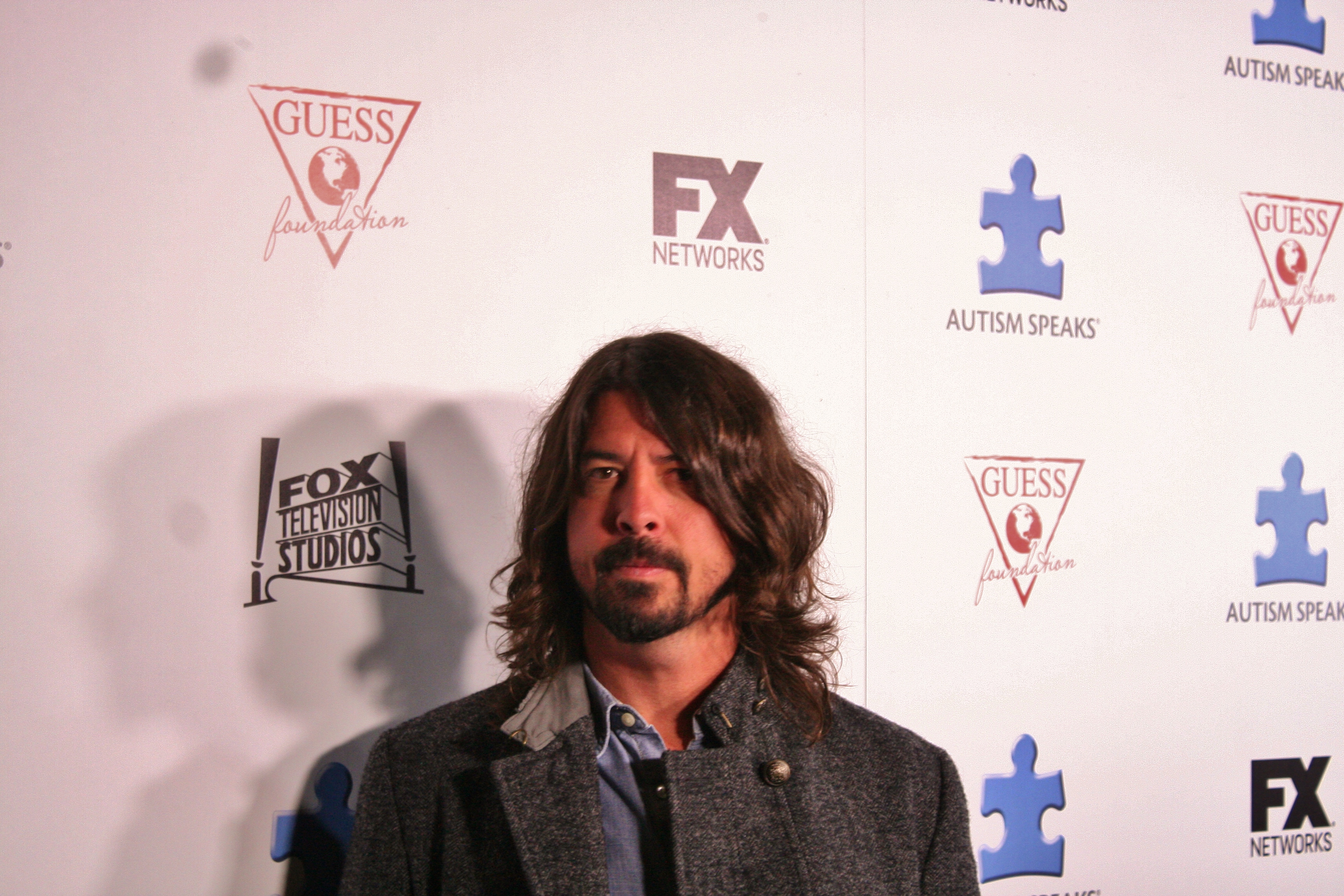
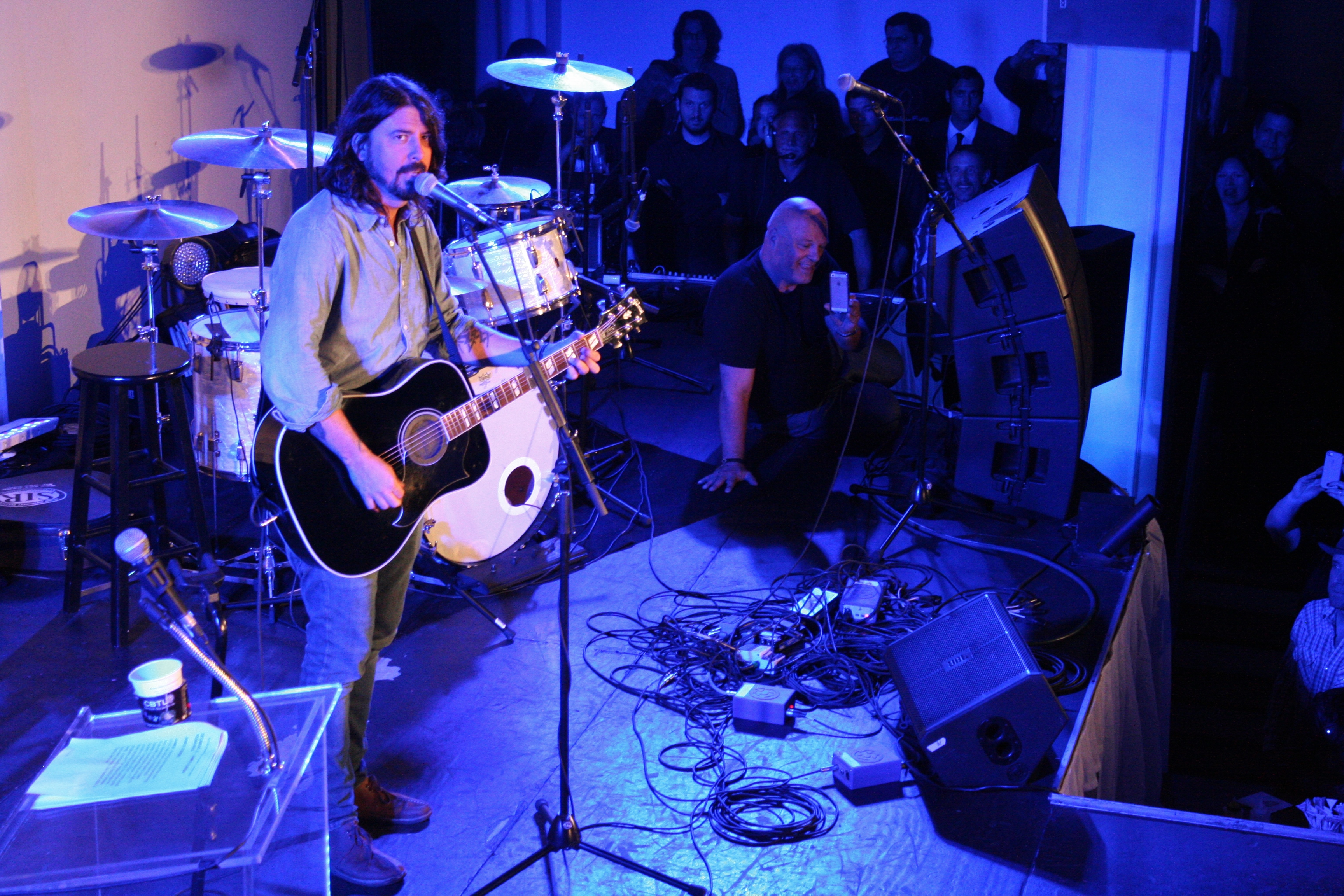
On Thursday, Autism Speaks held their Third Annual Blue Jean Ball at Boulevard3 in Hollywood. The evening began with a star-studded blue carpet, including appearances from Joshua Jackson, Diane Kruger, J.K. Simons and Dave Grohl. Hosted by TV personality Maria Menounos (Extra) and Michael Chiklis (The Shield), the ball included musical performances by Rick Springfield, Ryan Bingham and Dave Grohl, a live auction and the honoring of Chuck Saftler (FX Networks) for his dedication and work in the field of autism awareness, and testimony of Saftler’s son’s personal journey as a child on the autism spectrum.

IMG_2449

IMG_2554

Only a decade ago, the diagnostic percentage of ASD (Autism Spectrum Disorder) was 1 in 10,000. By 2013, this figure leapt to 1 in 88. While the cause of this alarming growth, treatment and a cure for autism continue to be a heavily debated and controversial issue, the fact remains that the disorder is growing, and attention to this circumstance is no longer optional.

During the event, a few attendees on the spectrum were graced with a photo op with Dave Grohl. One such young man, Andrew Hain, 21, had much to say on why Autism Speaks is a great organization deserving of celebrity endorsement and attention.

“It’s amazing – they do amazing things. Autism Speaks’ main focus is on four things: research, advocacy, family services and awareness. Advocacy can come in the form of insurance reform, where the government can chip in. Research can be raising money for genetic exploration, and awareness…people need to know now that Autism affects 1 in 88 families. We have to get the word out to the general public that it’s more common that in used to be. When I was first diagnosed, it was 1 in 10,000.” photo (51)

Andrew’s father, Phillip Hain, originally became involved with Autism Speaks as a volunteer. He has since served as the national director of Team Up! with Autism Speaks for 6 years.

“I was drawn to it because of its reach into the community, its ability to fund wonderful research and provide tools and resources to help families navigate a very complicated system.”

(For fascinating story Music Makes the Difference on Andrew, ASD and music, please visit the Autism Speaks Blog).

The evening concluded with a rousing and poignant acoustic performance by Dave Grohl. Interspersing hits including “Times Like These,” “My Hero” and “Everlong,” the packed nightclub fell quiet when Grohl shared words on why he was thankful to be in the position to give back to organizations like Autism Speaks. “One of the greatest things about being a musician – I write a song for one reason, and I sing it to you guys, and then you sing it back to me for eighty thousand difference reasons.”

IMG_2639

When so many on the spectrum can be aided by therapies in music developing social skills, memory, abilities in empathy and stimulating cognitive functioning needed for elements like speech, sensory-motor and overall communication, those with the means and reach – especially musicians – should care. People universally connect to and are healed by music in thousands of different ways, and when we have the resources, we need leave no one behind.

Photo 1, 2, 3 and 5 credit – Diana C. Hereld

Photo 2 credit – Phillip Hain

DAVE GROHL TO HEADLINE AUTISM SPEAKS’ THIRD ANNUAL BLUE JEAN BALL

AUTISM SPEAKS BLUE JEAN BALL LOGO

PRESENTED BY THE GUESS? FOUNDATION, WITH SPECIAL PERFORMANCES BY JAMES DURBIN, RICK SPRINGFIELD, RYAN BINGHAM, HONORING CHUCK SAFTLER OF FX NETWORKS

Hosted by Extra’s Maria Menounos and Actor Michael Chiklis


LOS ANGELES, CA, October 20, 2013 – Grammy® Award-winning music legend Dave Grohl

will headline Autism Speaks’ Third Annual BLUE JEAN BALL, presented by The GUESS?

Foundation, on Thursday, October 24, 2013, at Boulevard 3 in Hollywood.

Dave Grohl is the lead vocalist, guitarist, and main songwriter for the Foo Fighters, a band he

founded after being the drummer for the American grunge band Nirvana. Grohl is an eleven-

time Grammy® winner, and was Grammy®-nominated a total of 25 times. He has also taken

home an American Music Award and two MTV Music Video Awards.


Also performing will be rock artist Rick Springfield, who won a Grammy® for his No. 1 hit

“Jessie’s Girl” in 1981 and received an additional three Grammy® nominations. Oscar® and

Grammy®-winning artist Ryan Bingham will be performing as well. He recently wrote and

recorded “Until I’m One With You,” the theme-song for FX’s drama-series, The Bridge. Bingham

performed and co-wrote Crazy Heart’s (2009) award-winning theme song “The Weary Kid,”

earning him an Oscar, Grammy, Golden Globe, and Critics Choice Award, with the American

Music Association naming him “Artist of the Year.”


Also taking the stage will be American Idol finalist James Durbin, who is recognized for placing

in the top four of Season 10, while openly sharing his challenges of living with Aspergers

and Tourettes. In addition, The White Buffalo with singer/songwriter Jake Smith (Shadows,

Greys and Evil Ways) will perform. World-renowned DJ Splyce will be providing entertainment

throughout the evening.


The Third Annual BLUE JEAN BALL is honoring Chuck Saftler, President of Program Strategy

and Chief Operating Officer of FX Networks, and Autism Speaks Board of Directors’ Member.

Saftler will receive the tribute for his dedication to autism awareness. Hosting the event will be

television personality Maria Menounos (Extra) and Emmy® Award-winning Actor Michael Chiklis

(The Shield, Vegas, The Commish).


The Autism Speaks BLUE JEAN BALL is dedicated to raising awareness and funds for

innovative autism research and resources for individuals and families affected by the

disorder. Tickets, sponsorship opportunities and additional information are available at

events.autismspeaks.org/bluejeanball.


“One in 88 children is currently diagnosed with autism, and the annual cost for families living

with the disorder is an average of $60,000,” stated Matt Asner, Executive Director of Southern

California for Autism Speaks. “Now, more than ever, we need to raise awareness and assure

that research, advocacy and family service initiatives continue to be funded. What better way to

make a little noise than with a rock and roll concert?”


Past participants and honorees have included Sarah McLachlan, Toni Braxton, Paul Marciano,

photographer Rob Shanahan, Sinbad, Brooke White, Raphael Saadiq, Sarah Shahi, Beth

Reisgraph, Nikki Reed and Paul MacDonald, among others.


Autism is a general term used to describe a group of complex developmental brain disorders – autism

spectrum disorders – caused by a combination of genes and environmental influences. These disorders

are characterized, in varying degrees, by communication difficulties, social and behavioral challenges, as

well as repetitive behaviors. An estimated one in 88 children in the U.S. is on the autism spectrum – a 78

percent increase in six years that is only partly explained by improved diagnosis.


About Autism Speaks

Autism Speaks is the world’s leading autism science and advocacy organization. It is dedicated to funding

research into the causes, prevention, treatments and a cure for autism; increasing awareness of autism

spectrum disorders; and advocating for the needs of individuals with autism and their families. Autism

Speaks was founded in February 2005 by Suzanne and Bob Wright, the grandparents of a child with

autism. Mr. Wright is the former vice chairman of General Electric and chief executive officer of NBC

and NBC Universal. Since its inception, Autism Speaks has committed nearly $200 million to research

and developing innovative resources for families. Each year Walk Now for Autism Speaks events are

held in more than 100 cities across North America. On the global front, Autism Speaks has established

partnerships in more than 40 countries on five continents to foster international research, services and

awareness. To learn more about Autism Speaks, please visit http://www.AutismSpeaks.org .


Established in 1981, GUESS began as a jeans company and has since successfully grown into a global

lifestyle brand. Today, GUESS designs, markets and distributes full collections of women’s, men’s

and children’s apparel as well as accessories. Throughout the years, the GUESS image has been

portrayed in unforgettable, innovative campaigns that have made the brand a household name. GUESS

is distributed throughout the United States and Canada in fine department stores, its retail specialty and

factory stores, and domestically on its online stores. GUESS has licensees and distributors in South

America, Europe, Asia, Africa and Australia. In addition to shopping online, you can find more information

on GUESS at http://www.guess.com.

Effects of voice on emotional arousal

(From the Department of Neurology, Beth Israel Deaconess Medical Center and Harvard Medical School, Boston MA, USA; Department of Psychology, Wesleyan University, Middletown CT, USA).

Effects of voice on emotional arousal – Loui P, Bachorik JP, Li HC, Schlaug G

In December 2011, as a slight detour from some graduate school meetings, I traveled to Vienna to attend the 2nd World Congress of Clinical Neuromusicology. It was here that I met Dr. Gottfried Schlaug and witnessed his intriguing presentation on Melodic Intonation Therapy (MIT). This groundbreaking work has since proved to be a useful form of therapy in a variety of pragmatic ways across the general public. 

He comes to us now with results from a study investigating the effects of the human voice and lyricism have on emotional valence and arousal, and though the results may prove less than shocking, the implications for the continued study of emotion and music should be:

Music is a powerful medium capable of eliciting a broad range of emotions. Although the relationship between language and music is well documented, relatively little is known about the effects of lyrics and the voice on the emotional processing of music and on listeners’ preferences. In the present study, we investigated the effects of vocals in music on participants’ perceived valence and arousal in songs. Participants (N = 50) made valence and arousal ratings for familiar songs that were presented with and without the voice. We observed robust effects of vocal content on perceived arousal. Furthermore, we found that the effect of the voice on enhancing arousal ratings is independent of familiarity of the song and differs across genders and age: females were more influenced by vocals than males; furthermore these gender effects were enhanced among older adults. Results highlight the effects of gender and aging in emotion perception and are discussed in terms of the social roles of music.

For my Italian friends: 

La musica è un mezzo potentissimo capace di sollecitare un’ampia varietà di emozioni. Sebbene la relazione tra il linguaggio e la musica sia ben documentata, si sa relativamente poco circa gli effetti delle parole e della voce sull’elaborazione delle emozioni musicali e delle preferenze dell’ascoltatore. In questo studio, gli Autori indagano l’effetto della voce cantata sulla percezione della valenza emotiva e dell’arousal sugli ascoltatori. 50 partecipanti sono stati invitati a esprimere un giudizio sulla valenza emotiva delle canzoni familiari che venivano loro presentate, con o senza voce. Gli Autori hanno osservato un potente effetto del contenuto delle parole sull’arousal percepito. Inoltre, gli Autori hanno rilevato che l’effetto delle parole nell’aumentare i punteggi di arousal era indipendente dalla familiarità del pezzo ed era differente tra individui di sesso ed età diversi. Le donne erano più influenzate dalle parole rispetto agli uomini, e questi effetti dipendenti dal genere aumentavano con l’aumentare dell’età dei soggetti. I risultati sottolineano l’importanza del genere e dell’età nella percezione delle emozioni nella musica e vengono discussi in termini di ruolo sociale della musica.

For further inquiry into the study, please visit Frontiers.

what should we do with our brain – a metaphorical critique

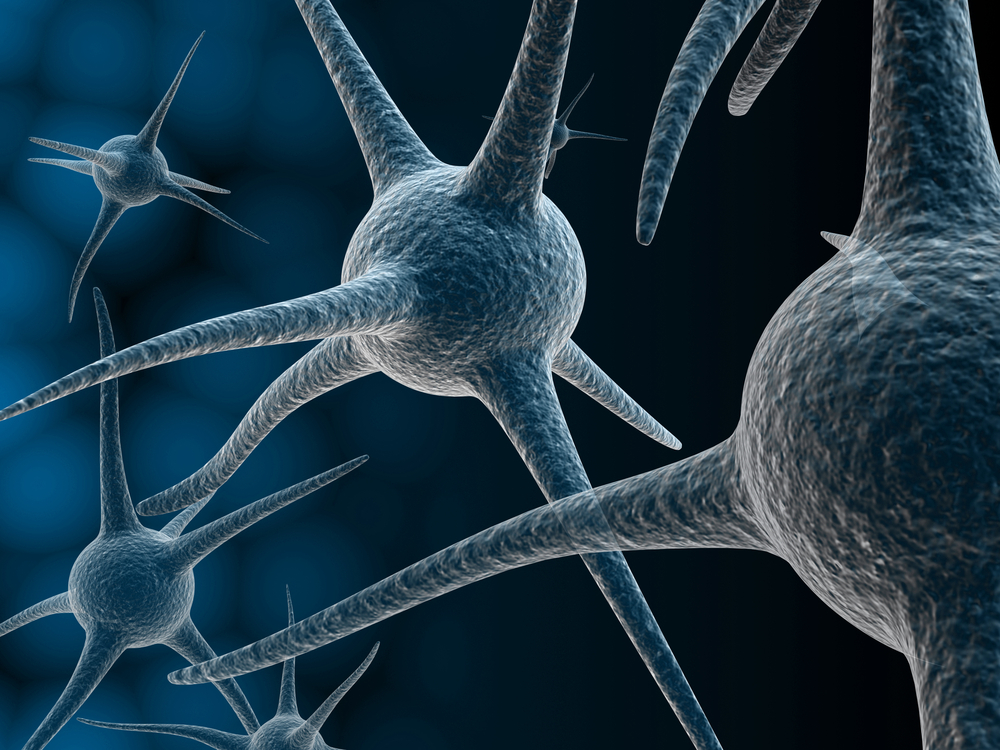
“The brain has always been described by means of technological metaphors.” [1]  neural pathways

One of the first handlings of this idiom occurred in Aristotle’s Rhetoric and Poetics: “Metaphor is the transference of a name from the object to which it has a natural application…” (Aristotle, Poetics, 21). More recently, individuals such as I.A. Richards, Kenneth Burke, and Max Black have made consequential advances in the field of metaphorical criticism, enabling its use to aid heavily in ornamentation and decoration, as structuring principle and discovery and description of the truth.[2]

According to Richards, all thought is metaphoric because when individuals attribute meaning, they are “simply seeing in one context an aspect similar to one [they] encountered in an earlier context.”[3] Though the work of theorists including Michael Osborn and Robert L. Ivie, we have a better understanding of how language relates us to reality, and how we as humans constitute reality through our use of symbols. When we process symbols to better understand reality, we are often using the metaphor. Phenomenological anomalies become accessible to us through the development of a physical materialism that often comes to life via symbols. When we attribute names or symbols to these phenomena, we are using the metaphor.

Along with the above, a number of others have stressed the importance of the metaphor. Nietzsche argued that it is simply the way in which we encounter the world: “A nerve-stimulus, first transformed into percept! First metaphor! The percept again copied into a sound! Second metaphor! And each time he leaps completely out of one sphere right into the midst of an entirely different one.”[4] In these viewpoints, metaphor occurs prior to and generates the discovery of ideas.

Foss explains a great example of this usage in Rhetorical Criticism: Exploration and Practice via the metaphor that “time is money.” By using terminology such as “I’ve invested a lot of time in someone,” “You need to budget your time” and “this gadget will save you time” we begin to equate time through a financial viewpoint; it now shares its level of worth with money. In metaphoric criticism, Max Black has developed an influential method known as interaction theory which juxtaposes two terms in the metaphor generally regarded to belong to two differing classes of experience. The first term is called the tenor, principal subject, or focus, while the second term is called the vehicle, secondary subject, or frame. For example, “The brain is a machine” is a metaphor for which brain is the tenor, and machine is the frame. The process from there then is to discriminate what traits are commonplace by the tenor and vehicle, and form a type of discerning argument. As the associated characteristics of the tenor and vehicle interact, some are accentuated while others are contained. As one goes through this progression of deconstructing tenor and vehicle of the metaphor, it becomes apparent that the metaphor serves an argumentative purpose: metaphor constitutes argument.[5]

To choose a common metaphor and artifact to further describe this process, the human brain has been the target of metaphoric assignments for quite some time: mirror, projector, computer, economy. (Tabbi, 1998) Others have termed the brain central telephone exchange, machine, and even government. While some illustrations appear more accurate than others, there are those who feel as a society that we’ve sorely missed the mark. In Catherine Malabou’s innovative work What Should We Do with Our Brain? (2008) she issues the challenge of deconstructing what we’ve always thought of our brains, and bestows an even greater one: what should we use it for?

Malabou begins the work by repetitiously stating “Our brain is plastic, and we do not know it.” The concept of consciousness is paramount to her: she not only calls attention to the many cities at work neurologically, but the fact that we do not know it. From “know thyself” forward, awareness has been the crux of academic and technological progress. Malabou’s critique of our neuronal dogma is an attempt not only to break away from the ideological presuppositions the field of neuroscience currently includes, but a call to become conscious of them-and of ourselves.

The first method of metaphoric criticism we may employ includes simply dissecting the metaphor. How does it function? In which way is Malabou trying to shake the current opinion of its role? Previously (as mentioned above) common symbols used for the brain include computer, central telephone exchange and machine. However, with Malabou’s concept of plasticity, the rigidity of these allegories will no longer suffice. Machines, computers and central telephone exchanges have a control center; an unyielding and stiff method of prescribing action and processing information. Plasticity is rigidity’s direct anonym, and as we have seen that metaphor not only tells a story but constitutes an argument, new metaphors must come into play. Our brains are no longer known to be entirely genetically determined, static or even simply flexible. “Plasticity, in effect, is not flexibility. Let us not forget that plasticity is a mechanism for adapting, while flexibility is a mechanism for submitting.”[6]  We must ascertain a new meaning, and this is Malabou’s challenge. She must use a metaphoric criticism to tear down the current views and instill the new.

We have now seen how the tenor and vehicle of “brain as machine” will no longer suffice. Let’s take a look at what Malabou uses as alternative: brain as plastic. Taken from the Greek plassein, to mold, plasticity has two basic definitions: one is to receive form, and one is to give form. “Plasticity in the nervous system means an alteration in structure or function brought about by development, experience or injury.”[7]Instead of mindlessly accumulating new metaphors for our brain, Malabou relies on the fact that we are the minds who make the metaphors, and sets out to explain just why the old metaphoric arguments won’t work. She offers perspective and a choice to the audience, just as Foss speaks of in Rhetorical Criticism, “If the audience finds the associated characteristics acceptable and sees the appropriateness of linking the two systems of characteristics, the audience accepts the argument.” In the context of modern day capitalism, Malabou creates a fantastic charge and call to consciousness, taking aide from European metaphysics, political engagement and neuroscience. By changing the terms (linguistically, semantically and literally) of the game, Malabou effectively provides a metaphoric critique to the prevailing comprehension of the function of the human brain.

In conclusion, a metaphoric criticism is best employed here simply because it is what the author employs herself. As Foss further states in Rhetorical Criticism, “Whatever metaphor is used to label and experience a phenomenon, then, suggests evaluations of it and appropriate behavior in response.” The old metaphors used suggest a worldview of a time passed, before the age of functional and real-time neurological imaging. The new formation of the model of our brain must be in line with the modern self: dynamic, transforming and revolutionary. We can no longer think of our brains, our neuronal selves, as but flexible and anonymous; as machine. We must affirm our capacity for change and confess our plasticity: evolutionary, adaptive, explosive. We must no longer consent to depression via disaffiliation; to be “blind to our own cinema.” Our brains tell us a story-whether we choose to listen or not. Karl Marx once stated “Humans make their own history, but they do not know that they make it.” As Malabou so eloquently proves throughout her work that a simple metaphor does not suffice and thus hinders a proper understanding for the plastic brain, she relies on concepts such as ecological, self-creating and emancipatory instead. Plasticity cannot be domesticated. The brain is ever-changing; so then must our conception of it be also.

“…At bottom, neuronal man has not known how to speak of himself. It is time to free his speech.”

-Catherine Malabou


[1] (Jeannerod, 2004).

[2] Foss, Sonja K. Rhetorical Criticism: Exploration and Practice, 2nd Ed. Prospect Heights: Waveland Press, 1996., p. 359

[3] Ibid, p. 359

[4] Friedrich Nietzsche, “On Truth and Falsity in their Ultramoral Sense,” in The Complete Works of Friedrich Nietzsche, ed. Oscar Levy, trans. Maximilian A. Mugge, II. New York: Macmillan, 1911., p. 178

[5] Foss, Sonja K. Rhetorical Criticism: Exploration and Practice, 2nd Ed. Prospect Heights: Waveland Press, 1996., p. 361

[6] Marc Jeannerod, 2004.

[7] See the entry “Plasticity in the Nervous System,” in The Oxford Companion to the Mind, ed. Richard L. Gregory (Oxford: Oxford University Press, 1987), 623.

CASBS Stanford Welcomes 2013-2014 Fellows and Visiting Scholars


THE CENTER FOR ADVANCED STUDY  IN THE BEHAVIORAL SCIENCES AT STANFORD UNIVERSITY
WELCOMES 2013-2014 FELLOWS AND VISITING SCHOLARS

 
Stanford, CA: September 12, 2013 – The Center for the Advanced Study of
Behavioral Sciences (CASBS) at Stanford University today welcomed the 35
Fellows and eight visiting scholars who make up the Class of 2014.

Chosen through a rigorous selection process, the group represents some of
academia’s most innovative scholarship across these behavioral sciences:
anthropology, communication, economics, education, history, law, linguistics,
philosophy, political science, public health, psychiatry, psychology, science &
technology, and sociology. The scholars hail from 21 universities in the United
States, as well as from universities in Canada, England, and Sweden.
Fellows pursue their own research for the full academic year while contributing
to the CASBS community through weekly seminars, occasional public lectures,
and informal conversations over daily lunch.

Informal interaction, in particular, fosters the cross-pollination of ideas across

disparate fields of study, said CASBS Director Iris Litt, MD, herself a Fellow
(1985). “Fellows typically report an expansion in their thinking, and sometimes
even a new approach to their research,” she said. “The launch of the field of
behavioral economics, attributed in large measure to our own Daniel
Kahneman, is an excellent example of this.” Kahneman, a Fellow in psychology
(1978) received the Nobel prize in economic science in 2002.

During their CASBS year, Fellows address some of the most pressing problems

of our day, seeking insight and innovation that will advance humanity at all
levels – whether on the international stage, the workplace, or within the
individual psyche. Among planned areas of study for members of this year’s
class:• the notion of peoplehood and its implications in the Israel/Palestine conflict;

• the manufacture of rayon – a textile marketed as ‘green,’ yet highly
dangerous to the people who make it and the environment;
• the economics of sexual orientation;
• psychobiological triggers of mania in an individual;
• the development of creativity in adolescence;
• implications of copyright law and emerging technologies;
• where data and behavior intersect.
About the Center for Advanced Study in the Behavioral Sciences
Since its founding in 1954, the Center for Advanced Study in the Behavioral
Sciences at Stanford University has brought together distinguished scholars in
the behavioral sciences to confront societal problems worldwide. The Center is
honored to count among its Fellows 22 Nobel laureates, 14 Pulitzer Prize
winners, and 44 MacArthur Fellows, in addition to hundreds of members of the
National Academies.
Fellows have helped develop new policies and practices in fields as diverse as
medicine, education, electoral politics, crime prevention, and international
development. And they’ve played key roles in starting new interdisciplinary
fields such as behavioral economics.
For ongoing news and events about CASBS, please visit http://www.casbs.org and follow on Twitter, @CASBSStanford .


Here are the 2013-2014 Fellows, listed by field of study:
Anthropology
• Ilana Gershon, Indiana University
During her time at the Center, cultural anthropologist Ilana Gershon is
studying how people agree upon ethical standards when using new
media in the course of hiring and firing. Her previous work explored why
Samoan migrants experience different ways of being culture-bearers in
New Zealand and the United States.
• Lawrence Rosen, Princeton University
Anthropology Fellow Lawrence Rosen will work on his latest book, Drawn
From Memory: Arab Lives Unremembered, a study of the intellectual lives
of four ordinary Moroccans he has known many years. It analyzes the
concept of memory in settings of the history, rural and urban
development, religious, and ethnic relationships of the country.Communication
• Byron Reeves, Stanford University
In his scholarship, Byron Reeves balances academic pursuit and
business entrepreneurship. One area of focus is psychological processing
of media in the areas of attention, emotions, learning, and physiological
responses. He is working on the application of multi-player game
technology to behavior change and the conduct of serious work.
• Natalia Roudakova, University of California, San Diego
Natalia Roudakova’s work bridges cultural anthropology to political
communication and comparative media studies. She notes, “Although
there is some tradition of ethnography in journalism studies,
anthropologists have not played much of a role in the field of political
communication.” Her research addresses that gap.

Economics
• Ali Ahmed, Swedish Collegium for Advanced Study
During his fellowship at the Center for Advanced Study in Behavioral
Sciences, economist Ali Ahmed will focus on addressing research
questions related to economics of sexual orientation. While most of his
research is in the field of economics of discrimination, he also studies
behavioral economics, labor economics, and economics of religion.
• Petra Moser, Stanford University
Returning Fellow Petra Moser’s research at CASBS will examine the
effects of copyright policies: Do stronger copyright terms increase the
price of books? And how do stronger copyright terms influence diffusion?

Education
• Sarah Freedman, University of California, Berkeley
Returning Fellow Sarah Freedman will conduct data analysis and write
about a five-year research project, The Development of Ethical Civic Actors
in Divided Societies: Northern Ireland, South Africa, and the United States.
Of her work she says, “I am interested in linguistic analyses that provide
windows into how varied students think about civic participation.”

History
• Ethan M. Pollock, Brown University
Ethan Pollock’s current research project tells the history of the Russian
bathhouse to gain new perspectives on Russian identity, traditional and
modern notions of health & hygiene, and the evolution of ideas about
community and sociability. (Under contract, Oxford University Press.)• Bruce J. Schulman, Boston University
Bruce J. Schulman’s CASBS project, “‘Are We A Nation?’: The Birth of
the Modern United States,” explores the transformation of American
nationhood between 1896 and 1929–the era in which the United States
emerged as a world power, international economic leader, and reservoir
for displaced persons from around the globe.
• Peter Stansky, Stanford University
Peter Stansky’s scholarly aim is to better understand Britain, mostly in
the areas where culture, literature, art, and politics meet, as in his
collection of essays, From William Morris to Sergeant Pepper. His current
project is a study of Edward Upward, the least-known member of the
group who gathered around W. H. Auden.

Law
• Molly S. Van Houweling, University of California, Berkeley
Molly Van Houweling’s research focuses on copyright law’s implications
for new information technologies, and vice versa. One strand of her
research explores how legal rules, designed to regulate sophisticated
commercial interests, affect unsophisticated individuals empowered by
information technology. She is currently working on a book, tentatively
entitled Property’s Intellect.

Linguistics
• Roger Levy, University of California, San Diego
Through study at the intersection of linguistics, cognitive science, and
game theory, Roger Levy hopes his work will help us better understand
how speakers and listeners are able to reason about each other to
achieve effective communication. He will also study the language of
children to better understand how language learning takes place.
• Judith Tonhauser, Ohio State University
Judith Tonhauser’s project, Content and context in the study of meaning
variation, is based on the idea that human languages may differ in their
morphological inventories and syntactic structures, but nevertheless
convey comparable meanings.

Philosophy
• John M. Doris, Washington University
John M. Doris works at the intersection of psychology, cognitive science,
and philosophical ethics. He is finishing work on a new book, Talking to
Our Selves: Reflection, Skepticism, and Agency, and beginning work on a collection of his papers, Character Trouble: Undisciplined Essays on
Persons and Circumstance, both to appear with Oxford University Press.
• Sam Fleischacker, University of Illinois at Chicago
Sam Fleischacker plans to use his time at CASBS to examine a series of
philosophical issues raised by the Israel/Palestine conflict. He’s
particularly interested in the notion of peoplehood, the link (if any)
between peoplehood and territory, and the question of whether states
should represent or foster a people’s identity.

Political Science
• Alison Renteln, University of Southern California
Alison Renteln’s research project focuses on various public policy
incentives for civic engagement. “As part of this study, I will undertake
comparative analyses of Good and Bad Samaritan laws and mandatory
voting systems,” she says. “I am particularly interested in crossdisciplinary scholarship on empathy as it relates to political participation
and humanitarian assistance.”
• Robert Van Houweling, University of California, Berkeley
Robert Van Houweling plans to complete a book about political
repositioning. It focuses on how voters react when politicians change
their policy positions, and in turn, considers the impact voters’ reactions
have on candidate strategies. He has on-the-ground experience as well,
having served as a legislative assistant to Senator Thomas Daschle.
• Michael D. Ward, Duke University
Political scientist Michael D. Ward’s primary interests are in
international relations (spanning democratization, globalization,
international commerce, military spending, as well as international
conflict and cooperation), political geography, as well as mathematical
and statistical methods.
• Erik Wibbels, Duke University
Political scientist Erik Wibbels’s CASBS project aims to develop
innovative approaches to understand why the quality of governance
varies across the geography of countries—why, for instance, central
authorities in places like Afghanistan and Mexico are able to govern some
parts of their countries but not others.

Psychiatry
• Albert Rothenberg, Harvard University
Returning Fellow Albert Rothenberg is studying the development of
creativity and creative thinking during adolescence. It’s an extension of

Studies in the Creative Process, a project where he serves as principal
investigator and which has carried out research on creativity in
literature, art, psychotherapy, and science.

Psychology
• David Dunning, Cornell University
While at CASBS, experimental psychologist David Dunning plans to work
on a book examining the personal to societal implications of
ignorance. He says he is particularly interested in “the fact that people
largely fail to know where their knowledge and expertise end – and their
ignorance begins.”
• Sheri L. Johnson, University of California, Berkeley
Sheri Johnson’s research focus during her CASBS year is
psychobiological triggers of mania. “I like that my work bridges many
different paradigms to help understand why people with bipolar disorder
develop symptoms on a given day,” she says. “I also really love the
process of working with collaborators and with students to develop
ideas.”
• Lee Jussim, Rutgers University
Lee Jussim’s research looks at the relationships between social
perception and social reality. His primary interests are interpersonal
processes, judgment and decision-making, prejudice and stereotyping,
self and identity, and social cognition.
• Jon A. Krosnick, Stanford University
Returning Fellow and social psychologist Jon Krosnick’s top priority for
his Fellowship year is to finish his book reviewing 100 years of research
on how to design questionnaires optimally. He researches attitude
formation, change, and survey research methods. For 15 years, he has
researched the American public’s views of global warming.
• Nilam Ram, Penn State University
Nilam Ram plans to write about how real-time assessments and analytics
can empower people to use data about their own behavioral patterns in
order to make changes that will help them have a better life. These
“personalized interventions … can be deployed at population scale,” he
says.
• Simine Vazire, Washington University
While at CASBS, Simine Vazire will work on research related to selfknowledge, exploring these questions: How well do we know ourselves?
How can we improve self-knowledge? And what are the consequences of
poor self-knowledge? She will also be working on research methodology:

Public Health
• Paul Blanc, University of California, San Francisco
Paul Blanc continues his research on the viscose rayon industry
and occupational disease. He says the material is linked to widespread,
often lethal disease among workers and environmental degradation.
Yet, “Rayon is even marketed as a renewable green product,” he says,
“because carbon disulfide is mixed with cellulose, a renewable resource.”
• Merwyn (Mitch) Greenlick, Oregon Health and Science
Returning Fellow Mitch Greenlick will work on a book on the Oregon
Legislature. From the time of his swearing-in, he recorded his reactions
to the Legislature, forming a body of work spanning six legislative
sessions; over time, perspective emerges from that of a minority
freshman to that of a senior committee chair in the majority.
• Heather Munroe-Blum, McGill University
Heather Munroe-Blum will focus on how public policy in science and
education contribute to a nation’s social and economic success within
the larger global context – with particular attention to young people. It’s
a natural extension of her work advising governments on the role that
progressive, evidence-based public policy plays in enriching society and
international competitiveness.
Science and Technology Studies
• Steve Woolgar, Oxford University
Sociologist Steve Woolgar’s main current research projects include
mundane governance, the social dynamics of provocation, and the utility
of radical academic ideas for business and management. He is interested
in technology and organizational change, branding and brand
development, the rise of ethics, and visualization and evidence in
eScience.

Sociology
• Elizabeth Bruch, University of MichiganElizabeth Bruch plans to explore mate search strategies and mate choice
behavior on online dating sites. She writes, “One central focus for me is
how search strategies and contact behavior differs across dating markets
… and also how people learn who is in their ‘league’ based on their
interactions on the site.”
• Cynthia Fuchs Epstein, Graduate Center of the City University of New York
Cynthia Fuchs Epstein returns to the Center for a third fellowship to
work on the upcoming book, The Difficulty of Doing Good: Law Students’
Commitment to Careers in the Public Interest. Her work looks at the use of
categories and distinctions in social life, with a focus on their impact on
women and minorities.
• Barbara Heyns, New York University
Returning Fellow Barbara Heyns studies the sociology of education,
social stratification, sociology of childhood, social policy, adolescence and
the life cycle, and quantitative methodology.
• Ching Kwan Lee, University of California, Los Angeles
In research for her upcoming book, Ching Kwan Lee poses the question,
“what is the peculiarity of Chinese capital in Africa?” In order to identify
what is Chinese (not just capitalist), she compares Chinese and nonChinese foreign investors in two core economic sectors in Zambia:
copper mining and construction.
• Elaine Wethington, Cornell University
Medical sociologist Elaine Wethington plans to work on a book about the
potential for translational sociology, focusing on the sociology of mental
health and illness and the life course. Her research interests are in the
areas of stress, protective mechanisms of social support, aging and the
life course, and translational research methods.

Complete bios of each Fellow, along with links to their work, may be viewed
here.
Visiting scholars and practitioners in the Class of 2013-2014 include
• Physicist, applied mathematician and computer scientist Eric Bonabeau
of Icosystem Corporation,
• Retired publisher, author, and journalist Howard M. Epstein, is working
on Death or Survival: The Battle for the Lives of French Jewish Children in
World War II.
• Poet, political consultant, and computer scientist Tung-Hui Hu is a
scholar of new media.
• Ellen Konar is a social organizational psychologist-turnedentrepreneurial data scientist and industry executive.

Literary agent and retired publisher Donald Lamm serves as editorial
consultant to this year’s class. He is particularly interested in the
survival of the book in an age of information overload.
• Arnold Milstein, MD will focus on formulating testable methods to
increase the psychological nuance of innovations in care delivery
designed to lower healthcare spending.
• Professor and artist Julia Rothenberg looks forward to pursuing her art
“in the gorgeous and haunting landscapes of Stanford and the hills and
meadows of CASBS.”
• Jane A. Shaw, the dean of Grace Cathedral, is writing about renewed
interest in mysticism in the US and UK; separately she is working on a
collaboration with actress/playwright Anna Deavere Smith.
• Sociologist Anna Sparrman is researching the intertwinement of children,
childhood, material culture, sexuality, and consumption from a
contemporary, everyday perspective.
• Paul Wise, MD, is investigating U.S. and international child health policy,
particularly the provision of technical innovation in resource-poor areas of the world.
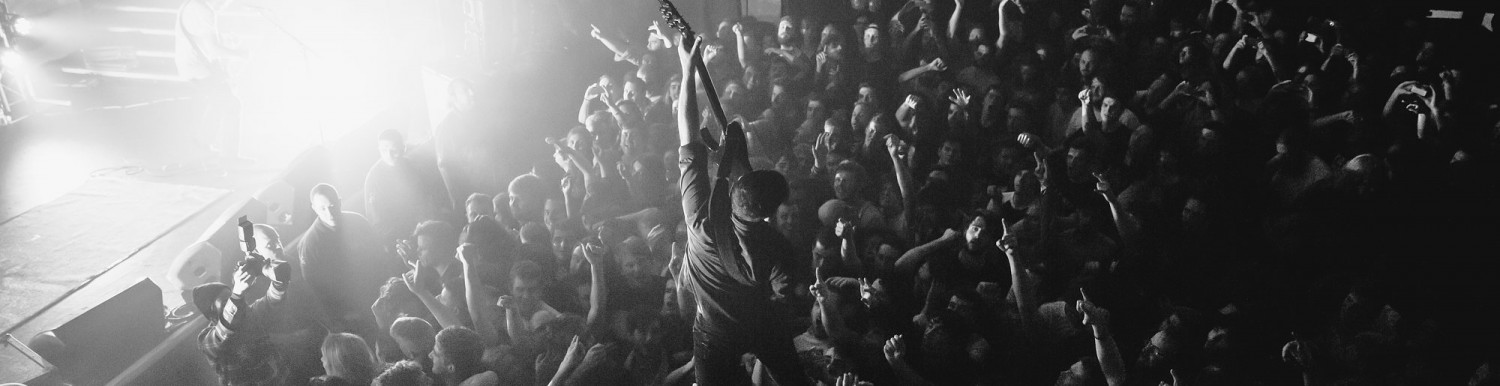
Plans Within Plans – Sonic Youth, The Cure, and The San Diego Music Thing

_DSC1370Last weekend, I had the immense privilege of being invited to cover the San Diego Music Thing. Bringing together a host of noteworthy music industry professionals and accomplished songwriter veterans, SDMT was a major success. Joined by photographer James Gutierrez, I have experienced one of the coveted moments as a journalist when you realize how very fortunate you are.

The first day was composed of panels including “Music Industry 101,” “Shout It Out: PR & Promoting Your Music,” and “Secrets of Synchronization.” The latter and largest panel included speakers Brett Andersen of The Donnas, as well as various industry vets including Jeff Gray and John Anderson of Hunnypot Unlimited. Hunnypot has established itself as a leading independent music publishing/placement company representing the catalogues of Far East Movement, The Robotanists, Das Tapes, Peachcake, Teenage Bottlerocket, Bonhom, Seven Saturdays and more. The panel explained, in explicit detail, why it’s no longer taboo or “selling out” for bands to seek synchronizations.

Kim Gordon gave the keynote that afternoon, beginning with a storm of prose and wrapping with her sardonic and witty (and obviously obligatory) Q&A. Full coverage of Day One can be found here_DSC1281 (2)

Day Two of the SDMT began on the more responsible side of things. With panels like “Lawyers, Guns and Money” and Every Artist Insured, Finding Affordable Healthcare under Covered California,” aspiring and working musicians could ask advice of top experts in the field on issues of copyright, trademark and medical insurance.

Followed by the “Producers Roundtable,” “Website Demolition Derby” and panel entitled “Bands and Brands,” the conference shifted to some heavy-hitting PR. With the theme notably focusing on cross-marketing and collaboration, more than ever it seems musicians are being asked to take on roles they could never have imaged twenty years ago.

With the afternoon providing a honest and intimate talk with The Cure’s Lol Tolhurst, a very apparent thesis became a constant throughout the conference. Mike Herrera (MxPx, Tumbledown) spoke last, and proved no different. Success, failure and plans within plans proved the premise of the weekend, and each artist lent to this subject matter in their own unique and brilliant way. Check out full coverage of day two.

Talking with Mike HerreraIn summary, aspiring musicians were able to take away some very valuable and pragmatic ideals for action. In the closing talk, Herrera states the following:

“Maybe you didn’t start out executing exactly what you thought you would, and arrive at the conclusion you thought you would, but you’re always going to end up somewhere, and you need to make that your success. You can’t always dictate where life takes you. You can’t plan everything. So Plans Within Plans being my idea…the big plan shouldn’t change too often, but the little plans change every day; constantly. It’s a matter of tackling each thing, and making it happen. Defining success for yourself is so important because you can’t say that what’s good for you is good for everybody. You’ve just got to define for you what it is you’re looking for, what it is you’re going for, and that’s what you work on. How you get there is the most important thing. It’s not where you are; it’s how you’re getting there, and it’s where you’re going.”

Check out my final post and comprehensive highlights here.

Photo credit: James A. W. Gutierrez

San Diego Takes A Stand Against Suicide, Launches Not On My Watch Campaign

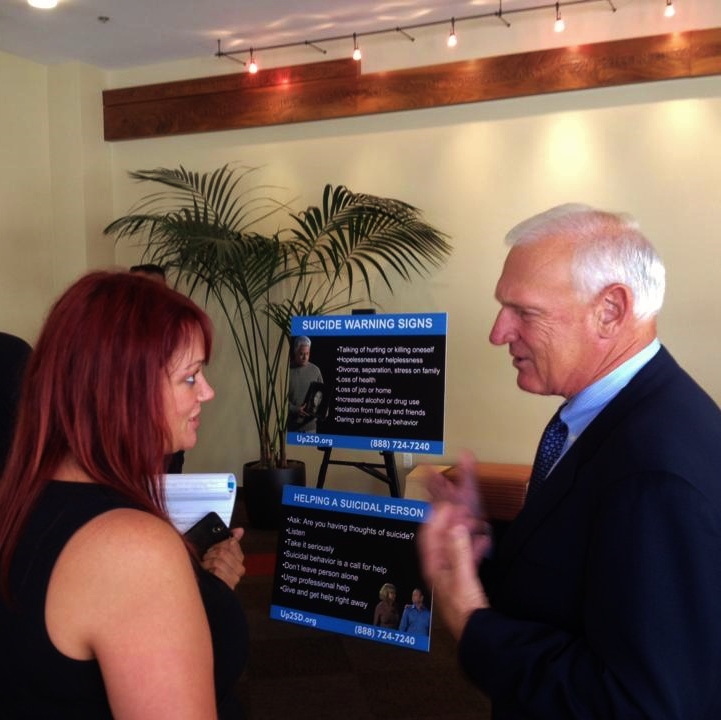
Diana Hereld speaks with County Supervisor Ron Roberts regarding Not On My Watch campaign

Diana Hereld speaks with County Supervisor Ron Roberts regarding Not On My Watch campaign

In 2013, four hundred and thirteen suicides were reported in San Diego County, making it a record year in the region. Of these, seventy five percent were male, and twenty five percent were female. Given these statistics, County officials joined mental health providers and local higher education officials on Friday to remind the public that knowing the warning signs of suicide can help save someone’s life.

In 2010, the county launched the It’s Up To Us campaign to prevent suicide by raising awareness about the warning signs. The county is also supporting the Not On My Watch campaign aimed toward raising awareness concerning suicide prevention across college campuses in San Diego.

One of the central themes of the campaign is recognition- knowing how to identify signals and where to find help can make the difference between life and death. Most people who attempt or die by suicide show one or more indications prior to the attempt. People tend to think of suicide in association with feelings of hopelessness or powerlessness. These individuals may have recently experienced the loss of a job or loved one, ended a relationship, or lost their home. “Recognizing the warning signs is key to preventing someone from ending their life,” said Nick Macchione, director of the County Health and Human Services Agency.  “Suicide can be prevented. It’s important to know how to assist a suicidal person.”

Some warning signs of suicide include:

  • History of mental illness, such as major depression, Bipolar disorder, Schizophrenia and post-traumatic stress disorder
  • Expressing a desire to hurt oneself or end one’s life
  • Divorce, separation, stress on family
  • Loss of health
  • Loss of home, job, or personal security
  • Increased alcohol or drug use
  • Isolation from family or friends
  • Potentially reckless behavior, such as excessive spending or engaging in unsafe sex
  • Sudden calmness after a period of depression or moodiness
  • Undergoing a recent trauma or life crisis

“Suicide is doubly tragic because of the lives lost and the emotional heartbreak to family members and other loved ones,” said San Diego County Supervisor Ron Roberts. “To some, suicide may seem like the only solution to their problems. It is not. Help is available for anyone considering ending their lives.”

Regarding the lack of suicide awareness across the state, Roberts believes it us up to us to educate each other, spread the word, and combat the stigma of what is too oft treated as taboo.

“First of all, there is the issue of mental illness and the stigma-we accept going to a doctor to get better if you’re suffering from some type of physical illness. We don’t say that that person is chronically ill, so we need to do the same thing with mental health. The really important part of this is that we recognize those symptoms where friends can step in with a little help, and maybe make a connection. We have the services available. It’s a willingness to talk about it…There is hope, there is somewhere to turn.” 

City of San Diego Prepares To Launch “Not on My Watch” Campaign

Colleges and Universities Say “Not on My Watch!”

Academic institutions band together in support of the “Not on My Watch” Campaign to prevent deaths by suicide among college students

Suicide Prevention Week will take place from September 8 – 14, 2013 in San Diego County.

The Suicide Prevention Council, convened by Community Health Improvement Partners (CHIP) and participants in its Higher Education Subcommittee have come together to host a myriad of the education, awareness and prevention activities at area colleges and universities in order to reduce suicide among student populations.

The Suicide Prevention Resource Center specifies that there are an estimated 1,100 students affiliated with colleges and universities across the country that die by suicide each year (http://www.sprc.org/collegesanduniversities/campus-data), and participating colleges’ and universities locally like the University of California at San Diego, the University of San Diego, San Diego State University, San Diego City College, Mira Costa College, California State University at San Marcos and Grossmont College want to send this prevention-campaign message to their respective student populations so that they are aware that there are quality resources available to students experiencing mental health problems associated with suicide.

On September 6th, County Supervisor Ron Roberts and Health and Human Services Agency Director Nick Macchione will kick-off Suicide Prevention Week at a “Not on My Watch” event at San Diego State University. While a variety of activities will take place over a one-week period, the San Diego County Suicide Prevention Council would like to highlight a series of events occurring Tuesday, September 10, 2013.  Activities occurring on Tuesday among participating college campuses/universities will range from noon-time table events/leaf-letting activities to special education workshops and/ community health resources fairs. At these activities they will be passing out ‘Not On My Watch’ kits that consist of wristband with the slogan on one side and the Access and Crisis Line on the other and additional resources, these kits were first created and used by Community Research Foundation and this year we are joining them to say ‘Not On My Watch.’  The September 10th events and activities for all six campuses are as follows:

 UCSD –Suicide Prevention Gatekeeper Training in colleges Sixth from 10:30am-12:00pmMuir from 3:00pm-4:30pm University of San Diego- Involvement Fair- Alcala Bazaar in Torero Way (on campus) featuring a Suicide Prevention information table from 11:30am-2:30pm San Diego State University-Suicide Prevention ‘Not On My Watch’ Suicide  Prevention information table from 11:00am-1:30pm  
San Diego City College-Suicide Prevention Fair and Depression Screenings from 11:00am-1:00pm Mira Costa College- Not On My Watch Suicide Prevention Tabling in the Quad during College Hour from 12:00pm-1:15pm California State University San Marcos-“A Light in the Darkness” Day from 11:00am-1:00pm with a panel from 6:00pm-8:00pm
Grossmont College-Hosting a Wellness table with a focus on Suicide Prevention from 11:00am-1:00pm

Mental health problems that are associated with suicide and other adverse outcomes affect a substantial portion of college students.  These problems can negatively affect students’ academic performance and quality of life.  To build momentum for prevention efforts, campuses should start examining current research on campus suicide and mental health problems, and the associated consequences.

About the San Diego County Suicide Prevention Council:

Beginning in 1999, Community Health Improvement Partners (CHIP) facilitated the local Suicide Prevention Work Team. The Work Team disbanded in 2009 and in April 2010, CHIP contracted with the County of San Diego Health and Human Services Agency to facilitate a Suicide Prevention Action Plan Committee (SPAPC). The purpose of the SPAPC was to develop a Suicide Prevention Action Plan (SPAP) for San Diego County.  After the development of the SPAP in 2011, a Suicide Prevention Council (SPC) was formed to guide the implementation of the SPAP and ongoing efforts for stigma-reduction associated with mental health challenges.  CHIP facilitates monthly SPC meetings as well as related sub-committee meetings.